

When major international groups—like the Shanghai Cooperation Organisation (SCO) or BRICS—hold their yearly meetings, you don’t need to memorize every single detail. Instead, focus on the “key outcomes.”
Usually, the leaders at these summits discuss similar major issues:
STOPPING global terrorism.
Ongoing tensions in the Middle East, such as the situation involving Iran and Israel.
The effects of the Russia-Ukraine war.
The Real-Life Impact of Wars
Sometimes, countries drag out wars to show their strength, but it is important to remember the real human cost. These “endless wars” deeply affect innocent people.
For example, India’s Prime Minister has encouraged Russian leadership to focus on ending the conflict rather than prolonging it. Despite these talks, the war continues, and regular people suffer. Sadly, individuals who travel abroad for work or school—including many Indian workers and students in Russia and Ukraine—have been caught in the crossfire. It shows that global politics has a direct impact on ordinary citizens.
How the SCO Leadership Works
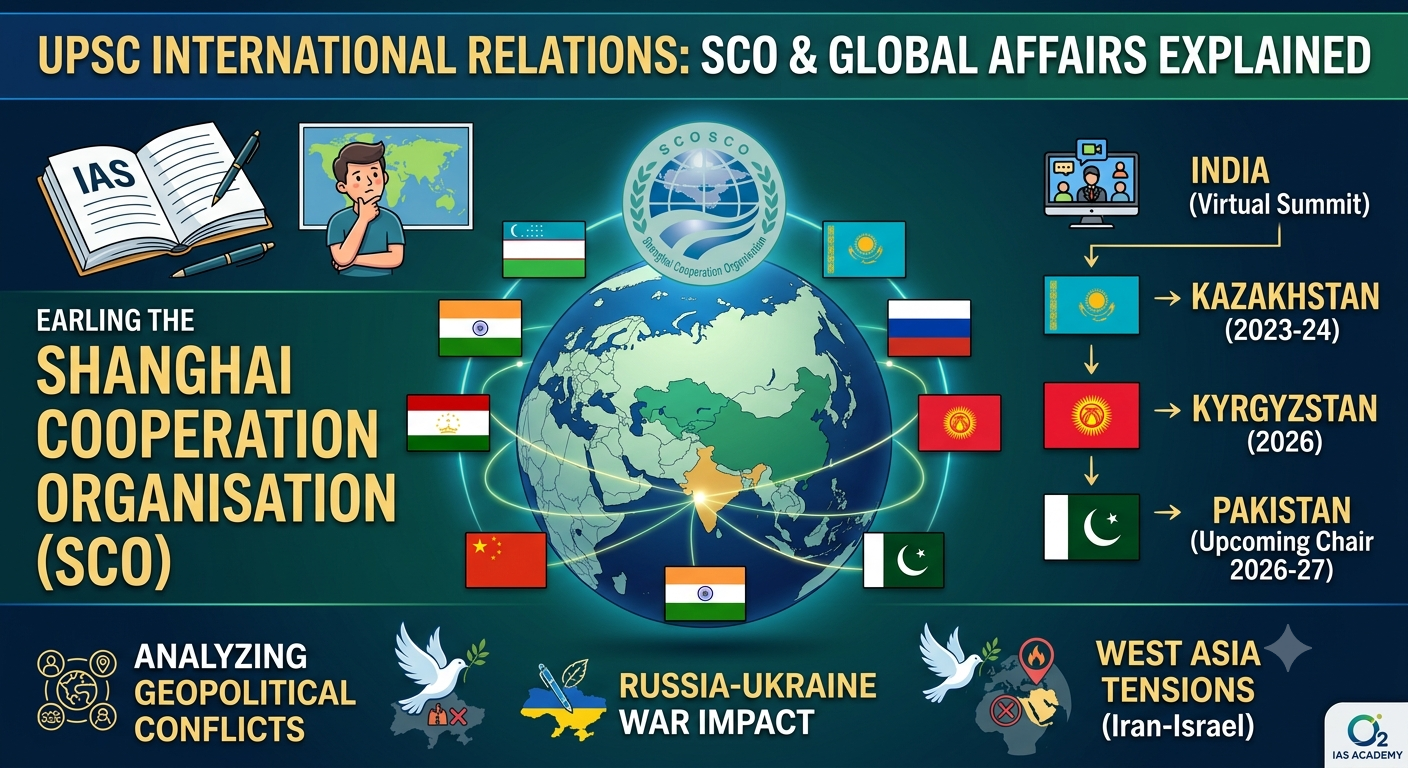
For exams, it is very important to know which country is leading groups like the SCO. The leadership, or “chairmanship,” rotates from one country to another every year, usually ending with a big summit.
Here is how the SCO leadership has rotated recently:
2022–2023: India held the leadership and hosted the meeting online (virtually).
2023–2024: The leadership was passed to Kazakhstan.
Current and Future Leaders: After Kazakhstan, the role moved to China and then Kyrgyzstan (which hosted in 2026). The leadership for the 2026–2027 term goes to Pakistan.
Summary
To do well in the International Relations section of your exams, focus on the big picture. Know who is leading major global organizations, understand the main problems they are trying to solve, and always remember how international conflicts affect everyday people.