




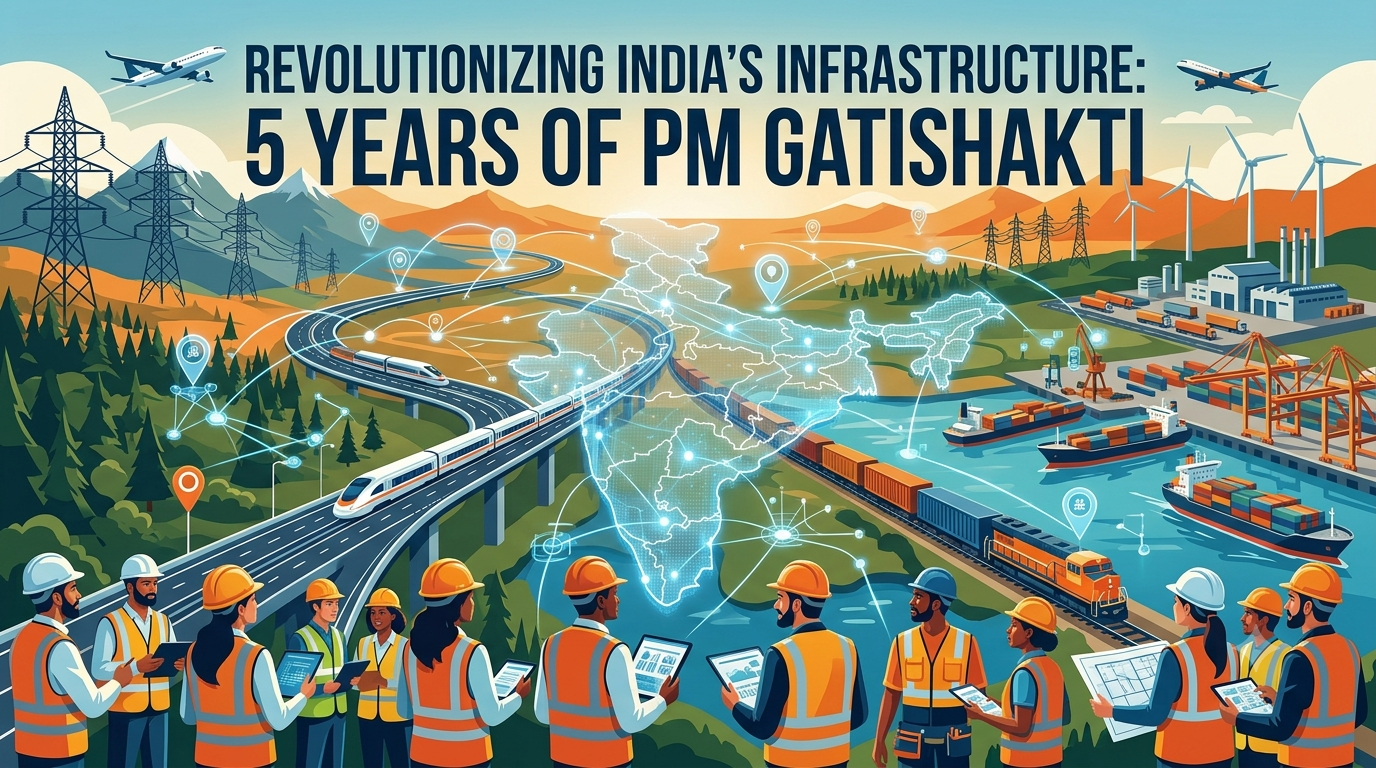
Building big things like roads, railways, and airports is only half the job; the real magic happens when they all connect smoothly. For a huge country like India, a big problem in the past was that different government departments planned their projects alone, without talking to each other. This led to massive delays, extra costs, and lots of confusion.
To fix this, the Indian government launched the PM GatiShakti Plan in October 2021. Recently, experts got together on a TV show to talk about how this plan has completely changed the way India builds its infrastructure over the last five years.
The Big Fix: One Giant Digital Map
Before this plan, building a road might get stuck because planners didn’t realize it crossed a protected forest or an underground cable until it was too late. Getting permissions took forever.
PM GatiShakti changed this by creating a massive digital map. It brought 58 government departments and all 36 states and union territories onto one single computer platform. Now, planners can look at over 23,000 layers of data—showing where forests, water, and power lines are—before they even start digging. This helps them spot problems early and find better routes.
Real Results on the Ground
Because everyone is finally sharing information and working together, things are moving much faster. Here are a few ways it has helped:
Saving Nature: When planning a major highway between Pune and Bengaluru, engineers used the new digital map to change the route, saving 19% of forest land that would have otherwise been cut down.
Connecting the Northeast: Projects like logistics parks in the Northeast are being designed to easily connect roads, trains, and rivers right from the start.
Super-Fast Railways: In the past, railway projects had to be passed around many different departments, meaning only about 5 to 7 projects were approved a year. Now, officials from all those departments sit and work together. Because of this, they now approve over 100 projects every single year.
What’s Next for India?
While the plan has been a huge success for big cities and major highways, experts say the next step is to bring these benefits to the rest of the country. To help India become a fully developed nation (Viksit Bharat), the government needs to focus on a few key areas in the coming years:
Reaching the Villages: Good roads and transport links need to reach smaller towns and remote villages, connecting them directly to big ports and markets.
Better Electricity: Factories and businesses can’t grow without reliable power. Upgrading power lines and making sure rural areas have constant electricity is a top priority.
Easier Land Buying: The government is working to put all state land ownership records onto the GatiShakti map. Knowing exactly who owns a piece of land will make buying it for public projects much faster.
Using Smart Tech: Using advanced technology like Artificial Intelligence (AI) will help plan even smarter and turn India into a global manufacturing powerhouse.
The Bottom Line
The PM GatiShakti plan isn’t just a fancy map; it’s a whole new way for the government to work. By breaking down walls between departments and planning things together, India is clearing the roadblocks to its future and paving the way for faster economic growth.