




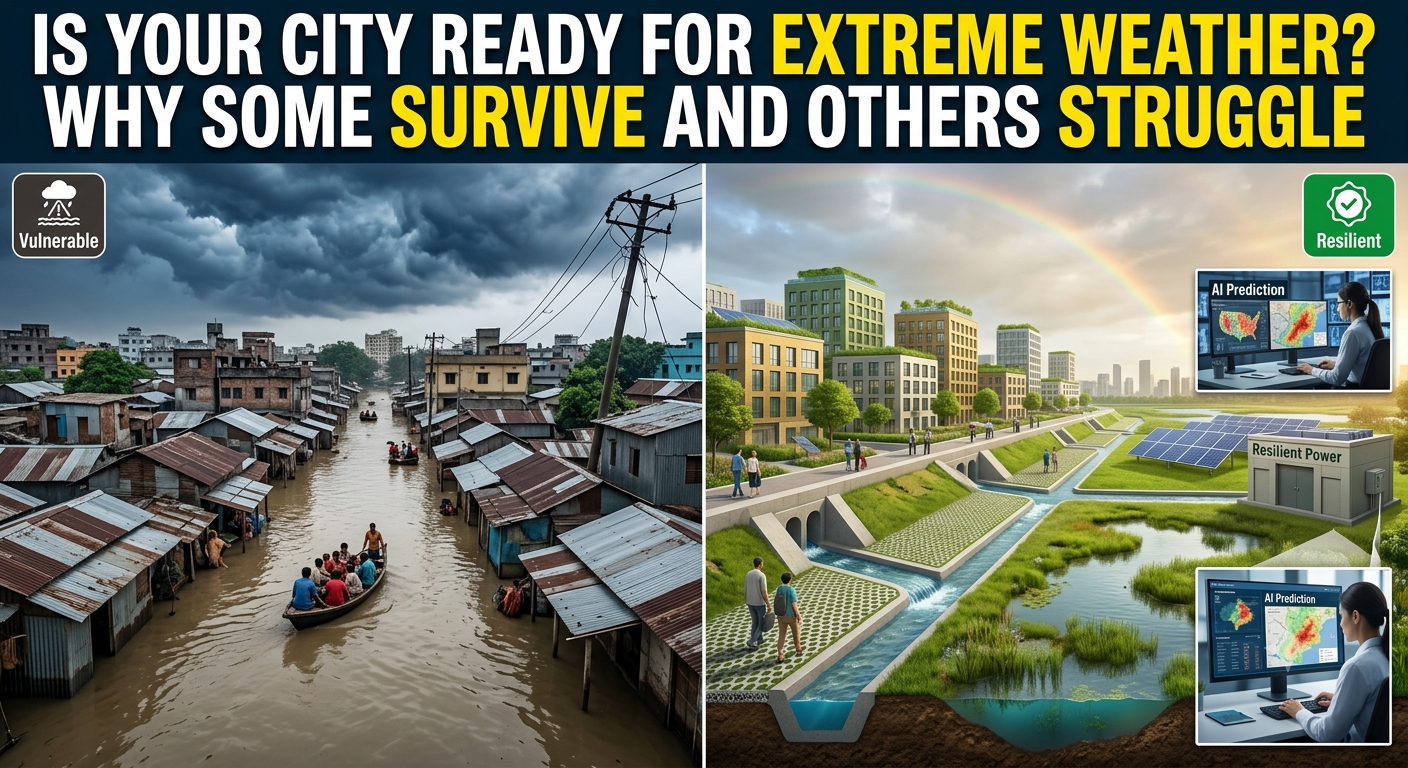
A recent study by AlphaGeo AI evaluated how prepared cities worldwide are for severe climate events. While cities like Chicago ranked highly for their readiness, the results were alarming for South Asia. Several cities in the region, including Ahmedabad and Kolkata, ranked near the very bottom, meaning they face severe risks and struggle to bounce back when disasters strike.
What Makes a City “Ready”?
A city’s readiness—or resilience—is its ability to protect its people, adapt to extreme weather, and recover quickly. To understand this, experts look at two main factors:
The Threat (Hazards): The actual extreme events, like floods, heatwaves, or severe storms.
The Target (Exposure): The number of people, homes, and businesses in the path of the threat. If two cities get hit by the exact same storm, the city with more people and weaker buildings will suffer far worse damage.
Why South Asian Cities Are at High Risk
Several overlapping problems make cities in South Asia especially vulnerable:
Overcrowding: Cities are expanding too rapidly. As populations boom in small areas, more people are put directly in harm’s way.
Weak Foundations: The development of safe housing, sturdy roads, and reliable power grids has not kept up with population growth.
Too Much Concrete: Natural water absorbers like lakes, wetlands, and open soil have been paved over. When heavy rains hit, the water has nowhere to drain, leading to massive floods.
Unpredictable Weather: Erratic monsoons disrupt food supplies, while extreme heat and cold waves multiply the everyday struggles of residents.
The Domino Effect of Disasters
We are no longer dealing with just one problem at a time. Disasters now cause chain reactions. For example, a severe storm might bring heavy rain, which causes flooding that destroys the power grid. Without power, communication networks fail, completely paralyzing emergency rescue teams. Similarly, a severe drought doesn’t just mean a water shortage; it kills crops, drives up food prices, and forces rural families to migrate into already overcrowded cities.
How Cities Can Protect Themselves
To survive a changing climate, cities need to upgrade almost everything about how they operate:
Smarter Construction: Building stronger physical barriers, like highly efficient storm drains, flood walls, and backup power systems that survive extreme weather.
Bringing Nature Back: Restoring natural landscapes by protecting wetlands, planting urban forests, and using special pavements that allow rainwater to soak into the earth.
Proactive Technology: Instead of just reacting after a disaster hits, cities can use Artificial Intelligence (AI) and satellites to predict them. AI can map out exactly which neighborhoods are most likely to flood or experience dangerous heat, allowing local governments to prepare warnings and resources ahead of time.
Fixing these massive urban challenges takes time, but upgrading technology, restoring nature, and planning smarter are the only ways to keep city populations safe in the future.