




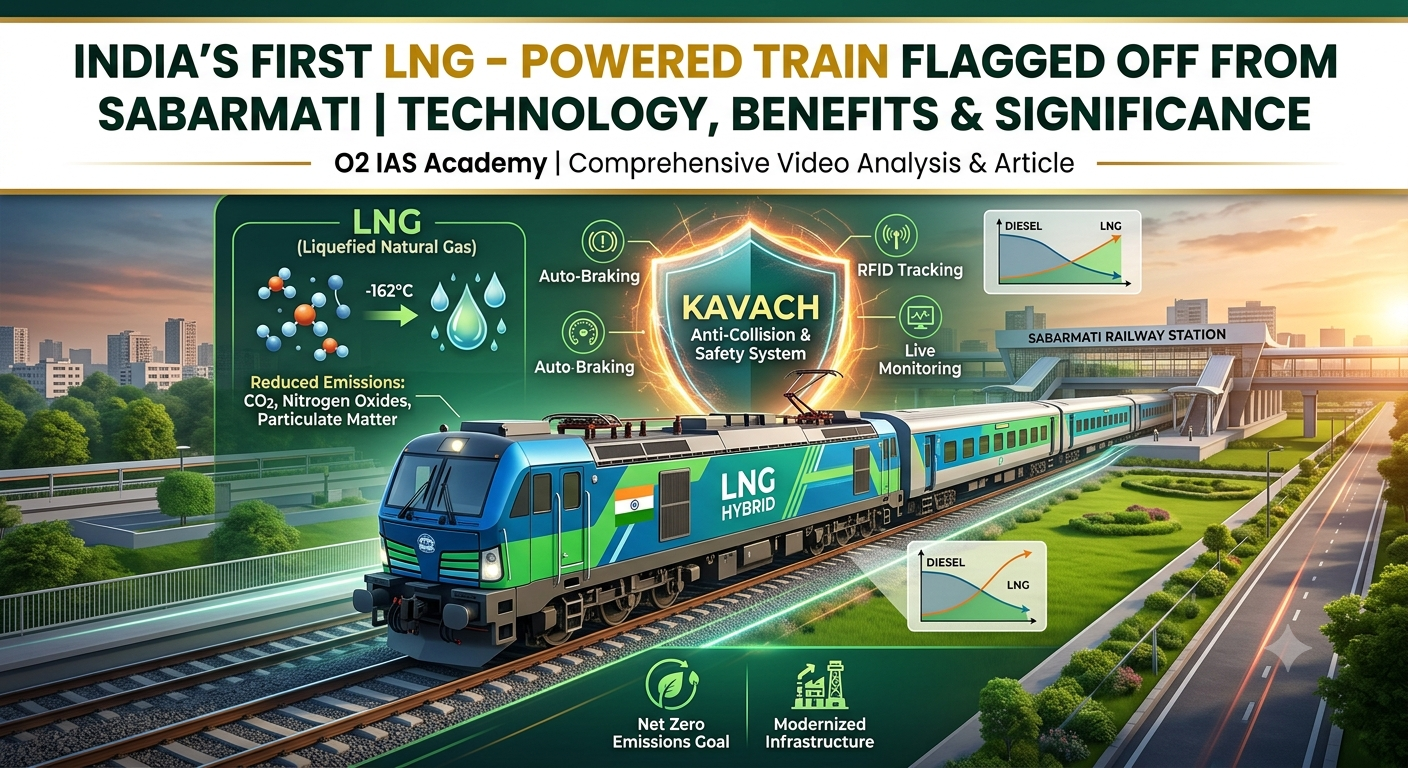
India has taken a major step toward eco-friendly transportation by launching its first Liquefied Natural Gas (LNG) train. Flagged off in Gujarat on September 27, this move highlights the country’s push to modernize its railway network while cutting down on pollution.
Understanding the Different Types of Gas
To understand this upgrade, it helps to look at the different forms of gas we use daily:
LPG (Liquefied Petroleum Gas): Used mostly in home kitchens for cooking.
PNG (Piped Natural Gas): Gas supplied directly to houses through pipes, removing the need for heavy cylinders.
CNG (Compressed Natural Gas): Gas squeezed under high pressure, commonly used to run cars and taxis.
LNG (Liquefied Natural Gas): Gas packed so tightly that it turns into a liquid. It requires freezing temperatures of -162°C to store, making it much more complex and expensive to transport.
How the New Train Works
Currently, the new train operates on a hybrid mix of both LNG and diesel, as switching completely away from diesel is not yet practical. Together, the engines produce a combined 1,400 horsepower.
The main goal of introducing LNG is to help Indian Railways reach “Net Zero” carbon emissions by 2030. By burning less diesel, the train will release far fewer harmful pollutants into the air, helping to fight global warming and protect public health. However, this shift comes with a few challenges. India has to buy most of its LNG from other countries, and the extreme freezing technology needed to store the liquid gas is very costly.
Advanced Railway Safety: The KAVACH System
Along with cleaner fuel, the railways are heavily focused on passenger safety. The government is installing a locally made automatic protection system called KAVACH.
Top-Level Security: It meets the absolute highest international safety standards.
Automatic Braking: If a driver accidentally misses a red light, KAVACH uses smart sensors to automatically apply the brakes and prevent accidents.
Live Tracking: It uses radio towers and track sensors to constantly monitor the train’s location, speed, and safety in real time.
Expanding the Railway Network
This eco-friendly train is just one part of a massive financial investment to upgrade India’s railways. The government is also working to improve older rail lines and increase the amount of cargo trains can carry, which includes running massive double-stacked freight trains. These upgrades aim to balance India’s fast economic growth with safer, greener travel.