




Most of us just use time to know when to wake up, schedule a meeting, or catch a train. But in today’s digital world, time is much more than what you see on a wall clock. It is the invisible backbone that keeps our modern digital infrastructure running smoothly.
To ensure all of our vital systems stay perfectly in sync, the Indian government has introduced a major new framework for national timekeeping.
The “One Nation, One Time” Shift
Recently, the government announced the Legal Metrology (Indian Standard Time) Rules, 2026. Slated to take effect 180 days after official publication, this new rule establishes a single, legally binding Indian Standard Time (IST) for all official, commercial, and administrative activities.
But this initiative isn’t just about making sure everyone’s wristwatch matches. It’s a massive technological and security upgrade for the entire country.
Why Do We Need Extremely Accurate Time?
As India becomes increasingly connected, split-second accuracy is non-negotiable. If computers across the country are even slightly out of sync with each other, the consequences can be huge.
Here is why perfect timing is so crucial:
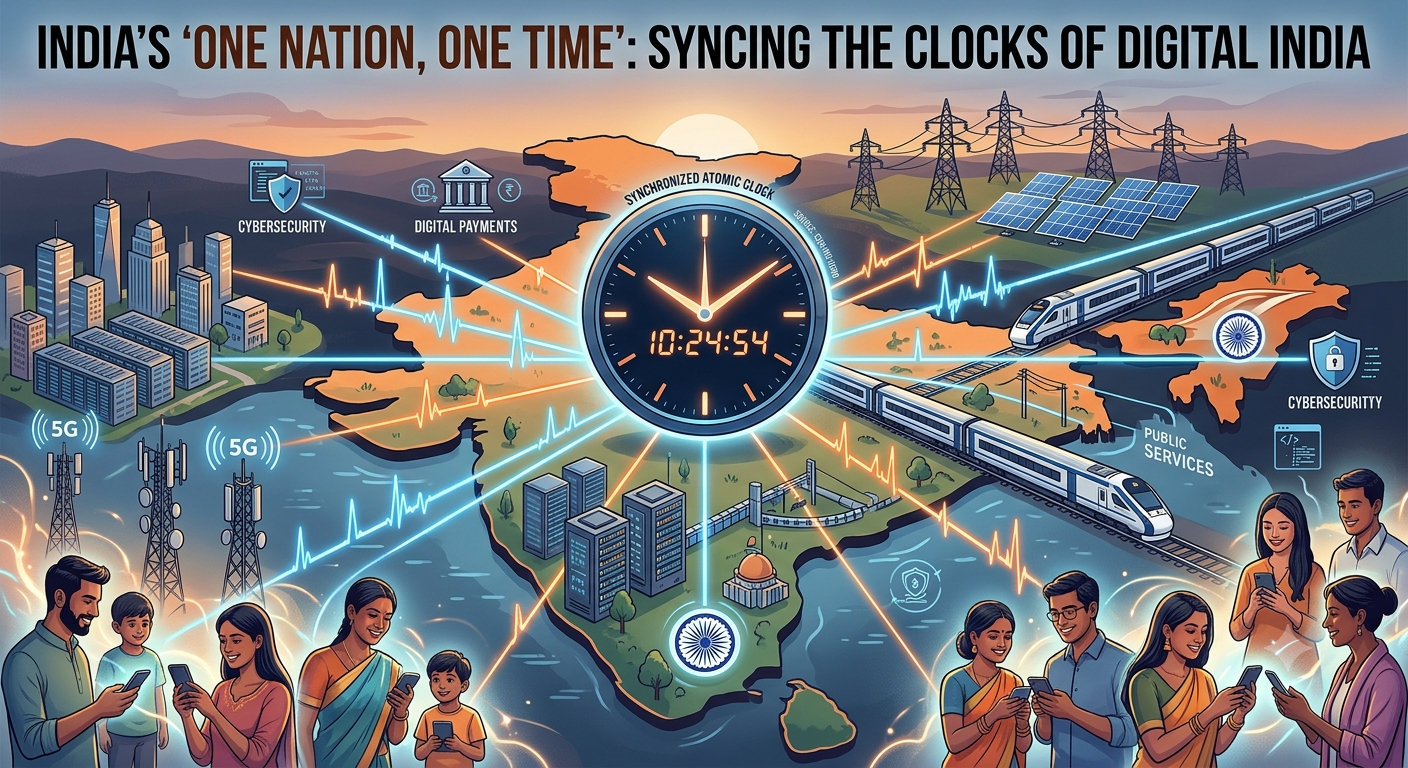
Digital Payments & Banking: To prevent fraud and ensure transactions process correctly, bank servers must agree on the exact millisecond a payment occurs.
Cybersecurity & Legal Records: Hackers can exploit tiny gaps in digital time logs. A single, legally recognized timestamp protects digital systems and ensures court records are unquestionable.
National Infrastructure: Power grids, mobile telecom towers, and railway networks rely on perfectly synchronized time to prevent system blackouts and manage traffic safely.
India’s Own High-Tech Time Network
To make this vision a reality, India is building its own highly secure and precise timekeeping network from the ground up. Top scientific organizations, including ISRO and CSIR-NPL, have teamed up to develop this system using advanced “White Rabbit” technology.
This technology is designed to provide ultra-precise time synchronization for critical sectors, and a successful test network was already launched in Bengaluru in July 2026.
What This Means for the Future
For the average citizen, not much will visibly change—your day will still have 24 hours! However, behind the scenes, this unified time system will ensure that India’s digital services, transportation networks, and banking systems are safer, faster, and much more reliable.