




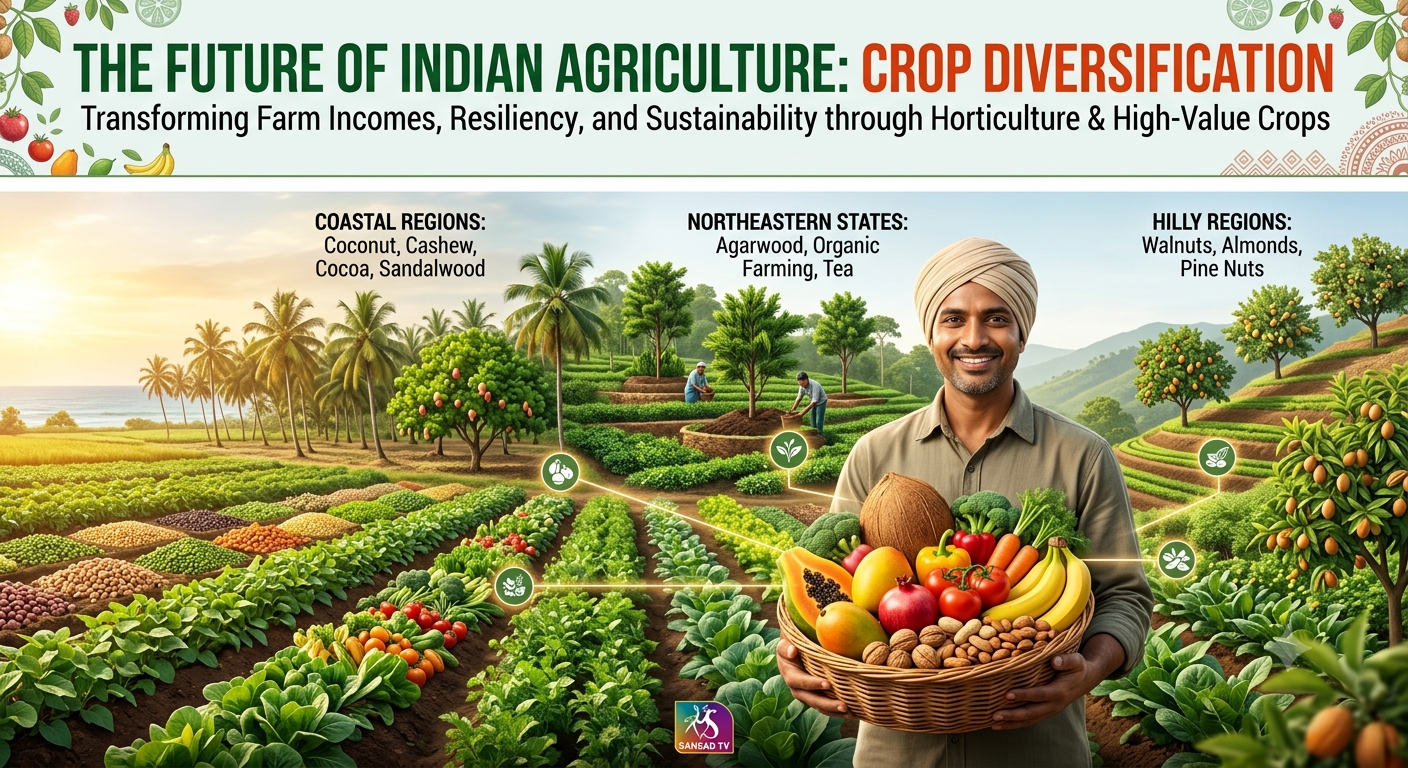
Farming in India is going through an exciting and necessary change. Instead of just relying on traditional crops like wheat and rice year after year, farmers are now planting a diverse mix of high-value items. This shift is helping farmers earn a more stable income while protecting their land from unpredictable weather patterns and saving precious groundwater.
The Power of Fruits and Vegetables
Growing fresh produce, known as horticulture, is quickly becoming the most profitable part of Indian farming. These crops bring in much better returns per acre compared to basic grains.
Horticulture now drives a major portion of India’s agricultural economy.
India stands as the second-largest producer of fruits and vegetables globally.
The country is the undeniable world leader in growing onions and shallots.
Smart Farming by Region
Because India has incredibly diverse climates, recent farming strategies focus on growing the right crops in the exact right places to maximize both yield and profit.
Coastal Areas: The warm, humid coastlines are perfect for coconuts, cashews, and cocoa. India is a top global coconut producer, and new programs are helping farmers plant better, faster-growing trees.
The Northeast: The lush environments here are ideal for Agarwood trees, which are highly prized worldwide for making luxury perfumes and natural medicines. This single crop holds massive financial potential for local farmers.
Hilly Regions: Cooler mountain areas, particularly Jammu & Kashmir, are perfectly suited for cultivating premium nuts like walnuts and almonds. These high-quality nuts are successfully exported to countries across the globe.
Looking Ahead
By planting a wider variety of crops that naturally fit their local environments, Indian farmers are building a wealthier and more secure future. This balanced approach protects the soil, saves water, and deeply strengthens the rural economy.