



India has taken a huge step toward eco-friendly travel by launching its very first hydrogen-powered train. Set to run between Jind and Sonipat in Haryana, this train is a big deal because it doesn’t use traditional, polluting fuels like diesel.
Here is a simple look at how this amazing new train works, why it is good for the country, and the hurdles it still needs to overcome.
How Does It Run Without Fuel?
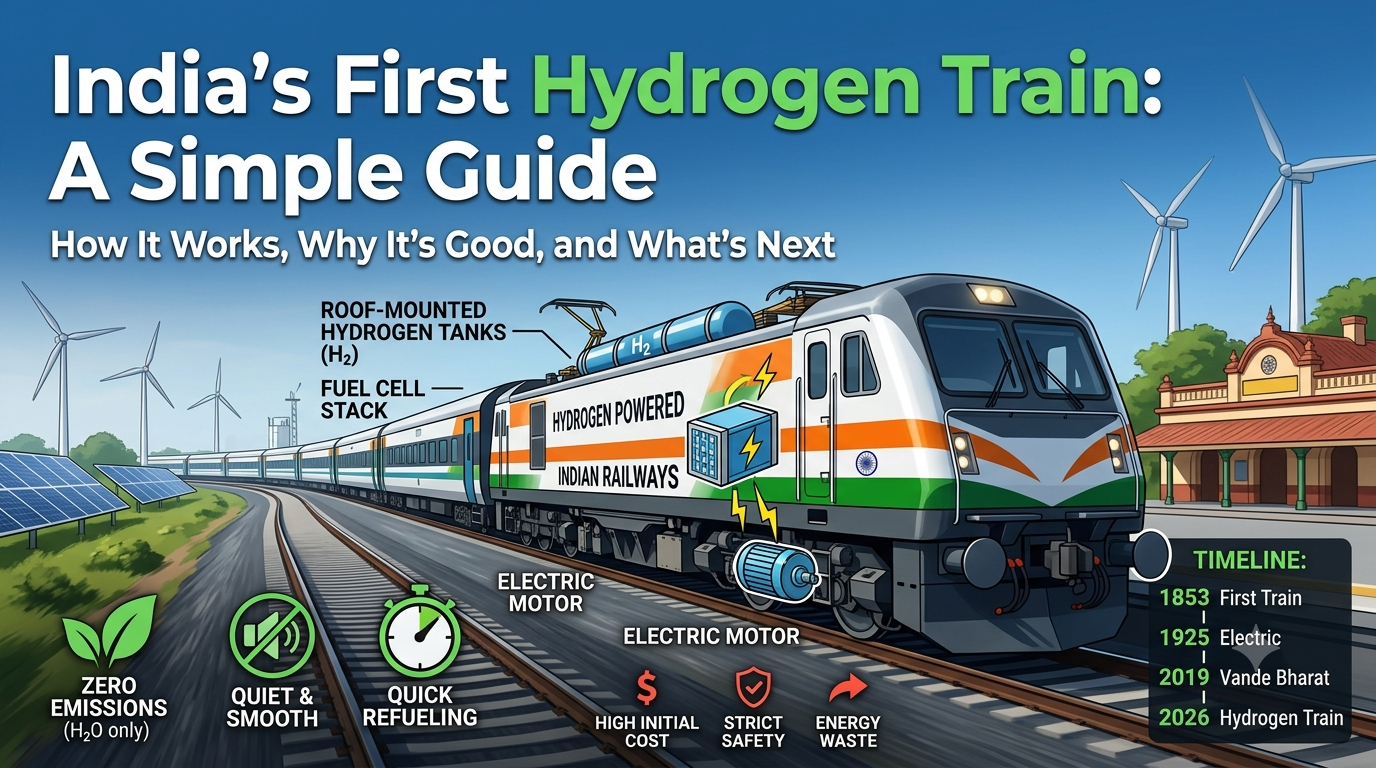
Instead of burning coal or diesel, this train creates its own electricity on the go using hydrogen gas. Here is the simple step-by-step process:
Roof Tanks: The train is filled up with hydrogen gas, which is kept in super-strong, high-pressure tanks on the roof.
Making Electricity: The hydrogen goes into a special device inside the train called a fuel cell. Here, it mixes with oxygen taken from the outside air. When these two mix, they create a chemical reaction that makes electricity.
Driving the Wheels: That electricity is used to power the motors and turn the wheels of the train.
Saving Extra Power: If the train makes more power than it needs, or if it generates energy while braking, that extra power is saved in a large battery so nothing is wasted.
Zero Pollution: The most amazing part is that the only “exhaust” this train leaves behind is pure water vapor and a little heat. There is no smoke at all!
Why Are Hydrogen Trains a Great Idea?
Switching to hydrogen power has several awesome benefits:
Good for the Environment: Because they only release water vapor, these trains do not pollute the air.
No Electric Wires Needed: Electric trains need expensive power lines built above the tracks. Hydrogen trains carry their own power, making them perfect for hilly, remote, or forest areas where building power lines is hard.
Quiet and Smooth Ride: Diesel engines are loud and vibrate a lot. Without that noisy engine, a hydrogen train is incredibly quiet and smooth, feeling very much like riding a metro.
Quick to Fill Up: Unlike battery-powered cars or trains that take hours to charge, hydrogen tanks can be refilled in just a few minutes.
Made in India: If India produces its own hydrogen, the country won’t have to spend as much money buying expensive oils and fuels from other countries.
What Are the Challenges?
Even though the technology is exciting, there are still a few problems to solve:
The “Clean Energy” Problem: Hydrogen itself is clean, but making hydrogen takes a lot of energy. If we use coal to make the hydrogen, we are just moving the pollution from the train to the factory. To be truly green, the hydrogen must be made using solar or wind power.
It’s Expensive: Right now, building these special trains, the fuel cells, and the safe storage tanks costs a lot more than building regular diesel trains.
Safety Risks: Hydrogen catches fire very easily. Because of this, it has to be squeezed tightly into heavily guarded, specialized tanks. Even a tiny leak could be dangerous, so safety rules have to be extremely strict.
Energy Waste: The whole process—creating the hydrogen, squishing it into tanks, and then turning it back into electricity inside the train—ends up wasting about 30% of the original energy.
A Quick Look Back at India’s Railways
To see how far we have come, it is fun to look at a quick timeline of Indian trains:
1853: India’s very first passenger train ran from Mumbai to Thane.
1925: The country got its first electric train.
Late 1980s: Fast trains like the Shatabdi and Rajdhani Express were introduced.
2019: The Vande Bharat Express arrived, giving India its first super-fast, engine-less modern train.
Now, the hydrogen train represents the next big leap, proving that the future of Indian railways is not just fast, but clean and green.