


The Middle East is going through a fresh wave of conflicts. Even though the fighting is happening far away, the whole world is feeling the impact. For India, this situation is a major concern because it directly affects the safety of its citizens, the price of everyday goods, and the country’s energy supply.
Here is a simple breakdown of how the crisis impacts India and the steps the government is taking to handle it.
1. The Safety of Indian Citizens and Sailors
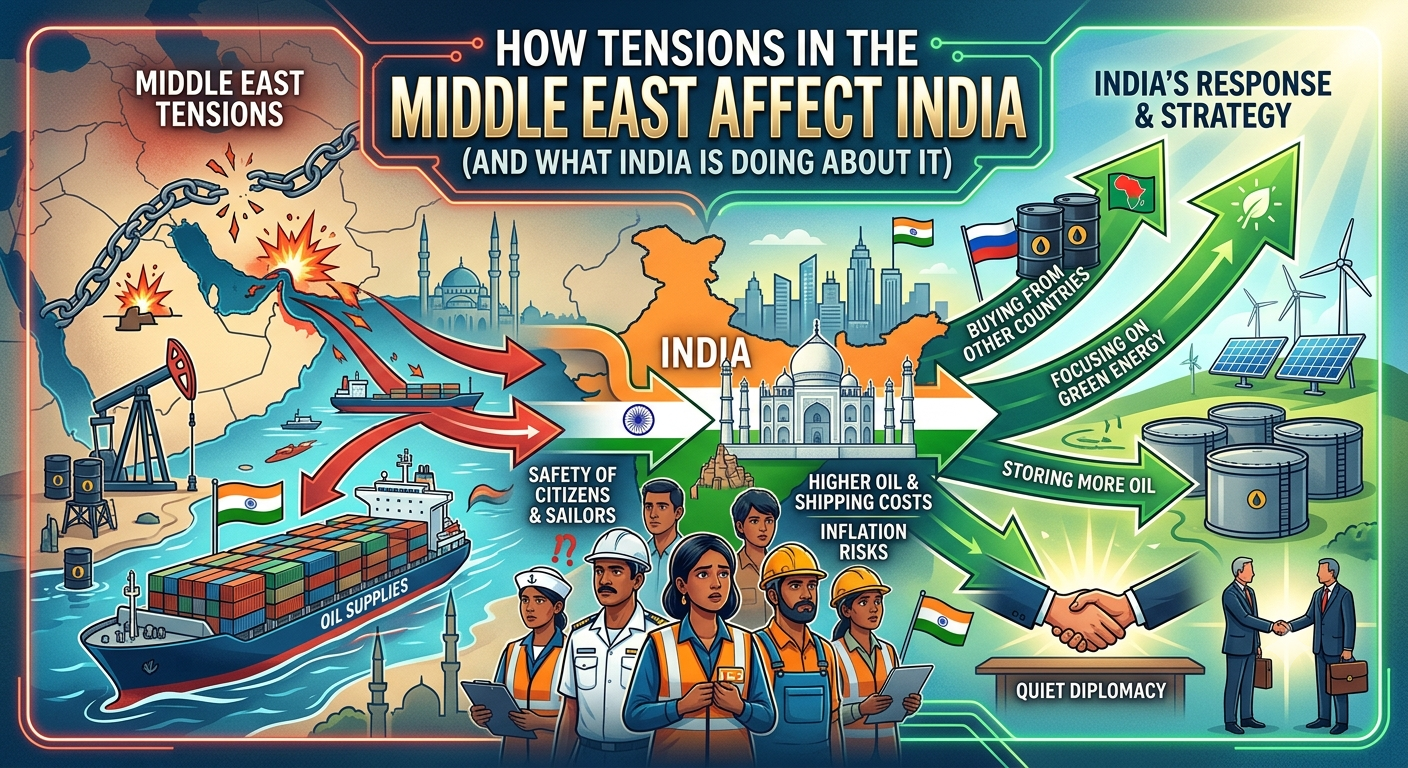
India’s first priority is its people. There are nearly 10 million Indians living and working in the Middle East. In addition, many Indian sailors work on international cargo ships that travel through the region’s waters. These sea routes have become dangerous recently. For example, a commercial ship was recently attacked, putting 11 Indian sailors at risk.
The conflict is also threatening major trade projects. India has invested heavily in the Chabahar Port (located in Iran) to help build better trade routes to Central Asia. The fighting is getting uncomfortably close to this port, proving that wars can threaten important international investments.
2. Expensive Oil and Trade Problems
India buys a huge amount of its oil from the Middle East. Most of this oil passes through a narrow and vital sea route called the Strait of Hormuz. When ships are attacked or blocked in this area, shipping companies have to pay higher insurance, and the journey becomes much more expensive.
When shipping costs go up, the price of oil goes up. Because India relies on importing this oil, higher oil prices can lead to higher inflation, making everyday items more expensive for the average Indian.
3. How India is Protecting Its Economy
To protect itself from these sudden shocks, India is making some smart moves:
Buying from other countries: India is trying not to rely on just one region for its oil. It is buying more oil from places like Russia and looking at markets in Africa.
Focusing on green energy: The oil crisis is a strong reminder that India needs to use less fossil fuel. The country is speeding up its shift to cleaner energy, like solar power and biofuels.
Storing more oil: The government is encouraging companies to build up their emergency oil reserves so the country has a safety net if supplies are suddenly cut off.
4. The Diplomatic Balancing Act
India is in a unique position because it has good relationships with almost everyone involved in the conflict, including the United States, Iran, Saudi Arabia, and the UAE.
However, balancing these friendships during a war is tricky. While India always encourages peace and open talks, trying to step in and stop the fight between major powers like the US and Iran likely won’t work right now.
Instead of trying to be the peacemaker in the middle, India is using “quiet diplomacy.” Behind closed doors, Indian officials are talking directly to the fighting nations to make sure Indian ships get safe passage and Indian interests are protected.
The Bottom Line
The unrest in the Middle East brings serious challenges for India’s economy and security. However, by looking for alternative energy sources, building up emergency reserves, and using smart, quiet diplomacy, India is doing what it takes to protect its people and keep its economy running smoothly.