




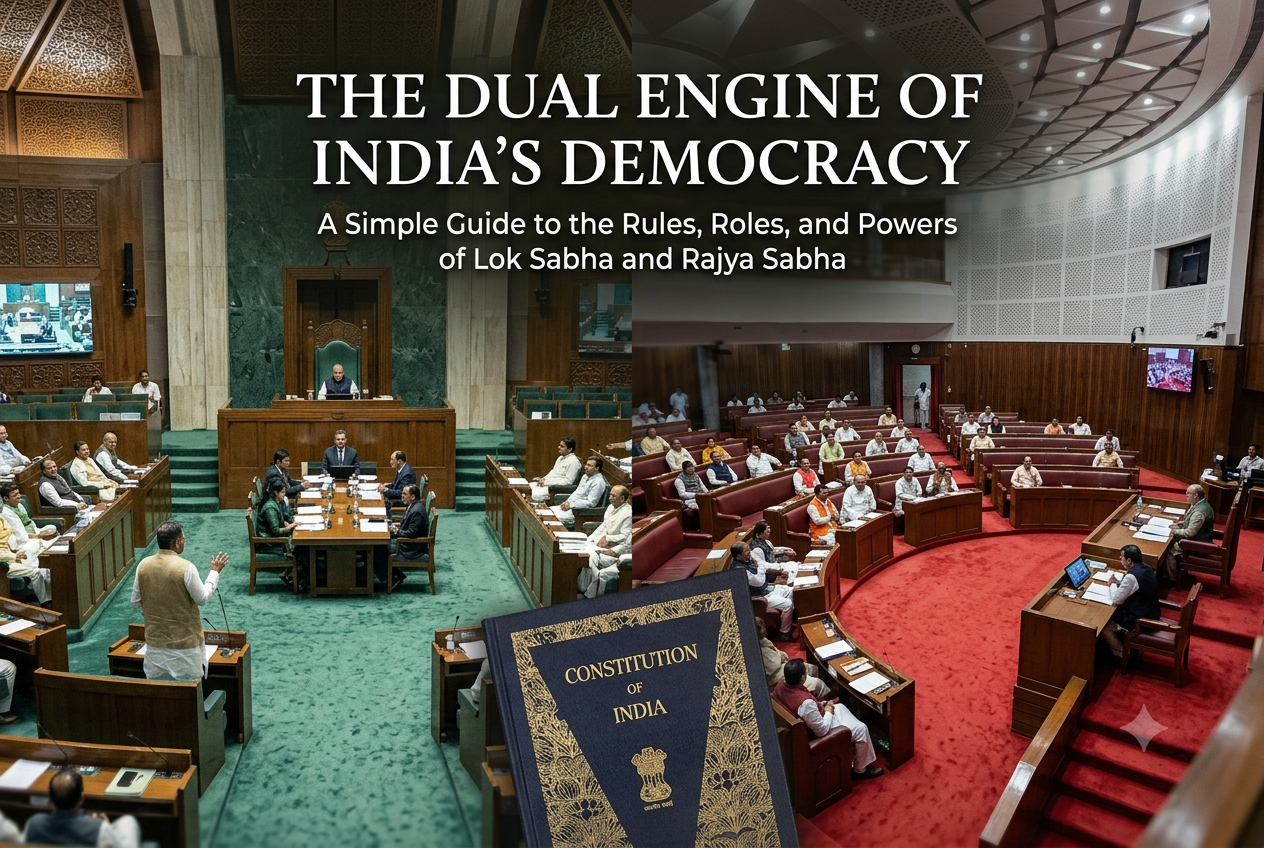
When India’s Parliament meets, it doesn’t just run on open arguments; it follows strict rules. These rules ensure that everyone gets a fair chance to speak, the government is held accountable, and national decisions are made properly.
Here is a simplified look at how the Lok Sabha and Rajya Sabha function on a day-to-day basis.
Managing Time
Parliament handles massive responsibilities, from questioning the government to passing laws and setting the national budget. Because time is limited, a special group called the Business Advisory Committee (BAC) decides how many hours or minutes should be spent on each topic. Big national policies naturally get more time than smaller, limited issues.
Who Gets to Speak?
The meetings are managed by a presiding officer—the Speaker in the Lok Sabha and the Chairman in the Rajya Sabha. They act like referees, deciding who speaks and for how long.
Members of Parliament (MPs) cannot just speak whenever they want. Their political parties help decide who gets to use the party’s allotted time. When speaking, MPs must address the referee, stick to the topic, and follow parliamentary manners. If a member constantly interrupts or ignores the rules, the presiding officer can stop them from speaking or even pause the meeting.
What is a “Point of Order”?
If an MP believes that the official rules of the house are being broken during a meeting, they can raise a “Point of Order.” This is a formal complaint to the referee to fix a procedural mistake. It is strictly meant for enforcing rules, not for arguing with another politician’s opinion or asking for more time to speak.
Making Decisions Through Voting
After a topic is debated, it is time to make a decision. This requires a majority vote.
Voice Vote: This is the most common method. The presiding officer asks the members to verbally say “Aye” (yes) or “No.”
Division: If the voice vote is unclear or someone objects, an exact count is taken. MPs use an electronic system to record their individual votes.
Normally, the presiding officer does not vote. However, if there is an exact tie, they get to cast the deciding vote.
Lok Sabha vs. Rajya Sabha: What’s the Difference?
While both houses work together to pass laws, they have distinct roles:
The Lok Sabha (House of the People): Members are elected directly by the public. The ruling government must maintain a majority here to stay in power. The Lok Sabha also has the ultimate say on “Money Bills” (laws dealing with taxes and government spending).
The Rajya Sabha (Council of States): Members represent India’s states and union territories. It is a permanent house, meaning it is never fully dissolved. It holds special powers, such as the ability to let Parliament make laws on state-specific issues in the national interest.
The Bottom Line
A strong democracy isn’t just measured by the topics discussed, but by how they are discussed. The strict rules, time limits, and voting procedures of Parliament ensure that disagreements are handled smoothly and decisions are made transparently for the country.