




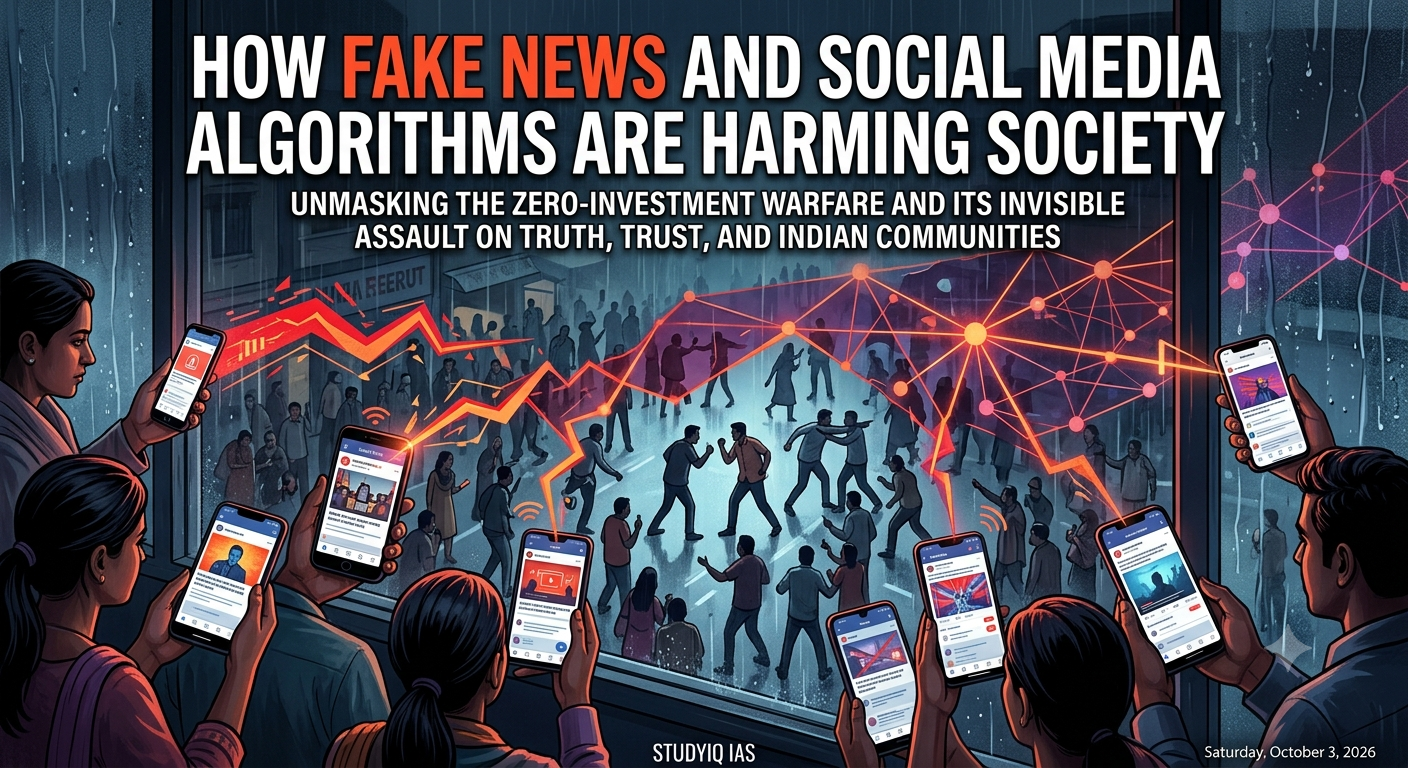
Today, many of us open our phones and immediately see posts or videos that make us angry. While this reaction feels natural, it is often a carefully planned trick designed to cause unrest and division.
Digital Lies, Real-World Harm
Fake content on the internet is increasingly causing real physical damage. For example, an artificially generated video about a mosque demolition in Ujjain recently sparked public anger and violence. Similarly, false online rumors about a student at a university in Punjab led to massive protests, property damage, and forced authorities to shut down local internet services. These events are not random accidents; they show how digital platforms can be actively used as weapons.
The Shift to Engineered Panic
Rumors have always existed, but they used to spread slowly by word of mouth and naturally fade away. Today, false information is purposely created and pushed rapidly to millions. In 2018, fake WhatsApp messages about child kidnappers caused panicked mobs to attack and kill innocent people across India. This marks a dangerous shift: digital lies now push everyday people to take extreme, violent actions on the streets.
The Algorithm Trap
Social media systems are built to show us content that triggers anger and negative emotions because it keeps us scrolling and engaged. Often, a very small group of automated accounts can make a topic trend, tricking the rest of the country into thinking everyone is outraged about it. A major concern is that the technology behind these platforms is controlled by foreign companies. Local governments have no way to see exactly how these systems decide what information goes viral and what gets hidden.
A New Kind of Invisible Warfare
This lack of control allows foreign groups to launch cheap, invisible attacks. By using automated bot accounts from other countries, bad actors mask their locations, pretend to be local citizens, and spread hateful messages in regional languages. This modern form of warfare costs the attackers almost nothing, but it successfully destroys trust, brotherhood, and peace within the targeted country.
To fix this, countries need to hold tech companies accountable and regularly audit how their systems promote content, without taking away citizens’ rights to free speech. As everyday users, our best defense is critical thinking. Before reacting to a shocking post or forwarding a controversial video, we must pause, check the source, and ask ourselves if we are being intentionally manipulated by a computer program.