




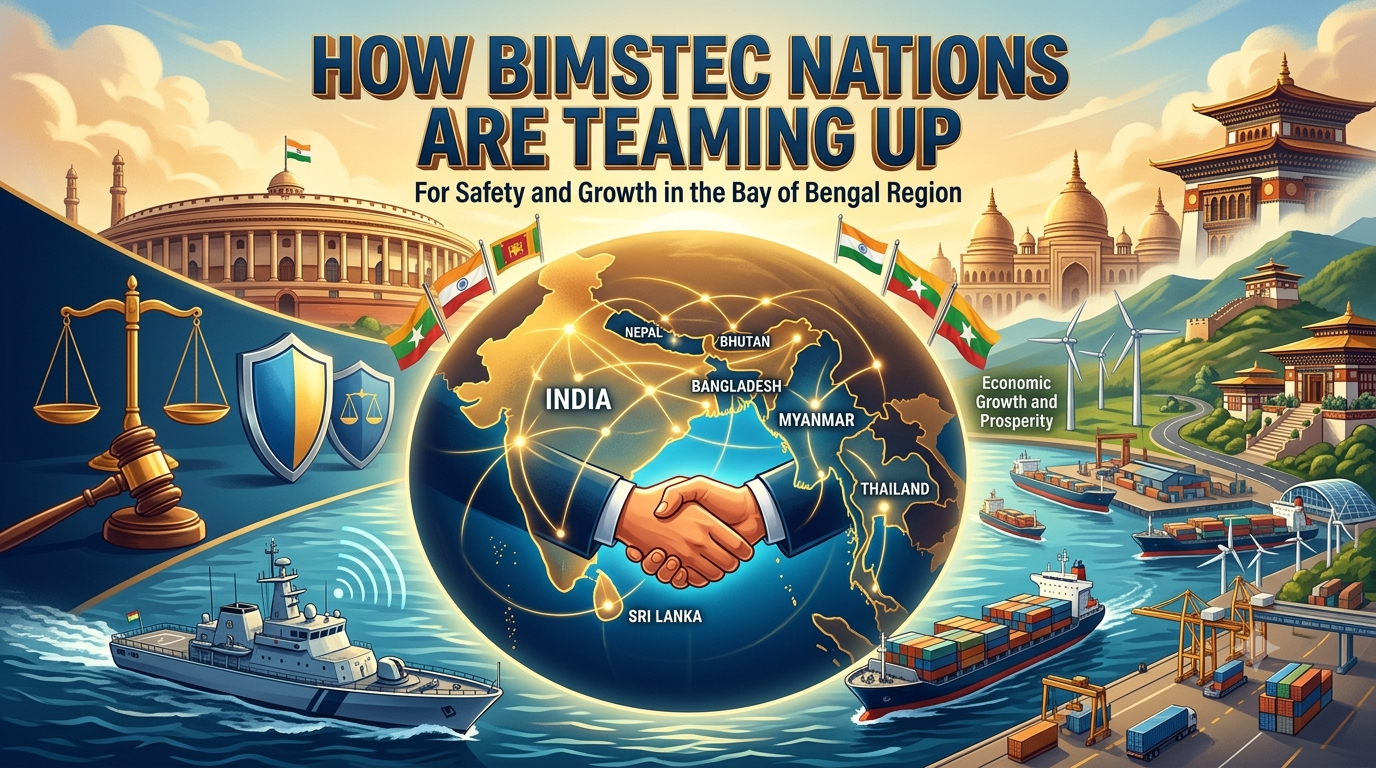
In 1997, four South Asian countries formed a group to boost regional growth. Recognizing they needed a stronger team, they quickly added Nepal and Bhutan to create BIMSTEC (the Bay of Bengal Initiative for Multi-Sectoral Technical and Economic Cooperation). Today, with its headquarters in Bangladesh, this group focuses on a shared goal: linking national security directly to economic prosperity.
During a recent meeting in India, regional leaders discussed how to turn this goal into reality, highlighting both the opportunities and the roadblocks ahead.
India’s Focus: Safety First
India’s approach is rooted in the idea that the world is one family. Leaders stressed that India has no desire to dominate others but wants to ensure mutual safety. The primary focus is eliminating cross-border crimes such as:
Terrorism and the funding behind it.
Drug trafficking and human smuggling.
Cyber attacks.
India maintains a strict “zero tolerance” rule for terrorism and urged partner nations to ensure their lands are not used to hide, train, or fund criminal networks that target neighboring countries.
Key Neighborly Relationships
The success of BIMSTEC relies heavily on how India manages its unique relationships with bordering nations:
Nepal: India and Nepal share deeply rooted cultural and family ties. Economically, Nepal relies heavily on India for trade. However, their 1,800-kilometer open border creates major security headaches. Criminals often use this open boundary to smuggle weapons or move terrorists, making joint border management a top priority.
Myanmar: Sharing a border with India’s northeastern states, Myanmar faces complex geographic and political issues. It is currently the world’s top producer of opium. The money from this illegal drug trade often funds armed rebel groups, creating “narco-terrorism” that spills over into India.
Bhutan: India shares an exceptionally close bond with Bhutan. Many Bhutanese leaders are educated in India, creating strong personal and political trust. Bhutan is currently focused on future-facing projects, like building an international “Eco City,” with India’s continued support.
The Hidden Roadblocks
While fighting crime is essential, experts point out three underlying challenges the region must solve:
Poverty at the Borders: People living in border regions often rely on illegal trade just to survive. If countries do not create legitimate jobs and economic growth in these areas, smuggling and drug production will continue.
Local Politics: Sometimes, politicians in neighboring countries criticize India simply to win local votes. This political game-playing makes it harder to build genuine cooperation.
The China Factor: With China sharing borders with several BIMSTEC nations, its growing influence is a constant concern. India must ensure it meets the economic needs of countries like Bhutan so they do not become overly dependent on Beijing.
The Path Forward
To keep the region safe and thriving, India must step up as a supportive leader. By helping neighbors grow their economies, securing vulnerable borders, and maintaining strong diplomatic trust, India can help the BIMSTEC countries successfully transition from focusing on basic security to achieving lasting prosperity.