




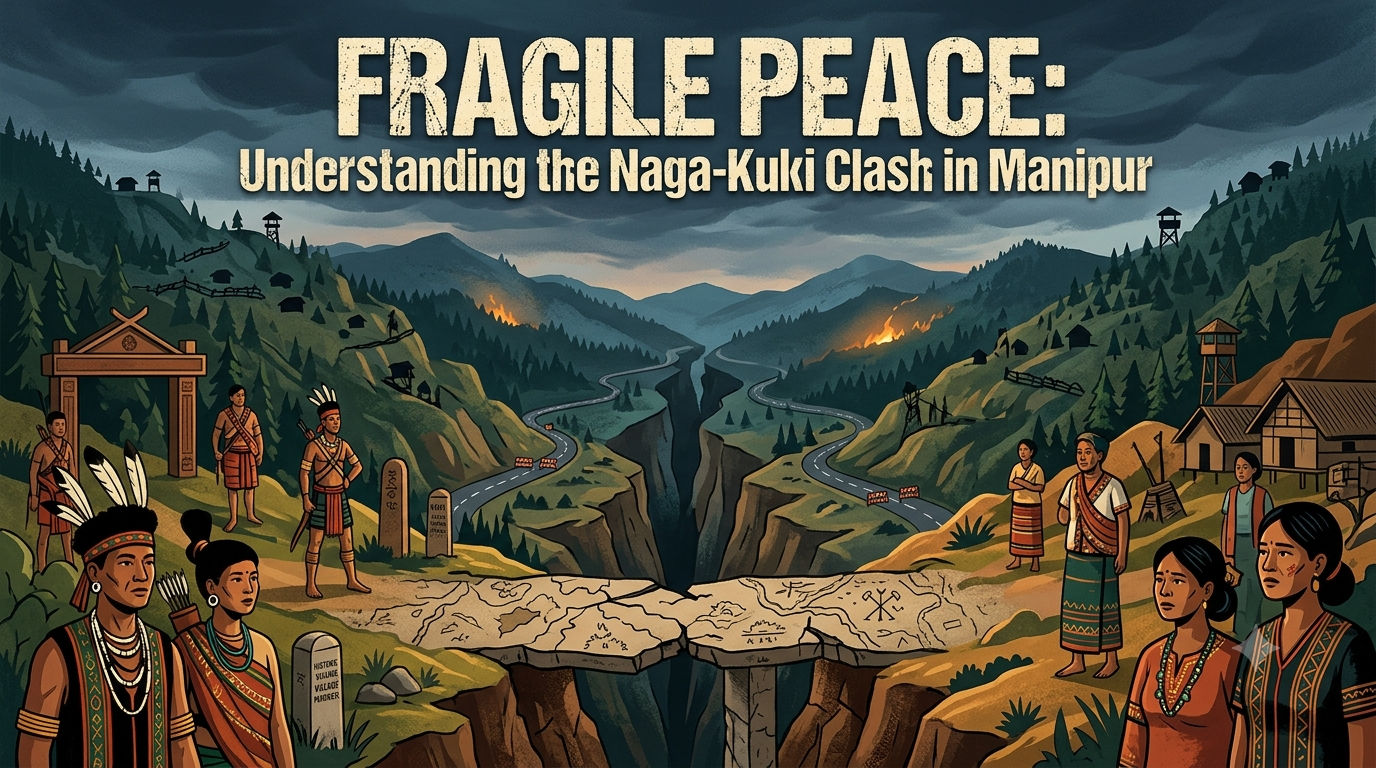
Manipur is facing difficult times once again. While the state was still trying to recover from the massive ethnic clashes of 2023, a new wave of violence has started. This time, the conflict is mainly between two different groups: the Naga and Kuki communities.
In just 24 hours, violence spread across three hilly districts, tragically resulting in the deaths of nine people.
How the Trouble Started
The recent violence kicked off in Kamjong, a district that shares a border with Myanmar.
Security forces were in the area trying to remove illegal hiding spots, known as bunkers. During this operation, a clash broke out between the security personnel, local women, and armed men. In the chaos, a 42-year-old Kuki woman was shot and killed.
This tragic event acted as a spark. Anger quickly boiled over, leading to gunfights and houses being set on fire. The violence didn’t stay in Kamjong; it rapidly spread to the neighboring districts of Kangpokpi and Ukhrul, resulting in the deaths of six Nagas, two Kukis, and one person of Nepali origin.
Why is This So Hard to Stop?
Stopping the violence in Manipur isn’t easy because of two main reasons: geography and history.
1. The Tough Terrain
The fights are happening in hilly, forested areas where village borders are confusing. Because the terrain is so rough, it is very hard for police and security forces to travel and take control. Also, because Kamjong is right next to Myanmar, armed groups can easily cross the border to hide or move around.
2. Old Grievances
The tension between the Naga and Kuki people isn’t new. Back in the early 1990s, the two communities had a long and violent conflict. The arguments usually come down to the same issues: who originally owned the ancestral land, and who gets the right to make political decisions in those areas.
The Current Situation
The atmosphere in Manipur is extremely tense right now due to a shocking incident during the recent clashes. Attackers reportedly took the severed head of a 52-year-old Naga victim. In response, Naga community leaders have given a strict 48-hour deadline for the head to be returned, refusing to allow standard medical procedures (post-mortems) on the victims until this happens.
While seven bodies have been returned to their families and the central government has promised to help bring back peace, the situation remains fragile. Because the roots of this anger go back decades, finding a lasting solution for Manipur will require a lot of time, careful communication, and trust-building.