



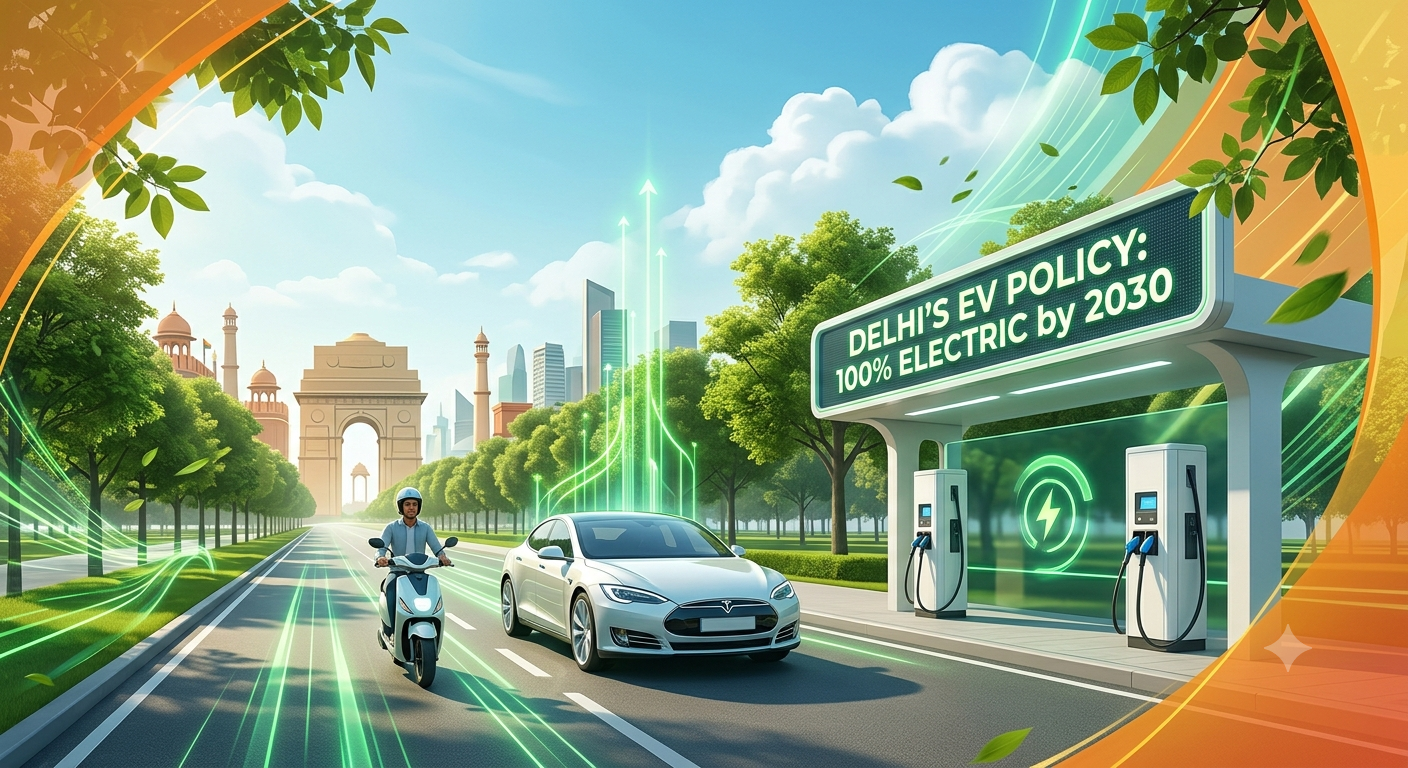
Delhi has launched a major new plan called the Delhi EV Policy 2026 to clean up its air and completely change how people travel around the city. The government is backing this project with a massive budget of over ₹15,000 crores, and the rules officially started taking effect on July 1, 2026.
The ultimate goal is to remove tailpipe pollution completely and turn Delhi into a zero-emission transport city by March 31, 2030. To do this, the government is offering discounts, cutting taxes, and building a massive network of chargers to make buying an electric vehicle (EV) an easy choice.
Recently, a panel of environmental and auto experts came together on Sansad TV to discuss what this roadmap means for the public and what challenges lie ahead.
Why Delhi Desperately Needs This Change
It is no secret that Delhi struggles with some of the worst air pollution in the world, with the air becoming dangerous to breathe during the winter months. Since vehicles are a major cause of this smoke, the government is setting strict deadlines to force a change. Under the new policy, the city will stop registering any new petrol or diesel vehicles by 2028, paving the way for a 100% electric fleet on the roads by 2030.
Are Clean Vehicles Ready for the Road?
Experts point out that parts of the market are already deeply shifting. For instance, nearly 88% of the three-wheelers (like auto-rickshaws) running in Delhi are already electric. While electric two-wheelers (scooters and motorcycles) currently make up only about 7% of the total, that number is expected to skyrocket soon.
Even though EVs can be slightly pricier to buy at first, they are much cheaper to run and maintain over time, which saves owners a lot of money. Furthermore, giving a clear deadline gives vehicle manufacturers the confidence they need to invest heavily in building local EV factories.
The Five Major Speedbumps Ahead
While the plan is a great step forward, the experts highlighted five key problems that need to be solved to make the transition smooth:
The Motorcycle Gap: Electric scooters are easy to find, but two-thirds of two-wheeler riders in India use motorcycles. Right now, there are very few reliable or affordable electric options for regular motorbikes.
Charging Infrastructure Delays: The government plans to spend ₹8,000 crores to set up 30,000 public charging stations. However, getting the local land permissions to build them can take a long time, which slows down progress.
No Charging Space at Home: Most EV owners prefer to charge their vehicles overnight at home. Unfortunately, many older, crowded neighborhoods in Delhi do not have designated parking spots, making it incredibly tough for residents to plug in their vehicles.
The Border Trick: Delhi shares very busy borders with neighboring cities like Noida, Gurugram, Faridabad, and Ghaziabad. If rules are only strict inside Delhi, people might simply buy and register petrol cars in neighboring states and drive them into the capital anyway. The entire region needs a unified plan.
Upfront Price and Loans: Even though the price gap between regular cars and electric cars has shrunk significantly, EVs are still a big upfront investment for a normal family. The government needs to work with banks to offer cheaper loans with lower interest rates to help regular people buy them.
A Roadmap for the Rest of India
Out of the 100 most polluted cities across the globe, 66 are located right here in India. Because of this, if Delhi can successfully pull off this transition, it will serve as a perfect “lighthouse” model for other states to follow.
To hit the 2030 target, everyone will need to pull together: the government must build the chargers quickly, car companies need to design better electric options, and everyday citizens must be willing to embrace a cleaner way to commute.