




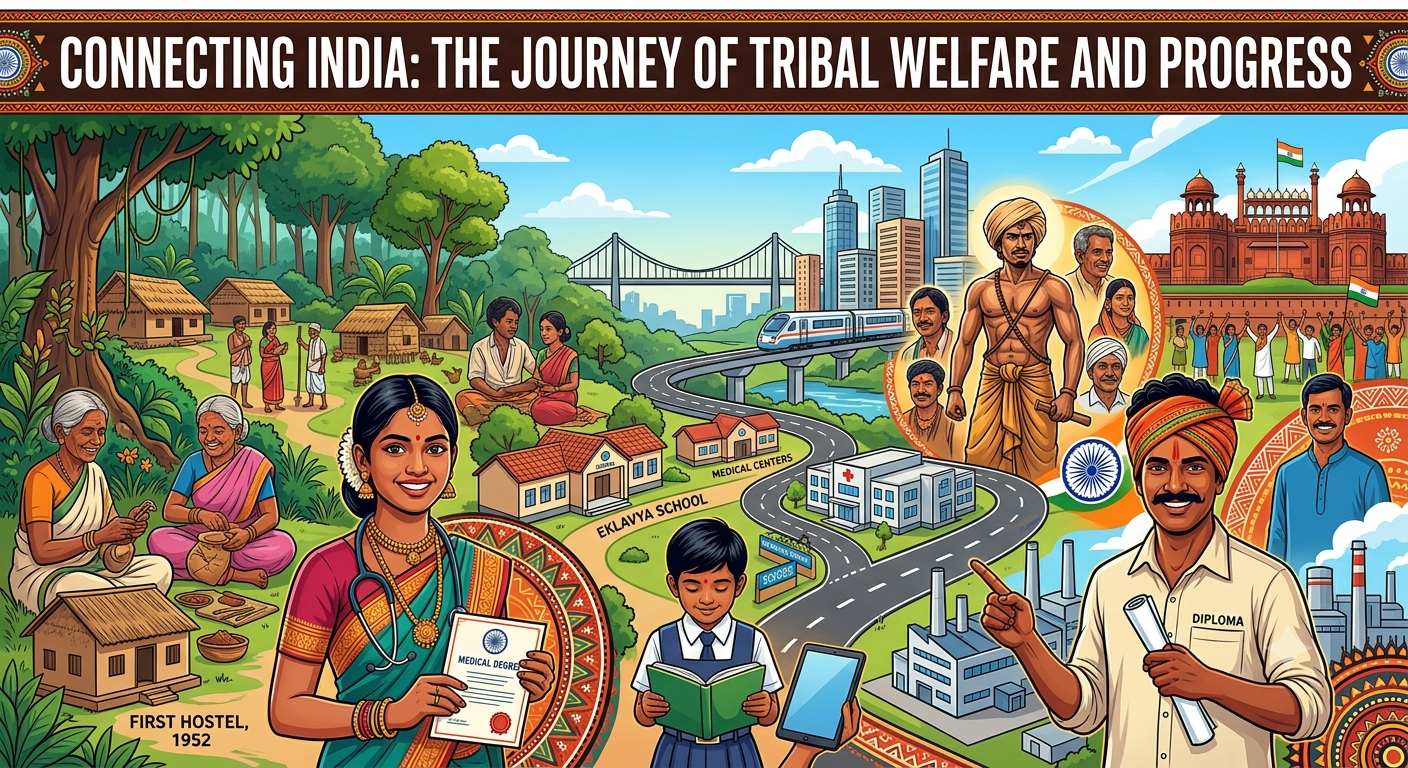
Since India gained independence, a major goal has been to help tribal communities (Vanvasis) grow and succeed while protecting their beautiful cultures and traditions. For over 70 years, dedicated volunteers and the government have worked together to make this happen.
How the Movement Began
The effort started with a simple protest. In the early 1950s, a local leader named Ravi Shankar Shukla was met with black flags and protests while visiting a tribal area in present-day Chhattisgarh.
Realizing that these communities felt disconnected and needed basic development, leaders decided to act. In December 1952, a dedicated young volunteer stepped up, leaving a government job to open a small hostel for just 13 tribal children in a town called Jashpur. This small step was the birth of a large social organization called the Vanvasi Kalyan Ashram.
Growing From a Small Hostel to a Massive Network
Over the decades, that single hostel has grown into a nationwide mission to help tribal families.
Widespread Support: Today, there are over 22,000 active projects across the country, including schools, medical centers, and more than 200 student hostels.
Creating Leaders and Experts: Children who grew up in these hostels have achieved great things. Many are now doctors, engineers, and members of the armed forces. For instance, a student from a displaced tribal community in Tripura is now a doctor at a top hospital in New Delhi.
Political Voices: Many former students have become powerful voices for their people. Even the current Chief Minister of Chhattisgarh started his journey with this organization.
Positive Changes and Government Help
In recent years, the government has paid much closer attention to the needs and history of tribal communities.
Honoring Heroes: The government now celebrates the birth anniversary of the great tribal freedom fighter, Bhagwan Birsa Munda, as a national day of Tribal Pride.
Building the Future: New infrastructure is being built rapidly, including special residential schools (Eklavya Schools), clean drinking water facilities, and better roads.
Fading Fears: Because of this continuous development and support, the fear of violence that once troubled many forest regions is slowly disappearing, making way for peace and progress.
A Historic Gathering in the Capital
A beautiful example of this changing tide happened in May 2026. Around 100,000 tribal people, representing over 500 different tribes from all over India, gathered at the Red Fort in New Delhi.
Unlike most large crowds in the capital, they were not there to protest or demand anything. They traveled using their own money simply to share their colorful culture, dances, and deep-rooted traditions with the rest of the nation.
Bridging the City and the Forest
As cities become more modern, people often lose touch with their history and nature. To fix this, volunteer groups in big cities now organize special village trips. City families travel to tribal areas to live with the locals for a few days, join in their festivals, and learn from a community that deeply respects nature.
This exchange teaches an important lesson: whether a person lives in a bustling city or a quiet forest, everyone shares the same roots and belongs to one large national family.