


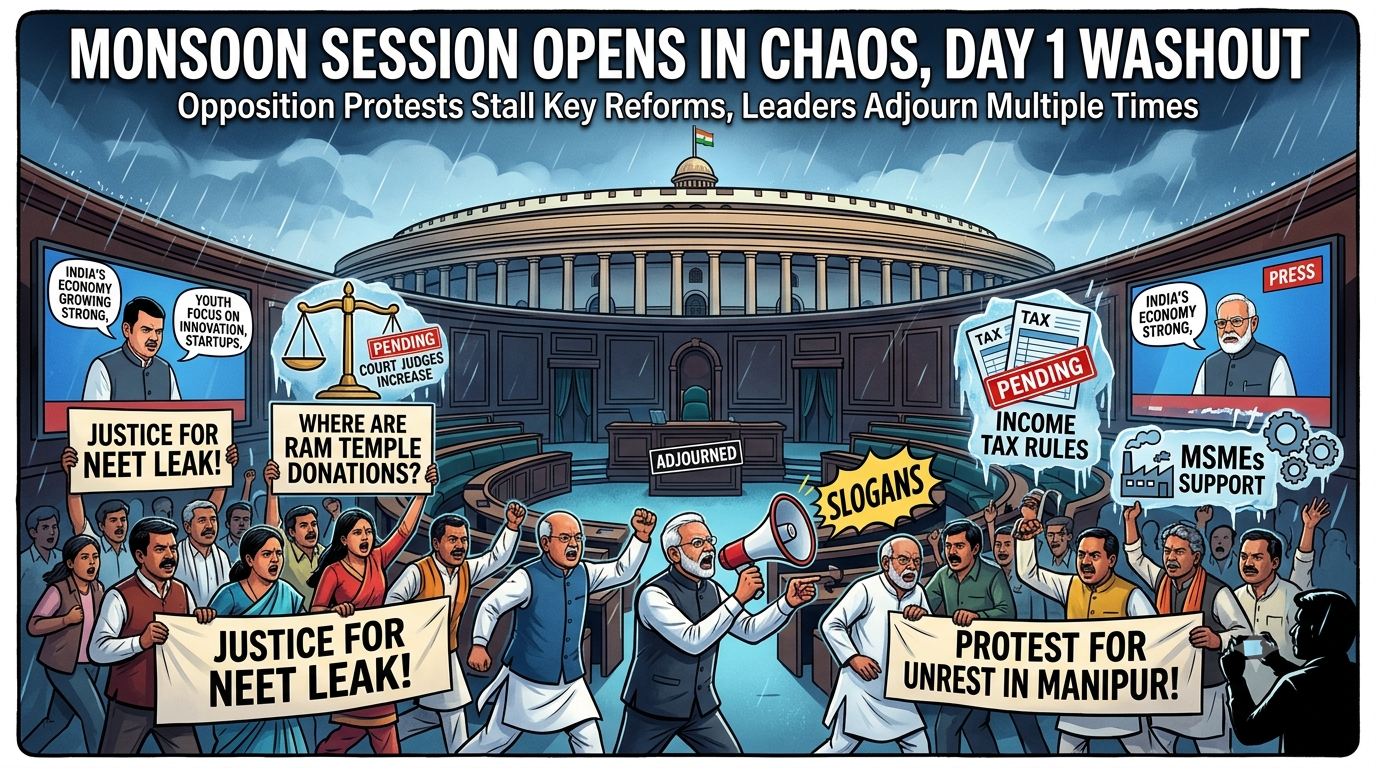
The Monsoon Session of the Indian Parliament began with a lot of noise and very little work. On the very first day, meetings in both the Lok Sabha and the Rajya Sabha had to be paused multiple times and eventually canceled for the day. Opposition leaders loudly protested about several major issues, including leaks in the NEET exam papers and rumors about stolen donations at the Ram Temple.
Because of all the arguing inside the building and protests out on the streets, lawmakers couldn’t get any actual work done.
Important Work Put on Hold
The government had a busy schedule planned for this session, which runs until August 13. They were hoping to introduce and pass several important laws, such as:
Updates to income tax rules.
New laws to help small and medium-sized businesses (MSMEs).
A plan to increase the number of Supreme Court judges so that court cases can be solved faster.
Unfortunately, due to the heavy protests, none of these important topics were discussed on day one.
The Government’s Point of View
Members of the ruling government expressed frustration over the delays. Lawmaker Anita Shadar Shiniji pointed out that the government is fully willing to talk about the NEET exam leaks and the Ram Temple issues. She urged the opposition to stop shouting slogans and instead use the Parliament for its actual purpose: having calm, useful discussions to solve the country’s problems.
Before the meetings began, Prime Minister Narendra Modi also spoke to the press. He highlighted that despite wars and economic troubles around the world, India’s economy is growing strong. He encouraged the country’s youth to focus their energy on positive innovations, like building new startups.
Why Is There So Much Arguing?
Journalist Aditi Tandan explained that the tension was brewing even before the session started. The opposition is upset about a variety of things, including unrest in Manipur, and they want to make sure their voices are heard.
Tandan also pointed out a bigger issue: politics. With important state elections coming up soon, politicians often use the Parliament as a stage to send messages to their voters. Because both sides are constantly in “election mode,” it creates a lack of trust, making it very difficult for them to cooperate and pass laws.
What Happens Next?
For the Parliament to actually help the citizens, both sides will need to find a way to work together. Leaders from different parties are currently holding special meetings to try and figure out a peaceful way to debate these tough topics.
While the first day was a complete washout, officials are hoping things will calm down quickly so that lawmakers can get back to doing the important work the country needs.