



In the complex arena of global geopolitics, alliances are constantly shifting. However, as numerous Western nations and international bodies increasingly distance themselves from Israel over mounting humanitarian crises in the Middle East, New Delhi is actively moving in the opposite direction. The rapidly expanding partnership between India and Israel brings forth a complex web of strategic benefits, domestic repercussions, and ethical dilemmas.
A Divergence from Global Trends
The international climate regarding Israel has undergone a significant transformation. Following detailed reports from organizations like the United Nations detailing catastrophic civilian tolls—particularly concerning minors—several European nations have recalibrated their diplomatic stances. Countries such as Spain, Ireland, and Norway have formally recognized Palestinian statehood, while public pressure in the United States continues to challenge historical defense pacts.
Against this backdrop of global hesitation, New Delhi has opted to solidify its ties with Tel Aviv. Driven by the strong diplomatic rapport between the leadership of both nations, India’s foreign policy is experiencing a distinct pivot, prioritizing this bilateral relationship over international consensus.
Expanding Defense and Economic Ties
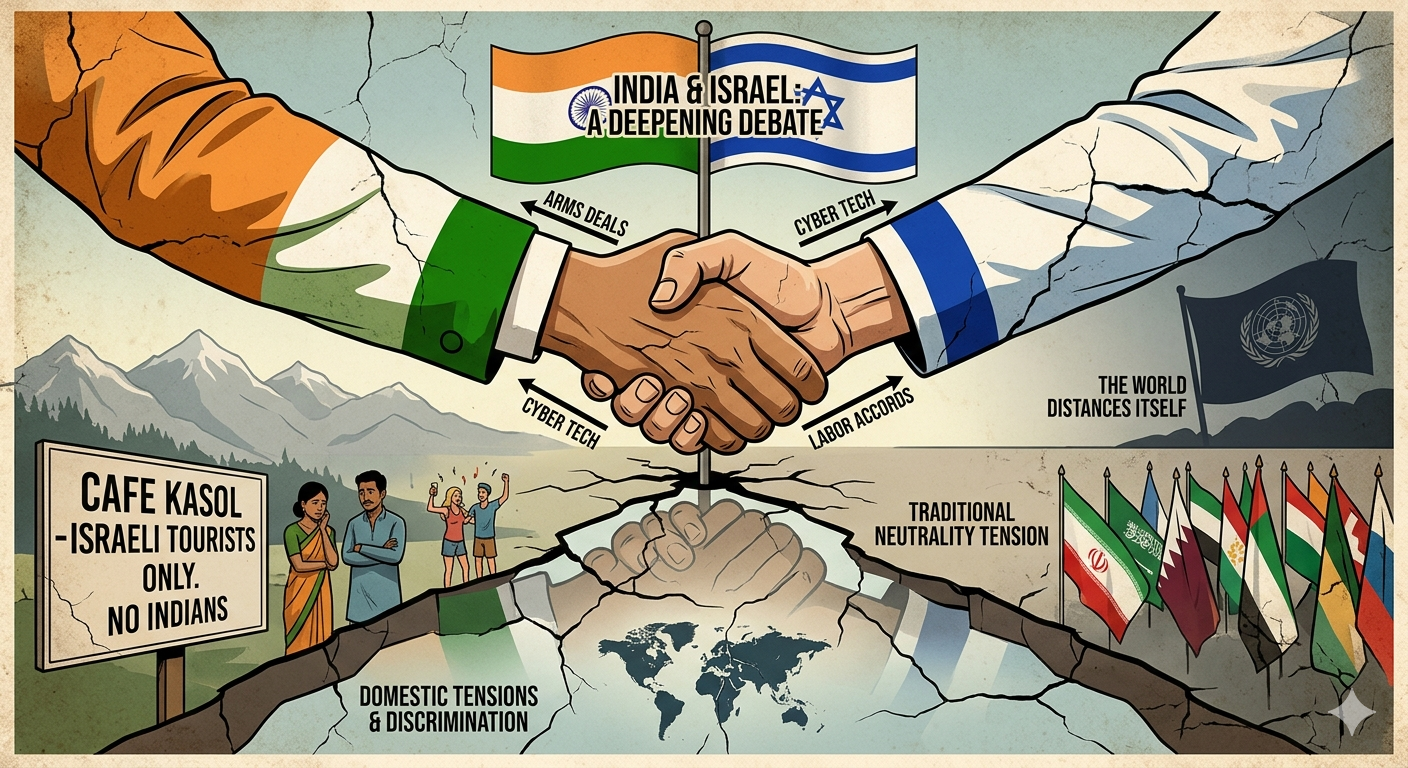
At the heart of this evolving friendship is a robust framework of defense and economic cooperation. In recent years, India has emerged as a primary consumer of Israeli military technology, acquiring everything from advanced anti-missile defense systems and combat drones to highly sophisticated surveillance software.
Beyond arms, the economic entanglement has deepened significantly since late 2023. With Israel experiencing major workforce shortages, the two nations brokered agreements allowing thousands of Indian laborers to fill vacancies previously held by regional workers. This has intertwined the economic stability of certain Indian labor sectors with Israeli domestic policy.
Domestic Frictions and Legal Blind Spots
The geopolitical alliance is also leaving a tangible footprint within India’s borders, most notably in the Himalayan state of Himachal Pradesh. Destinations like Kasol and Dharamkot have long been popular retreats for Israeli military reservists seeking post-deployment vacations.
However, this influx has sparked localized controversies. Reports have surfaced of cultural friction, including exclusive establishments that allegedly prioritize foreign tourists while denying entry or equal service to Indian citizens. Furthermore, human rights advocates have raised concerns regarding international law. When local activists have attempted to invoke the Geneva Conventions to hold visiting foreign personnel accountable for alleged wartime conduct, authorities have largely turned a blind eye, allowing these individuals to vacation and depart without legal scrutiny.
The Cost of Alienating Traditional Allies
Historically, India’s approach to the Middle East was celebrated for its delicate balance. For decades, New Delhi championed the Palestinian right to statehood while simultaneously acknowledging Israel’s sovereignty. It also maintained robust, strategic, and energy-driven ties with nations like Iran and various Gulf states.
The current, near-unconditional tilt toward Israel threatens to dismantle this historical neutrality. By abstaining from critical UN resolutions and maintaining silence during regional escalations that affect traditional partners, India risks alienating its longstanding allies. This shift threatens to isolate India in the broader Middle Eastern diplomatic theater, a space where it once served as a respected, neutral mediator.
Looking Ahead: Sovereignty and Influence
The ultimate question surrounding this deepening embrace is the long-term cost to India’s strategic autonomy. Critics point to the immense lobbying power and political influence foreign intelligence and defense sectors can exert over domestic politics, as frequently observed in Western nations.
If New Delhi does not establish clear diplomatic boundaries, it risks trading its historical moral high ground and independent foreign policy for technological and military gains. For India to maintain its standing as a sovereign powerhouse on the global stage, it must carefully weigh whether this exclusive alliance serves its comprehensive national interest, or if it is an overextension that compromises its foundational diplomatic principles.