




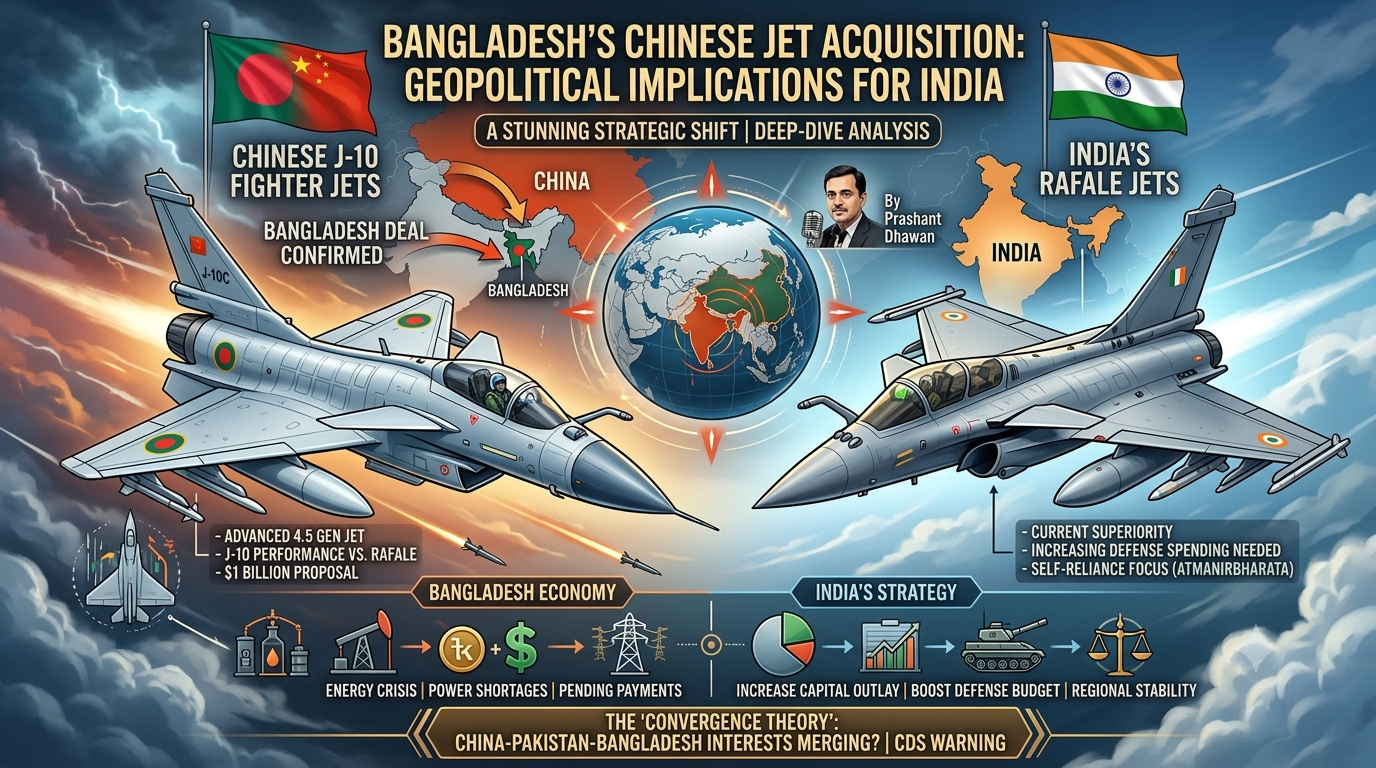
Military experts have recently warned that China, Pakistan, and Bangladesh might start working together against India’s interests. A new development shows this might already be happening: Bangladesh is planning to buy advanced J-10 fighter jets from China.
The J-10 Jet Deal
Bangladesh is currently seeking financial approval to buy up to 24 Chinese J-10 fighter jets. The reasoning behind this purchase is what has India concerned.
Official documents reportedly note that these Chinese jets perform well against India’s Rafale fighters.
Because Bangladesh’s other neighbors (like Nepal, Bhutan, and Myanmar) do not have strong air forces, this move seems specifically aimed at India.
If the deal goes through, it will be a massive upgrade to Bangladesh’s military strength.
The Money Problem
The total cost of these Chinese jets is estimated to be around $1 billion. This is a highly surprising move given Bangladesh’s current economic struggles.
The country is facing severe power shortages, forcing businesses to shut down early.
They are actively relying on India for emergency electricity and fuel supplies.
Major domestic events, like their premier cricket league, have been canceled to save money.
Spending a billion dollars on weapons while struggling with basic energy needs—and relying on India for that energy—sends a very confusing message.
How India Should Respond
Even if the deal is signed today, it will take a few years for the jets to be delivered, giving India time to prepare. To secure its borders, India should take a few practical steps:
Open a direct diplomatic dialogue with Bangladesh to figure out their true intentions.
Increase the national defense budget to roughly 2.5% of the country’s total economic output (GDP).
Dedicate more of the defense budget to buying modern weapons and technology, rather than just covering salaries and pensions.
Continue focusing on making weapons domestically to build a self-reliant military.
What are your thoughts on how India should balance helping neighboring countries economically while also protecting its own borders from them?