


When a medical emergency strikes, such as a road accident or a sudden heart attack, time is the most important factor. Doctors often refer to the first 60 minutes after an incident as the “golden hour.” Getting the right treatment during this short window can often mean the difference between life and death.
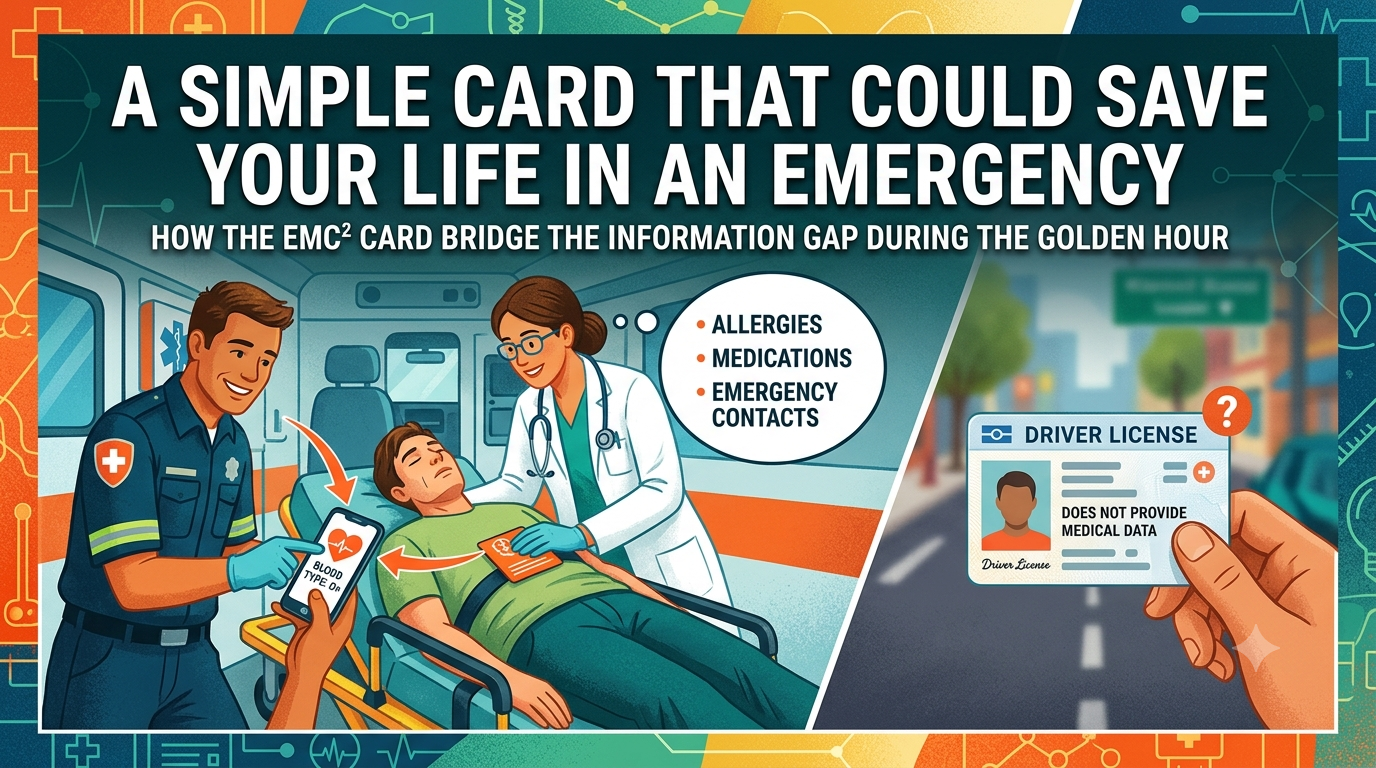
However, medical professionals face a common problem: if a patient is unconscious, doctors do not know their medical history, allergies, or blood type. While bystanders might check the person’s pockets, regular ID cards do not contain medical information, and smartphones are usually locked.
Introducing the Emergency Medical Care Card (EMC²)
To solve this dangerous gap in information, medical experts have introduced a new concept called the Emergency Medical Care Card, or EMC².
What it is: It is a simple, easy-to-carry physical card that features a unique QR code.
How it works: In an emergency, a bystander, paramedic, or doctor can simply scan the QR code using any standard smartphone camera.
What it shows: The scan instantly displays the person’s emergency contact numbers and vital health details, such as their blood group, existing conditions like diabetes, and current medications.
Why It Is Different from Other Cards
It is easy to confuse the EMC² with a health insurance card or a digital government ID, but its purpose is completely different.
It is not for billing: The card has nothing to do with finances, insurance premiums, or hospital bills. It is strictly meant for sharing life-saving medical data so doctors can start treatment immediately.
No passwords or OTPs required: Unlike some digital health systems that require a One-Time Password (OTP) sent to the patient’s phone, the EMC² works instantly. This is crucial because a patient in an emergency cannot provide a password.
It works anywhere: The card does not rely on a specific hospital’s network. It can be scanned by anyone, anywhere in the world.
Privacy is considered: Users agree to share this specific set of data when they sign up for the card, understanding that prioritizing their life in an emergency is more important than hiding basic health facts.
The Future of Emergency Care
The ultimate goal is for this life-saving QR code to become as common as carrying a wallet. In the future, experts suggest that this unique emergency QR code could even be printed directly onto existing documents—like a driver’s license or a national ID card—so people do not have to carry an extra piece of plastic. By making vital health information instantly accessible, this simple tool has the potential to save countless lives.
Would you be interested in carrying a dedicated emergency card like this, or would you prefer to have the QR code added to an ID you already carry? comment below your answer