




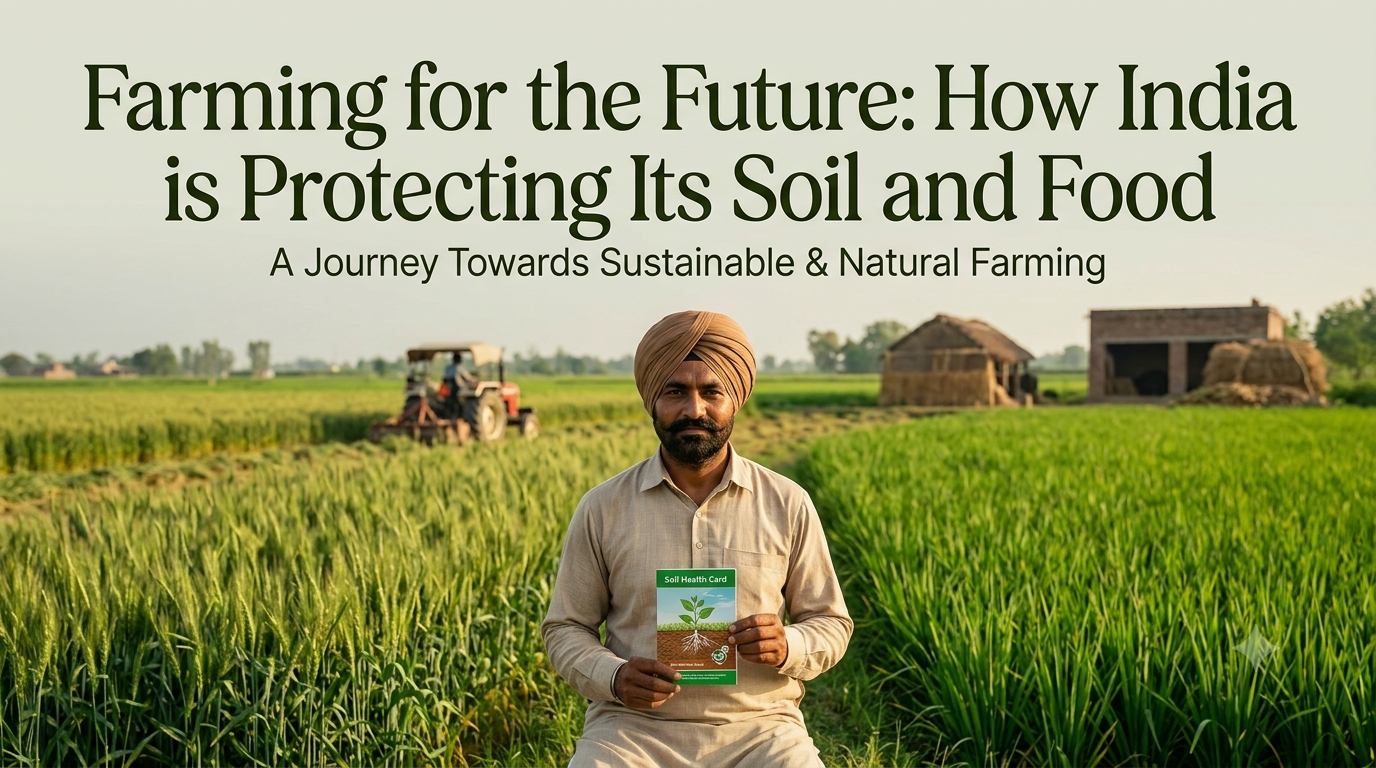
Sustainable farming is becoming the new standard for agriculture. Simply put, it means growing food in a way that keeps the earth healthy so we can keep farming for generations to come. For India, where millions of families rely on farming, shifting to these earth-friendly methods is the best way to make sure we have enough food, protect nature, and keep farmers out of debt.
Here is a simple look at why India is changing the way it farms and how it is doing it.
Learning from the Past
In the 1960s, India went through the “Green Revolution.” Farmers started using new, high-yielding seeds and chemical fertilizers. This was a huge success at first. It helped India grow enough food to feed its people and even sell extra food to other countries.
However, over the years, a problem appeared. Farmers were growing crops constantly and using too many chemical fertilizers while forgetting about natural compost. Just like eating only junk food hurts our bodies, this chemical overload hurt the soil. The dirt lost its natural nutrients, making crops weaker, easier for pests to attack, and less nutritious. It became clear that a change was needed.
A Balanced Diet for the Soil
The most important part of sustainable farming is treating the soil well. This is done through balanced fertilization.
Just as humans need a balanced diet of vitamins and minerals, soil needs the right mix of nutrients. Instead of dumping chemicals on the land, farmers are learning to give the soil exactly what it needs. This smart approach has many benefits:
Better Harvests: When soil has the right food, crops grow bigger and stronger.
Healthier Plants: Well-fed plants can fight off bugs and diseases naturally.
Protecting Nature: Using only what is needed means leftover chemicals don’t wash into rivers and lakes.
Saving Money: Farmers save money because they stop buying chemical fertilizers they don’t actually need.
Smart and Natural Farming Methods
To fix the damage done to the earth, farmers are adopting “regenerative” agriculture—farming that heals the land. This includes practices like changing the type of crop planted each season (crop rotation) so the soil doesn’t get exhausted.
A big part of this is Integrated Nutrient Management. This is a fancy term for a simple idea: mixing the old with the new. Instead of relying only on chemicals, farmers mix them with natural organic matter like cow dung, compost, and green leaves. This brings life back to the soil, making it spongy and rich, while still giving the plants the boost they need to grow.
The Soil Health Card: A Doctor’s Report for the Dirt
To help farmers know exactly what their land needs, the Indian government created the Soil Health Card Scheme in 2015.
Think of this card as a health check-up or a doctor’s report for a farm. Every two years, the soil is tested in a lab. The farmer then gets a card that tells them exactly which nutrients are missing and how much natural or chemical fertilizer they should add. This takes the guesswork out of farming and stops the overuse of harmful chemicals.
Looking to the Future
Most farmers in India own very small pieces of land, yet they are the ones who feed the entire country. To protect their future, India is pushing hard for natural, chemical-free farming.
Scientists have also developed over 1,900 new types of crops in the last ten years that can survive extreme weather like droughts or floods. The overall goal is to make protecting the environment a natural part of daily life.
Conclusion
Sustainable farming is more than just using fewer chemicals. It is about working with nature instead of against it. By mixing modern science with traditional, natural farming methods, India can make sure its people are fed, its farmers are prosperous, and its land stays healthy for our children and grandchildren.