




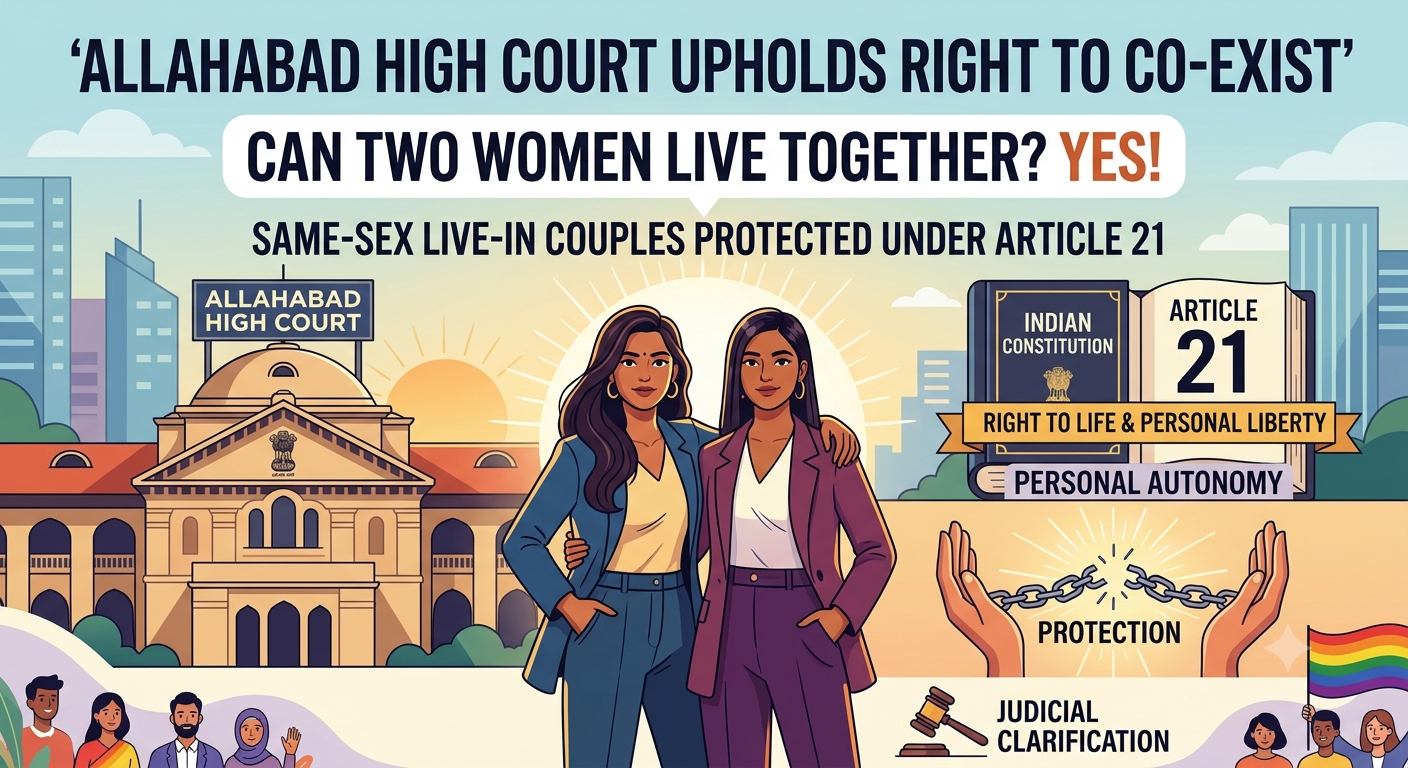
Recently, the Allahabad High Court made an important decision: an interfaith same-sex couple has the right to live together peacefully, and the police must protect them.
This ruling has sparked a lot of interest, especially since the Supreme Court refused to legalize same-sex marriage just a few years ago. So, how do these two decisions fit together? Let’s break it down simply.
The Background of the Case
The situation started when two adult women asked the court for help. They wanted to live together, but their relatives were harassing and threatening them because of their choice.
The High Court stepped in and ruled in favor of the women. The judges made it clear that when two adults willingly choose to live together—regardless of their gender—the law protects them. Family members, neighbors, or society do not have the right to threaten them or force them apart.
The Power of Article 21
The court based its decision on Article 21 of the Indian Constitution, which promises every citizen the “right to life and personal liberty.”
Over the years, the courts have explained that “personal liberty” covers a lot of everyday freedoms. It includes the right to privacy, the right to live with dignity, and the freedom to choose your partner. Because of this, the High Court stated that choosing to live with a same-sex partner is a basic freedom that the Constitution protects.
What About the Supreme Court’s Marriage Ruling?
You might be wondering: didn’t the Supreme Court say “no” to same-sex marriage in 2023?
Yes, they did. In a famous 2023 case, the Supreme Court said that only the government (the lawmakers) can create laws to officially recognize same-sex marriages. The courts cannot change marriage laws on their own.
However, the Supreme Court also made a very important point during that case: even though they couldn’t legalize marriage, LGBTQ+ people absolutely have the right to be in a relationship.
The Allahabad High Court used this exact difference to make their ruling. They pointed out that a relationship is a personal choice protected by the Constitution, whereas marriage is a legal status that requires official government laws.
Why This Matters
This decision is a big win for personal freedom. It highlights a few key lessons:
Freedom of Choice: Adults have the right to make their own life choices, as long as they aren’t harming anyone else.
Safety Without Marriage: You don’t need a marriage certificate to be treated with dignity. People in live-in relationships still deserve safety and respect.
The Law Overlooks Social Opinions: Sometimes, society doesn’t accept certain relationships. However, the courts made it clear that constitutional rights are more important than social approval.
Ultimately, this ruling is a reminder that the government and police have a strict duty to protect citizens from harm. While the lawmakers are the ones who control the rules of marriage, the Constitution guarantees everyone the basic right to live freely and safely.