




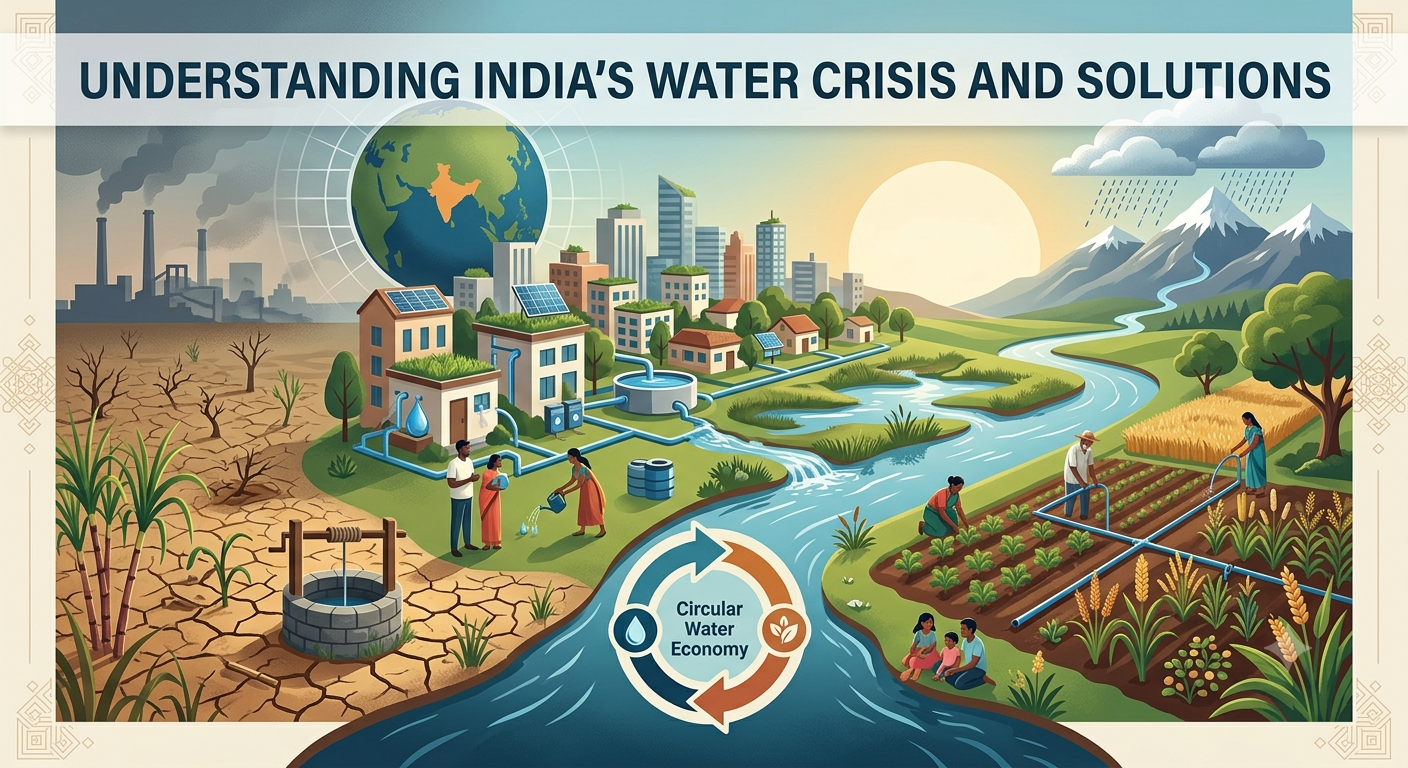
Water is not just a basic human need for survival; it drives the economy, health, and national security. During the recent 9th India International Water Week in New Delhi, experts highlighted that India’s water crisis is not simply about a lack of water, but rather how it is managed. Securing water for the future requires a coordinated effort across all levels of society, focusing on climate resilience and smarter usage.
The Impact of Changing Weather
India relies heavily on the annual monsoon season to refill its water supplies. However, climate change is altering these weather patterns. Instead of rain falling steadily over many days, it now frequently falls in short, intense bursts. This rapid runoff makes it harder for the ground to absorb water, leading to dried-up rivers, lakes, and wetlands. To adapt, communities need better infrastructure to capture rainwater quickly and manage both sudden floods and prolonged droughts.
The Hidden Groundwater Emergency
Groundwater is a critical resource, but it is being depleted at an alarming rate. Agriculture accounts for roughly 87% of groundwater use in India, and many regions are pumping water out much faster than nature can replace it.
To prevent running dry, farming practices must evolve. The goal is to achieve “more crop per drop” by moving away from water-heavy crops in dry regions and adopting highly efficient watering methods, such as drip irrigation.
Quality is as Important as Quantity
Water scarcity is only half the problem; water pollution is the other. Industrial waste and untreated city sewage frequently contaminate both surface rivers and underground aquifers. Furthermore, pumping too much groundwater can draw naturally occurring toxic elements, like arsenic and fluoride, into the drinking supply. Bad quality water is essentially the same as having no water at all.
Moving to a Circular Water System
Currently, a large amount of wastewater is discharged into the environment without being treated. To secure a sustainable future, water management must become circular. This means water should be used, properly cleaned, reused, and then safely returned to nature.
Key steps to achieve this include:
Protecting Natural Recharge Zones: Natural spaces like river floodplains, historical lakes, and wetlands act like giant sponges that naturally filter and store rainwater underground. These areas need strict protection, similar to forest reserves.
Shared Responsibility: The central government, state authorities, local town councils, and farmers must work together seamlessly. Policies need to encourage water recycling and ensure fair water pricing so the resource is not wasted.
Securing water for the future requires more than just hoping for good rainfall. It demands smart planning, updated technology, and a shared commitment from every citizen and industry to protect this vital resource for upcoming generations.