




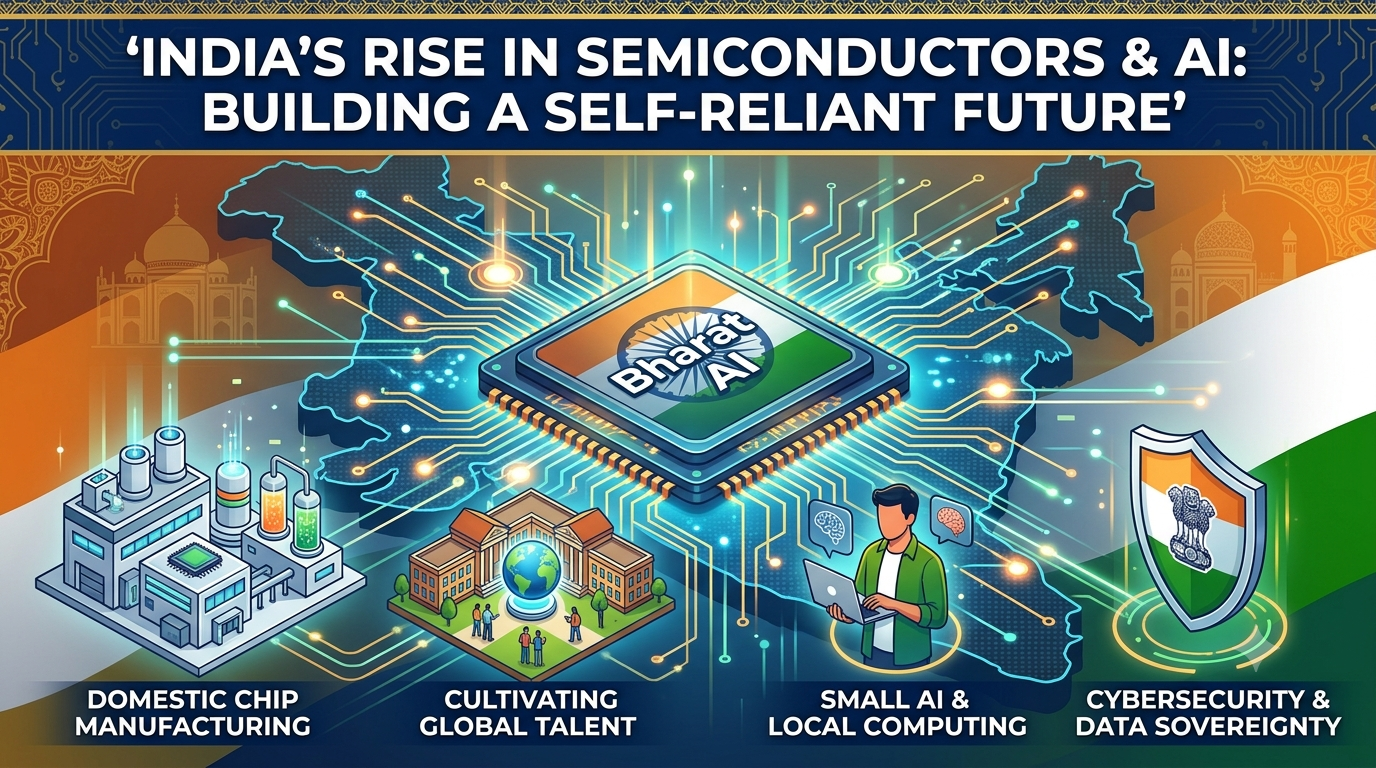
Microchips (or semiconductors) are the tiny brains inside almost everything we use today—from smartphones and cars to satellites and artificial intelligence (AI). Right now, the demand for these chips is exploding. For India, this is a massive opportunity. Instead of just drawing up the designs for these chips, India wants to build a complete industry where the chips are actually manufactured right here at home.
Why Making Our Own Chips Matters
We rely on chips for our daily lives. If a global crisis happens—like we saw during the COVID-19 pandemic—the supply of these chips can suddenly stop, causing huge problems. Furthermore, relying on other countries for our technology can be a security risk. If a foreign country decides to stop selling us chips, our digital growth could freeze. That is why becoming self-reliant and making our own chips is a top priority for India’s safety and economy.
Learning from the Past
Interestingly, India and Taiwan started trying to make computer chips around the same time in the 1980s. While Taiwan became the biggest chipmaker in the world, India fell behind. We faced setbacks, like a major fire at our first factory, and missed out on big deals with famous tech companies. However, things are changing. The Indian government now has a solid 20-year plan to catch up and build a strong, lasting chip industry.
The Magic of “Small AI”
Artificial Intelligence is changing how chips are made. AI can help engineers design chips faster and instantly spot mistakes in the factory.
Right now, a few large global companies make the most powerful AI chips, and they are incredibly expensive. But there is a new trend emerging called “Small AI.” Instead of needing giant, costly computer servers to run AI programs, Small AI is designed to run locally—even on a regular laptop. This is great for businesses because it is much cheaper and ensures that their private data stays safely inside the company instead of floating around on the internet.
What India Needs to Do to Win
To become a global leader in making chips, experts say India needs to focus on a few key areas:
Boost Local Startups: We need thousands of local companies designing chips. To help them survive, whenever an Indian company makes a chip, we should start using it instead of buying imported ones. This also protects our data from being spied on by foreign hardware.
Change How We Teach: Colleges need to focus less on textbook reading and more on practical, hands-on lab work. Students need to learn how to actually build and test products.
Bring Home Our Best Talent: Many brilliant Indian engineers are working for top tech companies abroad. India needs to roll out the red carpet for them, offering them easy ways to move back home so they can help build this new industry.
The Road Ahead
India’s computer chip dream is no longer just about building factories. It is about blending AI, smarter education, and local talent to create a self-sufficient tech ecosystem. By taking these steps, India is laying the foundation for a secure and powerful digital future.