


Chinese President Xi Jinping recently visited the United States for a three-day meeting with U.S. President Donald Trump. This was the first time in over ten years that a Chinese leader made a state visit to the U.S.
While President Trump gave President Xi a grand welcome with a red carpet, the reality is that the two countries are still strong rivals. The meeting was less about becoming best friends and more about finding ways to manage their disagreements without starting a bigger conflict.
Here are the most important takeaways from their meeting:
1. A Short Pause on Trade Fights
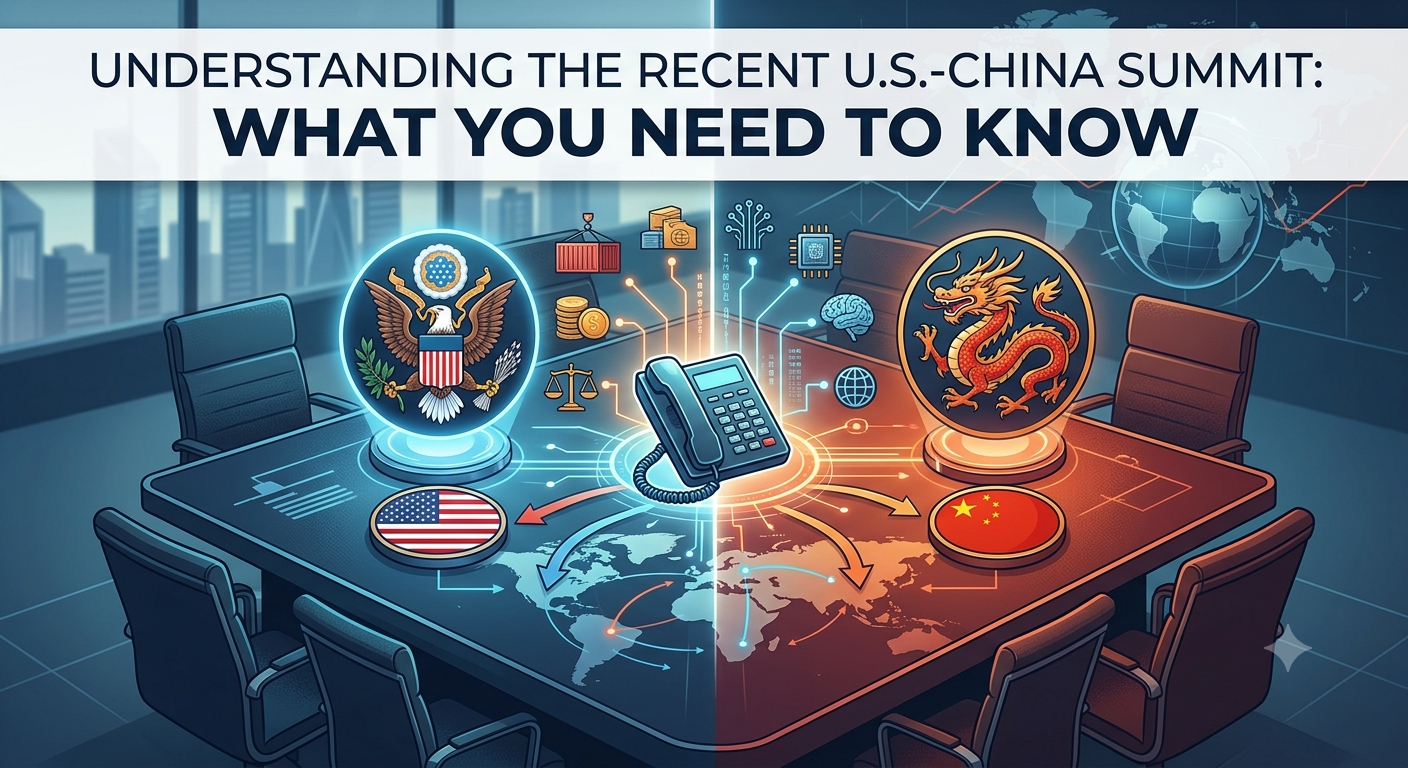
The U.S. and China agreed to pause their trade war for another two months. This short extension shows that they still have a lot of disagreements to work out.
What the U.S. gets: China will keep sending “critical minerals” to America. The U.S. desperately needs these materials to build advanced technology and airplanes.
What China gets: The U.S. agreed not to charge high fees on Chinese cargo ships coming into American ports.
The Oil Threat: The U.S. recently passed a law that could put a massive 100% tax on countries that buy a lot of Russian oil. China is the biggest buyer, so they want to keep talking to the U.S. to avoid these heavy taxes.
2. Setting Rules for Artificial Intelligence (AI)
Technology was a huge topic, and famous tech leaders like Elon Musk and Tim Cook attended the state dinner. Both leaders are worried that Artificial Intelligence is growing so fast that it could accidentally cause a national security crisis.
To fix this, the U.S. and China agreed to create an “AI hotline.” If AI technology ever causes a sudden security threat, the two countries can easily contact each other to prevent a misunderstanding from turning into a real conflict.
3. Big Disagreements Still Remain
Despite the polite smiles, the U.S. and China still deeply mistrust each other on global issues.
Taiwan: The U.S. continues to support Taiwan, which angers China. China wants America to step back from the region.
Global Conflicts: The U.S. suspects that China is secretly providing weapon parts—like drone engines and missile fuel—to countries like Russia and Iran.
Because they couldn’t agree on these big issues, the two leaders did not release a joint statement or hold a shared press conference at the end of the trip.
4. What This Means for India
When the world’s two biggest powers meet, it affects everyone, especially a fast-growing country like India.
Moving Factories: Because the U.S. and China have been arguing so much lately, many big companies have moved their factories out of China and into India. For example, India now makes a huge portion of the world’s iPhones. If the U.S. and China become too friendly, this factory shift might slow down.
Staying Neutral: India is the fifth-largest economy in the world and makes its own choices. India has good relations with the U.S. but also talks with China. This helps India protect its own interests no matter what happens.
The Oil Tax Problem: Just like China, India buys a lot of Russian oil. India’s leaders will have to work carefully to make sure the U.S. doesn’t hit them with the new 100% tax on oil importers.
Summary
The recent meeting between the U.S. and China was an effort to cool down tensions. While they made good progress on keeping trade flowing and setting safety rules for AI, their deep political and global differences are far from solved.