




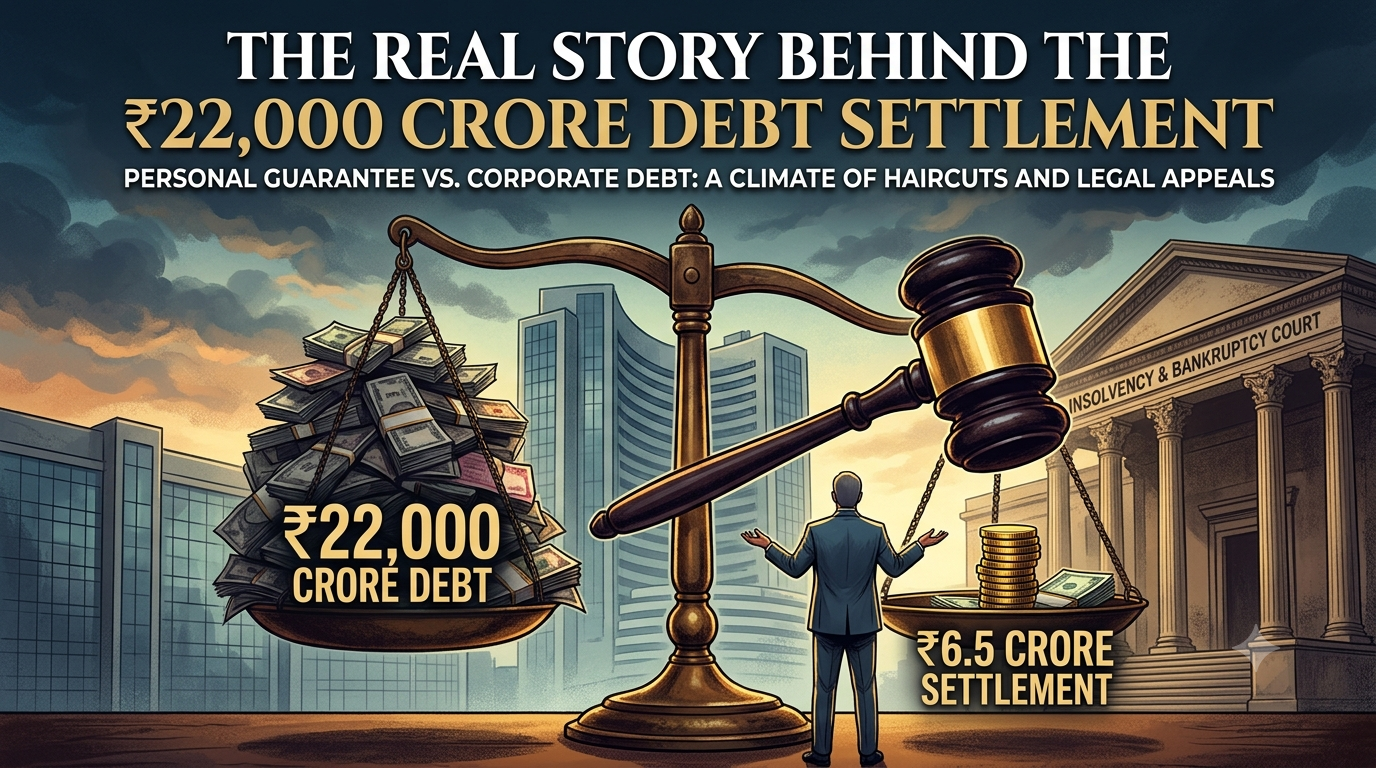
Recently, the news has been buzzing with a shocking headline: Subhash Chandra, the man who started the Zee Group, supposedly had a massive ₹22,000 crore loan cleared by paying just ₹6.5 crore.
At first glance, it looks like banks let a billionaire walk away from a massive debt. But if we look closely at the rules of banking and the law, the truth is quite different.
Understanding the Loan: Company vs. Individual
To understand what actually happened, we have to separate Subhash Chandra the person from his businesses.
Chandra didn’t take the ₹22,000 crore for his personal use; different companies within his Zee Group took these loans. Chandra just acted as a “personal guarantor.” This means he promised the banks that if his companies failed to pay back the loan, he would step in.
However, under the law, if a guarantor is asked to pay, they only have to pay what they can afford today. If the guarantor has lost most of their personal wealth over time, the banks cannot force them to pay money they no longer have.
Did Banks Really Lose Everything?
Because Chandra is only paying ₹6.5 crore, many people think the banks lost 99% of their money. This is incorrect.
The ₹6.5 crore is just the amount Chandra is paying from his own personal pocket to settle his part of the problem. The banks have not forgiven the massive ₹22,000 crore corporate loan. They will still recover a lot of their money by taking over and selling the assets and properties of the Zee Group companies.
The court (NCLT) accepted this small amount from Chandra personally because dragging him through years of legal battles might have ended up costing more time and bringing in even less money.
Why Some Big Banks Are Angry
While most lenders agreed to this settlement, major financial institutions like LIC, HDFC Bank, and Axis Bank rejected it.
Their anger comes from a mystery surrounding Chandra’s wealth. In 2017, his total net worth was estimated to be a massive ₹45,000 crore. By 2018, it fell to ₹400 crore, and today, he claims he is only worth ₹31 crore.
These big banks find this sudden drop highly suspicious. They believe Chandra might be hiding his true wealth so he doesn’t have to pay them back.
Subhash Chandra’s Side of the Story
Chandra argues that the numbers being shown in the media are wrong. He claims that his companies originally took loans worth about ₹45,880 crore and have already paid back ₹43,000 crore. According to him, the actual remaining debt is much smaller than what the banks are claiming.
What Happens Next?
The story doesn’t end here. The banks that are unhappy with this decision are getting ready to appeal to a higher court (NCLAT).
This case is being watched very closely by financial experts. Its final result will be very important for India’s banking system, as it will set an example of how the law handles wealthy business owners when their companies fail to repay massive loans.