




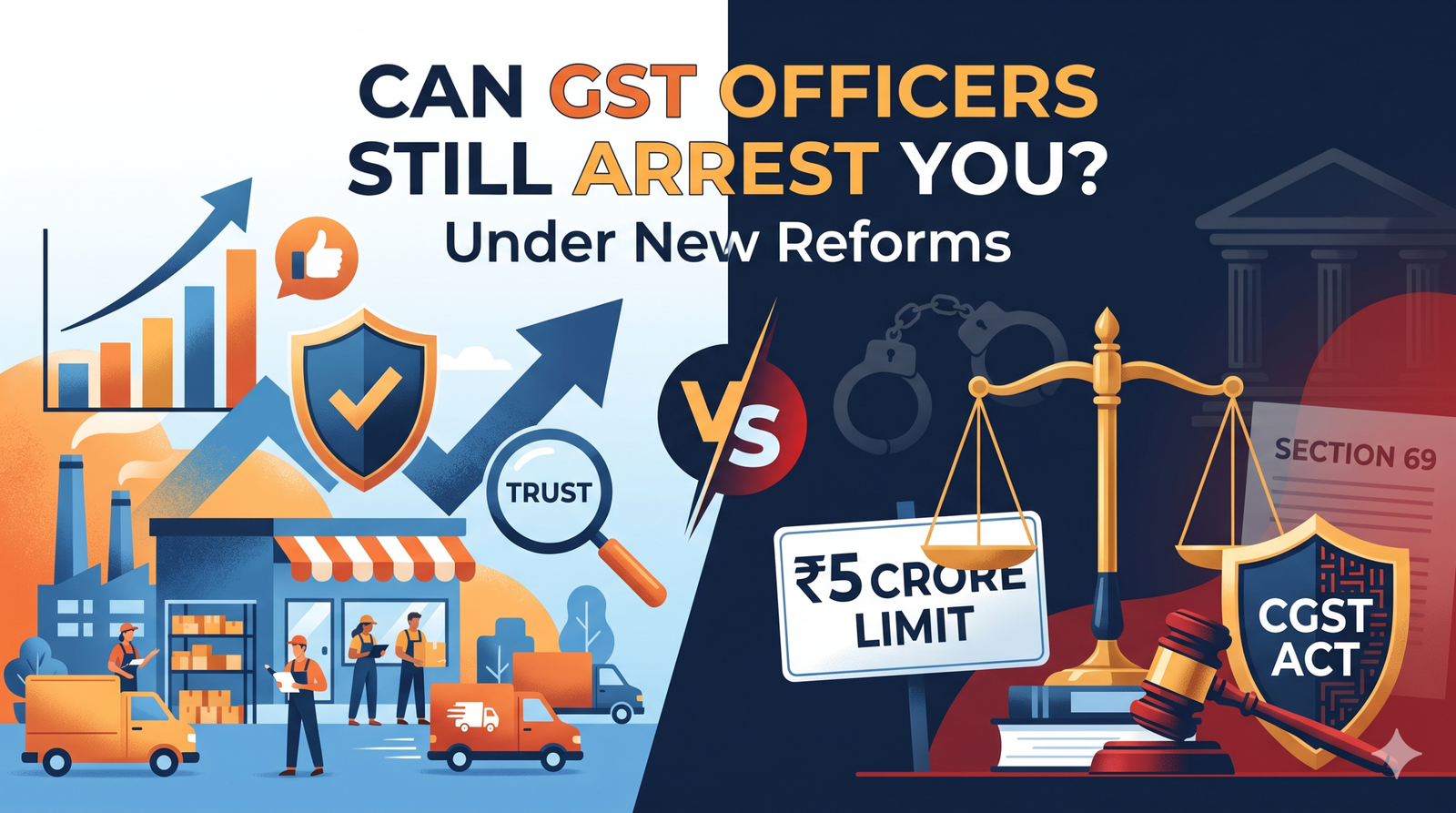
Recently, the GST Council held its 57th meeting and discussed a major question: should tax officers have the power to arrest business owners during an investigation, or should they just focus on recovering the unpaid taxes?
To make the tax system fairer and less frightening for honest businesses, the government has proposed some major changes. Here is a simple breakdown of what these new ideas mean for you.
The Three Big Changes
It is important to know that these are currently just proposed ideas and have not yet become official laws.
1. Re-thinking Arrest Powers
Under the current rules (Section 69 of the GST Act), tax officers can arrest individuals for certain tax evasions. The government wants to change this. They believe that an arrest is a very serious action. It should not be used as a routine step just because there is a disagreement over how much tax is owed.
2. The New ₹5 Crore Limit
Previously, if a business was accused of avoiding ₹1 crore or more in taxes, they could face criminal charges. The government is proposing to increase this starting limit to ₹5 crore.
This does not mean small mistakes are ignored. If a tax issue is under ₹5 crore, the business will still have to pay fines and the owed taxes. However, the government will reserve harsh criminal charges and jail time mainly for massive, deliberate frauds.
3. Fairer Punishments
The government is also reviewing the general rules for tax offenses (Section 132). The goal is to clearly separate honest mistakes or misunderstandings from intentional cheating, ensuring the punishment fits the actual crime.
Helping Small Businesses Run Smoothly
For a small business, having cash on hand is vital for paying workers and buying supplies. When the government delays a tax refund, it can freeze a small company’s daily operations.
Because of this, the GST Council isn’t just looking at arrest rules. They also want to make everyday business easier by proposing:
Faster, Automatic Refunds: Updating the system so businesses get their owed money back quickly without unnecessary delays.
Easier Registration: Making it simpler for businesses—especially small online sellers—to sign up for GST.
Quicker Dispute Resolution: Solving arguments over tax bills much faster.
Finding the Right Balance
The government has a tricky job. On one hand, they need to collect taxes to fund public services like schools, roads, and hospitals. They absolutely need to stop real fraudsters.
On the other hand, they want business owners to work and grow without the constant fear of being harassed or arrested over a simple calculation error. The goal is to build an enforcement system that is smart, evidence-based, and forgiving of honest mistakes.
What Happens Next?
Right now, headlines might say “GST Arrests Are Cancelled,” but the reality is more complicated. Moving forward, we need to keep an eye on a few things:
Will these become laws? We have to wait and see if Parliament officially passes these proposals into the GST Act.
Will it actually work? We need to see if the government’s computer systems actually process refunds faster.
How will officers act? The real test will be seeing if tax officers on the ground start treating ordinary business owners with more fairness and understanding.
At the end of the day, a successful tax system isn’t just about how much money it collects, but how fairly it treats the people paying into it.