


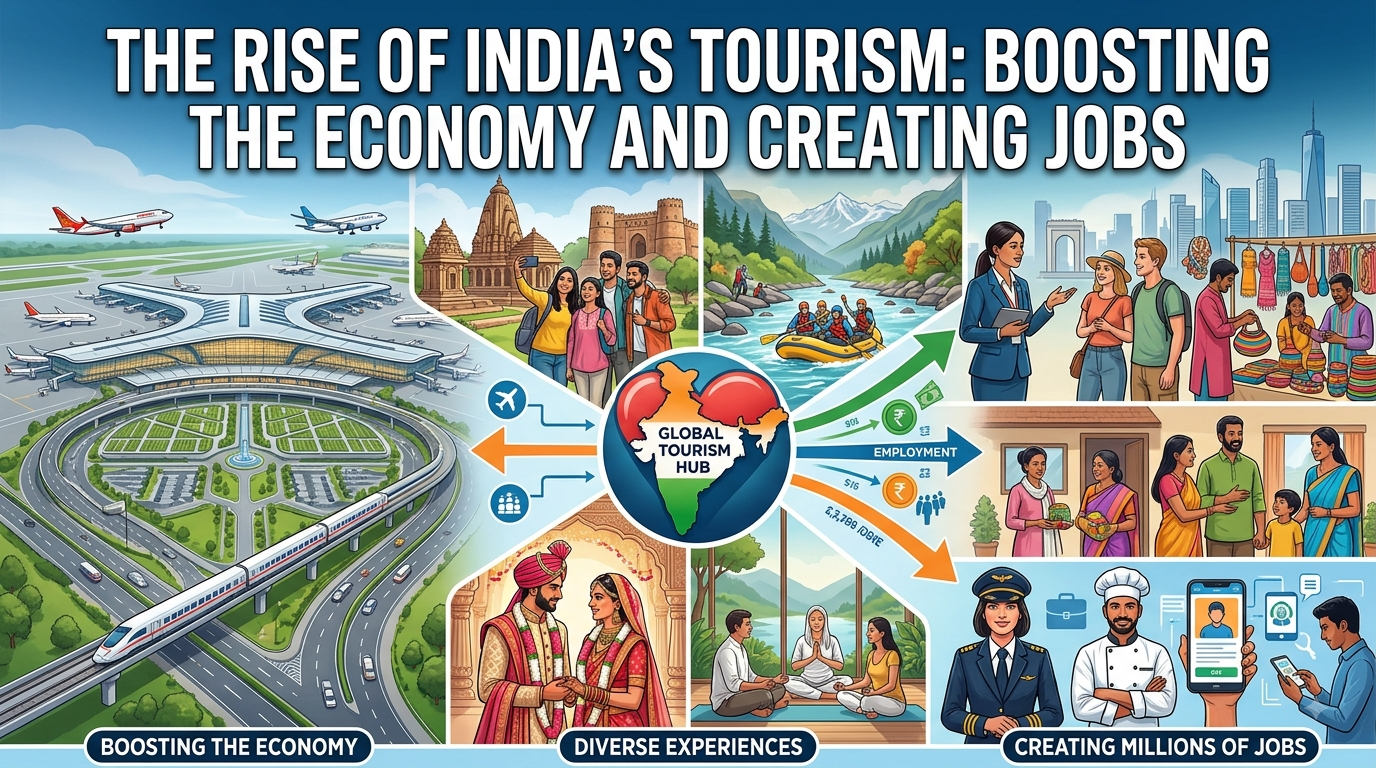
India is no longer just a traditional holiday destination. Today, it is rapidly becoming a top choice for medical treatments, wellness retreats, adventure sports, business conferences, and grand weddings. Tourism has grown into a powerful engine for India’s economy, creating millions of jobs and strengthening the country’s global image.
By the Numbers: A Growing Industry
Recent data highlights just how fast India’s travel sector is expanding:
Local Travel: In 2024, Indians took nearly 2.95 billion domestic trips.
Foreign Visitors: In 2025, around 20 million international tourists visited the country.
Economic Growth: In the 2023-24 financial year, tourism contributed roughly 5.22% to India’s GDP.
Job Creation: The travel and hospitality industry supports about 85 million jobs across the country.
Roadblocks to Overcome
Despite having stunning landscapes, diverse wildlife, and 44 UNESCO World Heritage sites, India still faces tough competition from countries like France and Thailand. Industry experts point out a few key challenges holding the sector back:
High Costs: International flights to India and 5-star hotel rooms are often more expensive compared to neighboring Asian countries.
Cleanliness: Basic hygiene and cleanliness remain a challenge. Experts suggest making public hygiene a compulsory subject in schools to change habits early on.
Marketing and Visas: India needs a stronger digital marketing push globally. Additionally, offering easier “Visa on Arrival” options for key countries would attract more foreign travelers.
The New Indian Traveler
The way Indians travel has changed drastically. People are no longer just visiting famous monuments; they are looking for unique, local experiences. Tourists now prefer exploring quieter, lesser-known towns instead of crowded spots. Thanks to better highways, improved regional airports, and digital booking platforms, weekend getaways and road trips are easier and more popular than ever.
Government Action and New Policies
The government has changed its approach from just fixing up single tourist spots to developing entire areas.
Upgrading Sites: Programs like Swadesh Darshan and PRASHAD have transformed religious and cultural centers with better facilities.
Lower Taxes: Reducing the GST on hotel rooms from 18% to 12% has made staying in hotels more affordable.
Medical Tourism: Because India offers world-class medical care at a fraction of the cost found in Western countries, thousands of people are traveling to India for healthcare.
Skills and Employment
The 85 million jobs created by tourism are not just in airlines or luxury hotels. This sector supports everyday people—taxi drivers, local guides, home-stay owners, food vendors, and craftspeople. Because tourists interact with these locals every day, the government is focusing heavily on training and skill development so that visitors always feel welcome and get world-class service.
Protecting Nature for the Future
With more people traveling, popular destinations—especially hill stations—are suffering from “over-tourism.” Too many visitors can cause traffic jams, water shortages, and environmental damage.
To fix this, tourism must become sustainable. Destinations need to be managed based on their “carrying capacity”—meaning they should only allow as many tourists as the local environment can safely handle. Furthermore, India needs to build new tourist hubs, such as modern coastal resorts for cruise tourism, to reduce the pressure on older holiday spots.
The Road Ahead
India’s travel story is entering an exciting new chapter. The goal is no longer just “Come and See India,” but rather “Experience, Heal, Meet, and Marry in India.” By improving infrastructure, focusing on cleanliness, and promoting sustainable travel, India has all the potential to become the world’s favorite travel destination.