




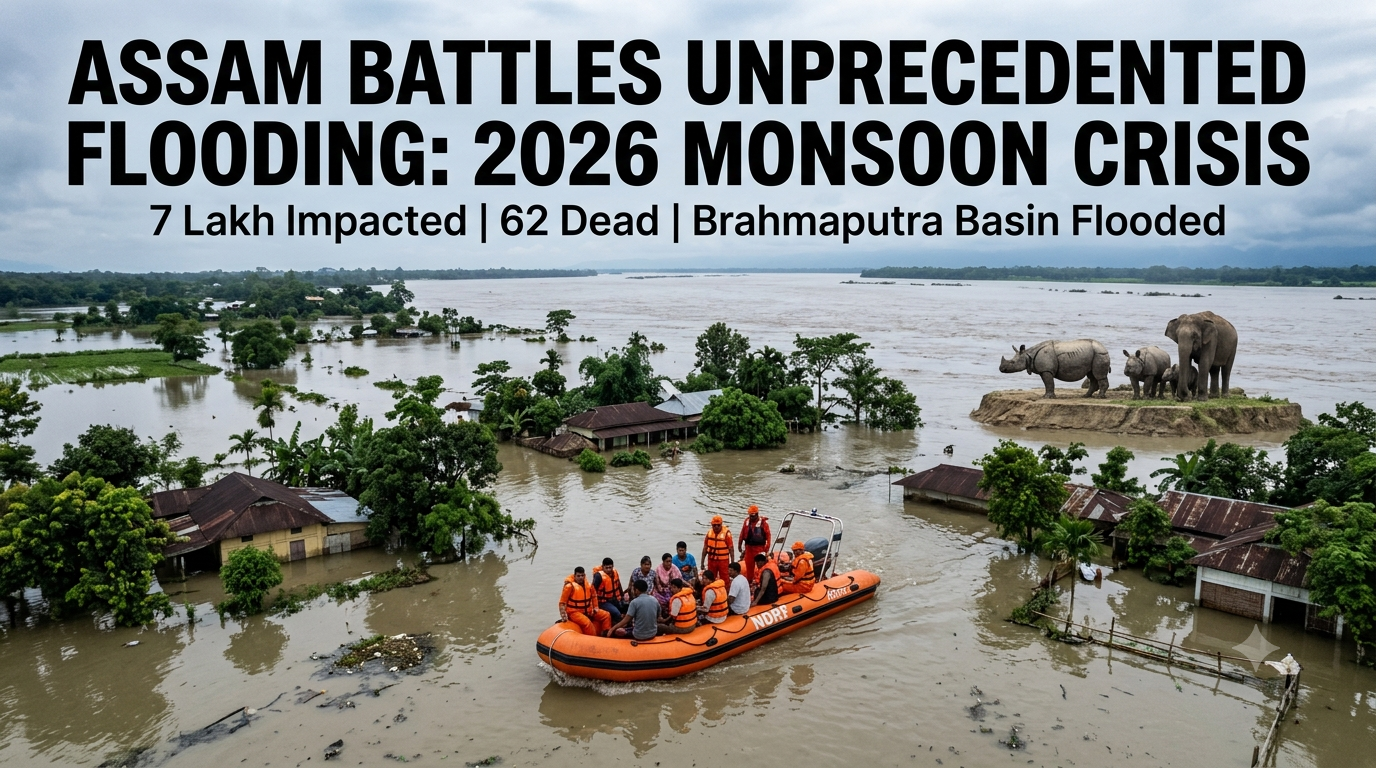
Assam is currently facing one of its worst natural disasters during the 2026 monsoon season. Massive flooding has brought life to a standstill, causing huge losses to people, property, and nature.
Here is a simple breakdown of what is happening, why it keeps happening, and what can be done.
The Current Crisis
The floods have created a devastating situation across the state:
The Human Toll: Over 700,000 people have been affected, and tragically, the death toll has reached 62.
Widespread Damage: Floodwaters have submerged more than 800 villages across 11 districts.
Farming Ruined: Over 24,000 hectares of farmland have been destroyed, which is a massive blow to local farmers.
Hardest Hit Areas: Sivasagar is the most severely affected district, with nearly 400,000 people struggling. Other heavily impacted areas include Tinsukia, Jorhat, and Golaghat.
Overflowing Rivers: Five major rivers, including the massive Brahmaputra, are flowing above danger levels, threatening to break protective walls (embankments) and flood more towns.
Why Does Assam Flood Every Year?
Flooding is an annual problem in Assam, mostly because of its unique geography.
The “Bowl” Effect: Assam sits lower than its neighboring areas. When it rains heavily in surrounding higher places like Arunachal Pradesh, Nagaland, Meghalaya, and Bhutan, all that water rushes down into Assam.
Natural Floodplains: About 40% of Assam’s land is made up of natural floodplains. These are areas where water is meant to flow and spread out naturally. When people build houses and farms in these areas, they inevitably face flood damage every year.
Why is This Year So Bad?
While floods are normal for Assam, a few extreme factors have made this year’s situation much worse:
Sudden, Heavy Rain: Neighboring states experienced massive amounts of rain in a very short time. Instead of spreading out over weeks, the water all rushed into the Brahmaputra River at once.
A Shifting River: The Brahmaputra is a “braided” river, meaning it does not flow in one straight line. It constantly changes its path. When the river shifts its course, it floods new areas where people thought they were safe.
Mud and Debris: Heavy rains in the mountains cause landslides. Tons of rocks, mud, and sand wash down into the Brahmaputra. This debris settles at the bottom of the river, making it shallower. Because the river can’t hold as much water, it quickly overflows.
Climate Change: As the planet gets warmer, the air holds more moisture. This results in heavier, more intense rainstorms that cause flash floods instead of steady, manageable rainfall.
The Impact on Daily Life and Wildlife
The rushing water has washed away roads, bridges, railway tracks, and hospitals, cutting off entire villages from the rest of the world. Families have lost their homes, clean drinking water, and farm animals.
Nature is also suffering. Famous wildlife sanctuaries like Kaziranga National Park are flooded. While some natural flooding is healthy for the environment, extreme water levels force wild animals like rhinos and elephants to escape to higher ground, often pushing them dangerously close to human villages.
Rescue Efforts and Finding a Solution
Emergency teams, including the National Disaster Response Force (NDRF) and local police, are working hard to rescue people using boats and move them to safe relief camps.
However, experts agree that simply rescuing people and building temporary walls to hold back the water is not a permanent fix. To truly manage this crisis in the future, the government needs to look at long-term solutions:
Better Warning Systems: Using technology to predict floods earlier so people have time to evacuate.
Safer Building Zones: Preventing heavy construction in natural floodplains.
Protecting Nature: Restoring natural wetlands that can soak up excess water like a sponge.
Teamwork: Coordinating with neighboring states to manage how water flows down from the mountains.