




The Global Economic Lifeline
The Strait of Hormuz is not just a body of water; it is the central artery of the global energy supply chain. Handling roughly 20% of the world’s petroleum trade and a massive share of Liquefied Natural Gas (LNG) shipments, the stability of this narrow corridor directly dictates global market health. The economic lifelines of several Gulf states depend entirely on this passage. Consequently, any perceived instability in this region immediately triggers sharp spikes and extreme volatility in international energy markets.
From Military Posturing to Bureaucratic Governance
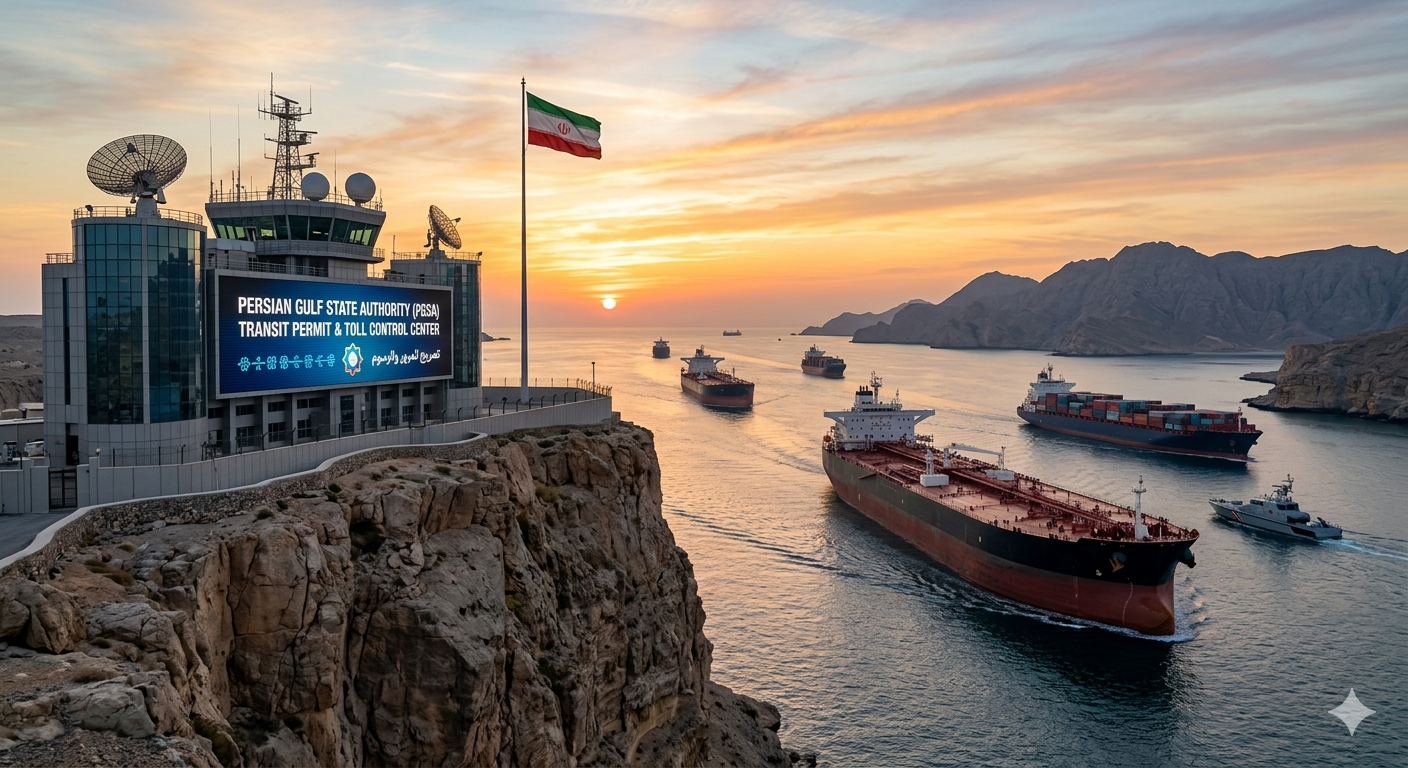
We are currently witnessing a profound evolution in how regional power is exercised. In the past, influence over the Strait was largely demonstrated through unpredictable military friction and intimidation tactics. Today, that strategy is being replaced by a formalized system of administrative governance. A newly established regulatory authority has been tasked with managing maritime traffic. By shifting from aggressive posturing to institutional regulation, the governing state is attempting to force the international community to recognize its sovereign authority over these critical waters.
The Mechanics of Maritime Transit
Under the newly imposed regulations, passing through this geopolitical chokepoint is no longer a given right but a heavily vetted privilege. Commercial vessels are now required to submit extensive documentation to secure transit approval. This mandatory vetting involves detailed disclosures, such as:
Vessel Lineage: Comprehensive details regarding the true ownership of the ship and any ties to Western states.
Cargo Verification: Specific declarations on the nature of the freight, distinguishing between commercial energy supplies and military assets.
Crew Demographics: A detailed registry of the nationalities of all personnel onboard.
Logistical Tracking: Complete transparency regarding the ship’s origin, final destination, and maritime insurance backing.
This bureaucratic hurdle grants regional authorities the definitive power to permit, delay, or block vessels based on broader geopolitical alignments.
Diplomatic Leverage and Strategic Implications
The implementation of this administrative toll system serves as a powerful instrument of foreign policy. Economically, the capacity to delay international shipping creates a credible threat capable of inflating global energy prices. Politically, it acts as a robust shield against international sanctions, clearly demonstrating that access to Middle Eastern energy cannot be separated from regional diplomatic realities.
This presents a complex challenge for nations heavily reliant on energy imports. States that maintain a non-aligned, balanced diplomatic posture—such as India, which imports massive quantities of oil and collaborates on strategic infrastructure projects like Chabahar—are better equipped to secure safe passage for their cargo. In contrast, vessels aligned with adversarial nations face a high probability of transit denial.
Conclusion
The evolving administrative control over the Strait of Hormuz is a textbook example of the shift toward a multipolar global order. It illustrates how nations can leverage geographical chokepoints to challenge traditional maritime dominance and bypass economic sanctions. For scholars and future policymakers, understanding these bureaucratic maneuvers is just as important as analyzing traditional military capabilities.