




A New Era for Farming
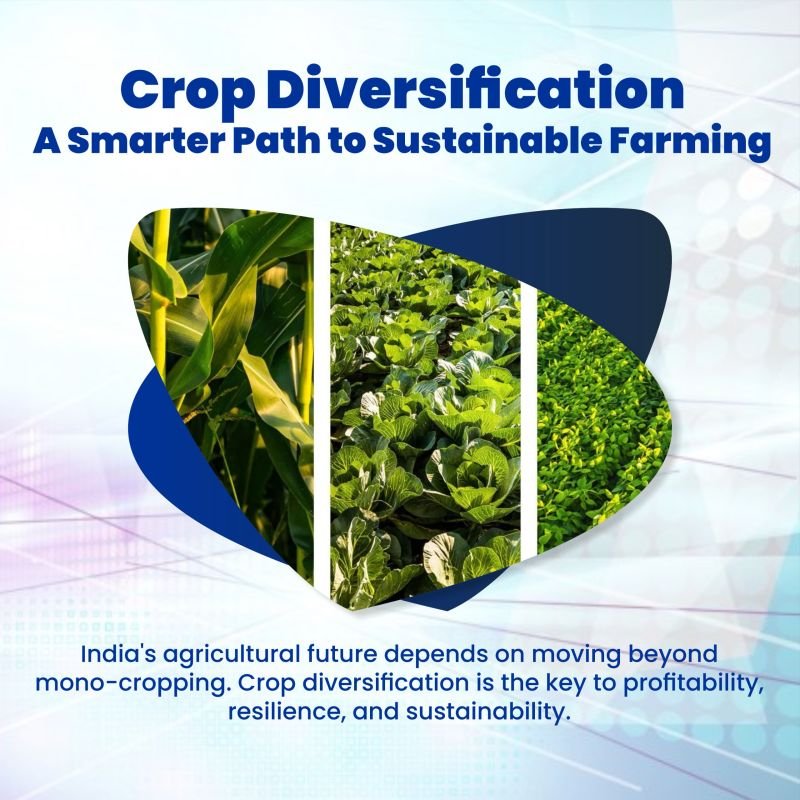
Indian agriculture is experiencing a structural shift as farmers move away from the traditional reliance on single-crop staples like rice and wheat. By embracing a diversified approach that includes pulses, oilseeds, and horticultural crops, the agricultural sector is building a more profitable and environmentally sustainable future. This transition helps conserve water, rejuvenate soil health, and provides a buffer against the economic shocks of unpredictable weather patterns.
The Rise of the Horticultural Economy
Horticulture has cemented itself as a vital engine for rural economic growth in India.
Soaring Production: Yields have seen a massive increase, reaching a total of 370.74 million tons during the 2024-25 period.
Global Prominence: India currently holds the position of the world’s second-largest producer of both fruits and vegetables. It accounts for over 8% of global vegetable output and over 9% of fruit output.
Market Dominance in Staples: Notably, the nation leads the globe in the production of shallots and onions, supplying more than 22% of the world’s total share.
A Localized Approach to Growth
Recent governmental frameworks, highlighted in the 2026-27 Union Budget, champion a geographically customized strategy for agricultural development. By matching specific crops to the regions where they naturally thrive, India is maximizing both yield and export potential:
1. The Coastal Coconut Industry
The varied climates along India’s extensive coastlines are ideal for lucrative crops like sandalwood, cocoa, cashew, and coconuts.
India is the second-largest coconut producer on earth, yielding nearly 14 million tons in 2024-25.
Cultivation strengths vary by state: Kerala dedicates the most acreage to coconuts, Tamil Nadu produces the highest overall volume, and Andhra Pradesh achieves the greatest yield per hectare.
To sustain this momentum, new policies are focused on replacing older, less productive trees with modern, high-yield saplings.
2. Agarwood in the Northeast
The lush, biodiverse environment of northeastern India is becoming a powerhouse for premium agroforestry.
The region is home to roughly 90% of India’s 150 million agarwood trees.
Internationally referred to as “oud,” agarwood is deeply valued in the luxury perfume industry and traditional medicine.
The financial ceiling for this crop is remarkably high; the state of Tripura alone has an estimated annual market potential of ₹2,000 crores.
3. Premium Nut Cultivation in the Mountains
Cooler, higher-altitude regions are being utilized for premium nut crops such as pine nuts, almonds, and walnuts.
Jammu & Kashmir dominates the nation’s walnut cultivation.
India produced over 3.2 lakh tons of walnuts in 2024-25, and successfully exported nearly $7.8 million worth of the crop to international markets, including Turkey and the UAE.
Looking Forward
For crop diversification to reach its full potential, it must remain deeply tied to the unique ecological realities of India’s distinct regions. By transitioning from resource-heavy monocultures to localized, high-value farming, India is actively securing greater financial independence for its farmers and ensuring the long-term resilience of its agricultural sector.