


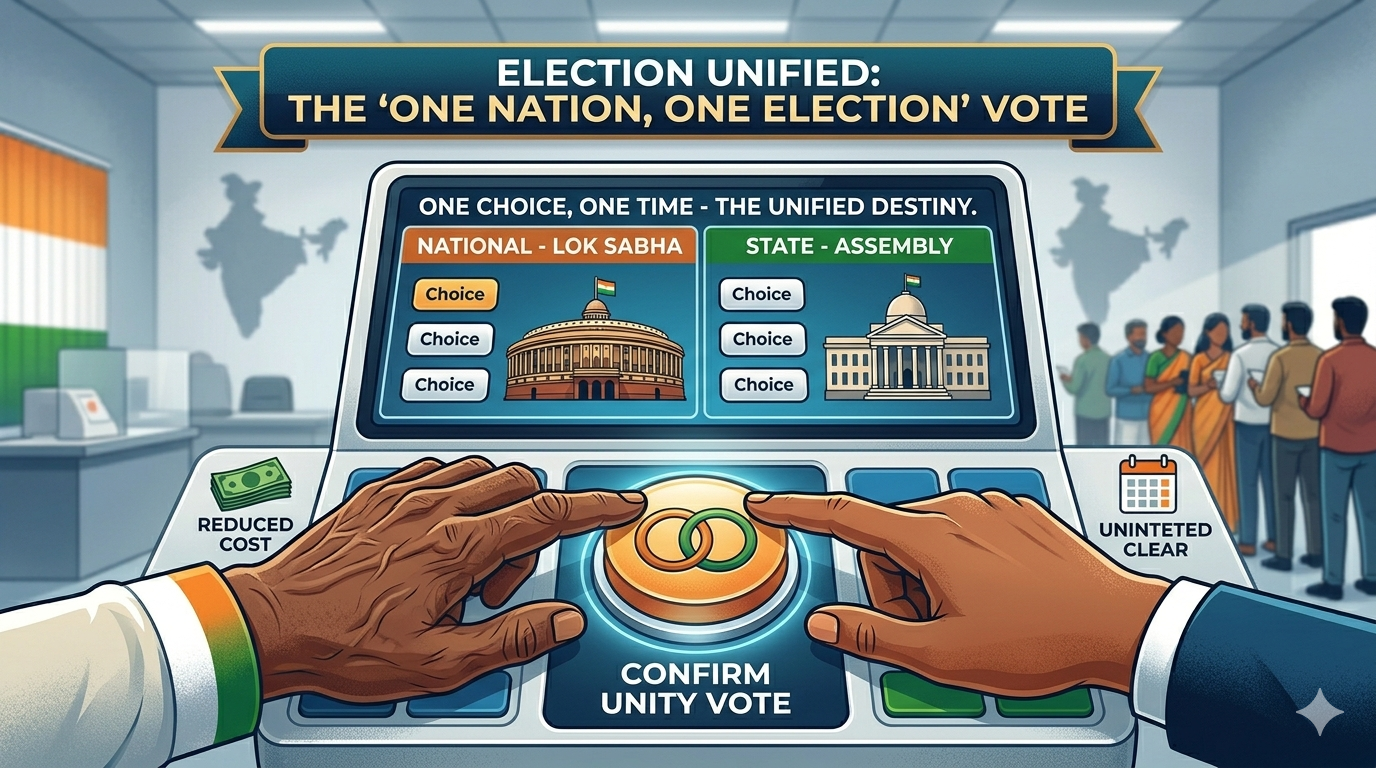
In India, the democratic process is a continuous, monumental exercise. Because state and national election cycles are currently staggered, the country finds itself in an almost perpetual state of campaigning. To address the fatigue and disruption this causes, policymakers are heavily debating a transformative shift: synchronizing the electoral calendar so that citizens vote for both national and state representatives at the same time.
Here is a breakdown of what this proposed shift entails, its historical roots, and the hurdles it faces.
A Return to the Past
Holding simultaneous elections is not a completely new concept for the country. For the first two decades following independence—specifically during the national elections of the 1950s and 1960s—Indian voters cast their ballots for both the central government and their respective state assemblies simultaneously.
This synchronized cycle naturally fractured in the late 1960s. As regional political movements gained momentum and governments fell before completing their full terms, the election schedules across various states fell out of sync with the national calendar.
The Argument for Synchronization
Advocates for a unified election cycle point to several major benefits that could transform how the country is governed:
Uninterrupted Governance: Currently, the frequent enforcement of the Model Code of Conduct (which prohibits governments from announcing new policies during an election period) routinely stalls administrative work. A unified election would allow elected officials to focus purely on governance and long-term policy for the bulk of their term, rather than constantly preparing for the next regional poll.
Curbing Campaign Costs: While the Election Commission conducts elections highly efficiently, political parties spend astronomical sums on continuous campaigning. Consolidating elections into a single season would significantly drastically reduce these recurring campaign expenditures.
Roadblocks and Challenges
Transitioning a nation of over a billion people back to a synchronized voting system is a colossal logistical and legal challenge.
Massive Infrastructure Demands: The current staggered system allows the Election Commission to rotate its electronic voting machines (EVMs) and polling equipment across different states. A nationwide simultaneous election would require manufacturing millions of additional machines. Furthermore, local governments would need to build and maintain secure, year-round warehousing for this massive inventory of equipment.
Constitutional Amendments: The Indian Constitution dictates specific terms and dissolution rules for both the national parliament and state assemblies. Aligning these timelines would require major constitutional amendments, which necessitates a broad political consensus.
The Federal Dynamic: Critics frequently raise concerns that holding state and national elections on the same day might cause national political waves to overshadow local, state-specific issues. However, recent electoral data suggests that Indian voters are highly discerning and capable of voting for different parties at the state and national levels, even on the same day.
The Road Ahead
While smaller nations with different federal structures have successfully implemented synchronized voting, India’s sheer scale makes direct comparisons difficult.
Because altering the electoral framework touches the very foundation of India’s democracy, the transition cannot be rushed. Moving forward requires bridging political divides and establishing a strong consensus among all major parties. With proposals targeting implementation in the coming decade, there is a crucial window to upgrade infrastructure, resolve legal constraints, and ensure that the ultimate decision strengthens, rather than dilutes, the voice of the voter.