




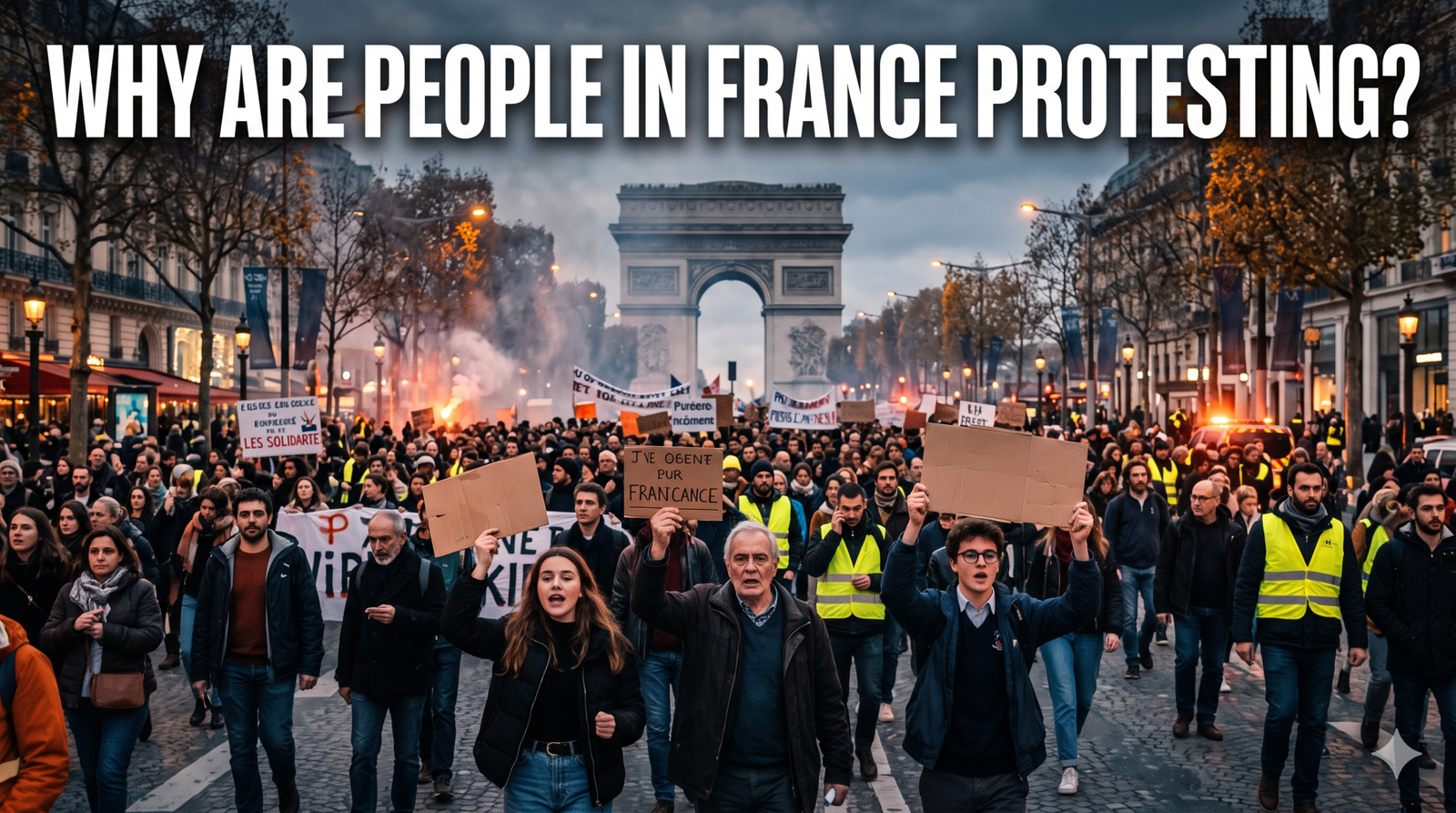
Recently, France has experienced some of its biggest and most intense protests in years. Hundreds of thousands of people have taken to the streets, resulting in clashes with the police and many arrests. But the fires on the streets are just a symbol of a much bigger problem: deep anger and a broken trust between the citizens and their leaders.
Here is a simple breakdown of why France is in turmoil and what it means for the future.
How the Protests Started
The current unrest didn’t begin as a huge national movement; it started with everyday school problems. Students and parents were frustrated with bad conditions in schools, overcrowded classrooms, and a severe lack of teachers.
However, things escalated quickly. Other groups of people, including workers and union leaders, joined the students. The protests shifted from being just about schools to a massive outcry about the rising cost of living and the growing gap between the rich and the poor. To calm things down, the government promised to hire 3,000 new teachers, but it was too little, too late. The people were already too frustrated about their daily financial struggles.
A Reminder of the Past
If this sounds familiar, it’s because something very similar happened in 2018 with the “Yellow Vest” movement. Back then, the government raised taxes on fuel. That single issue acted as a spark that ignited nationwide protests about the cost of living. Today, the spark is the education system, but the root cause—everyday people feeling ignored and financially squeezed—is exactly the same.
Not Just a French Problem
This anger isn’t limited to France; it is spreading across Europe. We are seeing similar situations in other countries:
Germany and Greece: Farmers have been protesting against changes to taxes and fuel costs that hurt their income.
Poland and the Netherlands: Citizens are pushing back against government rules that make earning a living harder.
People across the continent are starting to feel that government policies are out of touch with the struggles of normal, working-class citizens.
The Big Money Problem
It might seem confusing that this is happening in France, a wealthy country known for taking good care of its citizens with strong social benefits (like healthcare and retirement).
But taking care of citizens is very expensive. The government is struggling to balance the country’s growth with paying for these benefits. For example, almost a third (32%) of France’s education budget doesn’t go to classrooms—it goes to paying retirement pensions. This leaves very little money to actually fix the schools, creating a huge financial trap for the government.
What Can We Learn?
You cannot force people to trust the government just by sending out the police. Stopping a riot is not the same as fixing a broken system. The situation in France teaches us three simple lessons:
Money isn’t everything: Just because a country is rich on paper doesn’t mean its citizens are happy.
Promises need action: Announcing a quick fix (like hiring teachers) doesn’t work if people don’t see real improvements in their daily lives.
Small issues grow fast: When people are worried about money, a single problem like bad schools can quickly turn into a national crisis.
Looking Ahead
France is facing a serious political crisis. The government has to figure out how to deliver what the people expect using the money they actually have. With national elections coming up in 2027, the current leaders are under immense pressure to rebuild trust before it’s too late.