




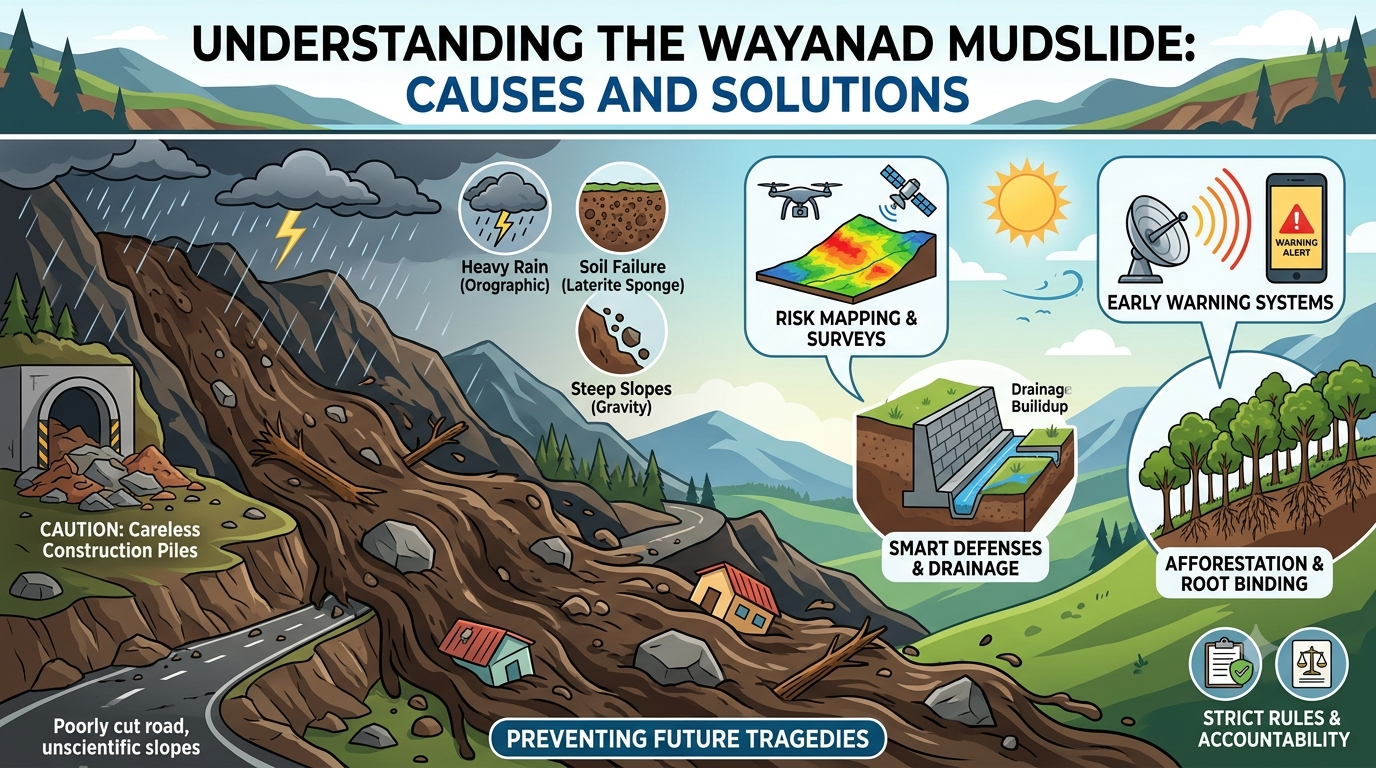
Recent heavy rains across the Western Ghats have caused terrible damage, but the tragedy in Wayanad stands out because it could have largely been prevented. To understand why these disasters happen almost every year, we have to look at the mix of local nature, weather, and human mistakes.
Not Just a Landslide, But a “Debris Flow”
While people often call it a landslide, what happened in Wayanad is technically known as a debris flow.
A normal landslide happens when heavy rocks and dry soil simply fall down a hill because gravity pulls them down.
A debris flow is much more dangerous. It happens when huge amounts of rain mix with the soil, turning it into a fast-moving river of thick mud. This mud rushes down steep hills without warning, picking up heavy boulders, trees, and anything else in its path.
Right before the disaster, Wayanad was hit by an extreme amount of rain—about 24 to 25 centimeters in just 24 hours. Because the area usually gets about 300 centimeters of rain over an entire year, this sudden downpour was too much for the land to handle.
The Role of Nature
Wayanad’s natural landscape makes it highly vulnerable to mudslides for a few key reasons:
Steep Hills: The Western Ghats have tall, sharp cliffs. When moist winds from the ocean hit these cliffs, the air is forced upward quickly, which causes massive, sudden rainstorms.
Sponge-Like Soil: The soil in this area (laterite soil) acts like a giant sponge. At first, it easily absorbs the rainwater. But once the “sponge” is completely full, the soil becomes too heavy and loses its grip on the hard rock underneath.
Gravity: Because the hills are so steep, once the heavy, wet soil breaks loose, gravity pulls it down the valleys at terrifying speeds.
How Humans Made the Disaster Worse
Even though the heavy rain was a natural event, human actions turned it into a deadly disaster.
Careless Construction: A new tunnel was being built in Wayanad. The workers dug up massive amounts of loose dirt and rocks and just left them in huge piles on the hills.
Ignoring Warnings: Local government leaders actually warned the builders to move those dirt piles before the heavy rains came, but the warnings were ignored. When the rain hit, those massive mounds of loose dirt turned into the deadly mud river.
Damaging the Land: Over the years, cutting into hills for roads, mining for rocks, and building tourist spots without proper planning have destroyed the natural flow of water and made the hills unstable.
How We Can Prevent Future Tragedies
To stop losing lives every monsoon season, experts suggest taking several important steps:
Map the Danger Zones: Use drones and advanced technology to find the most dangerous hills and mark them as high-risk areas.
Early Warnings: Use advanced weather tracking (like Doppler radars) to predict heavy rainfall so people can evacuate well before the mudslides start.
Build Smart Defenses: Construct strong retaining walls to hold back rocks, and build proper water drains so heavy rain has a safe path to flow down the hills.
Plant Deep-Rooted Trees: Stop cutting down forests. Planting native trees with deep roots acts like a natural net that holds the soil together.
Strict Rules and Punishments: Stop unsafe building practices. If builders or officials act carelessly and ignore safety warnings, they must face strict legal consequences.