




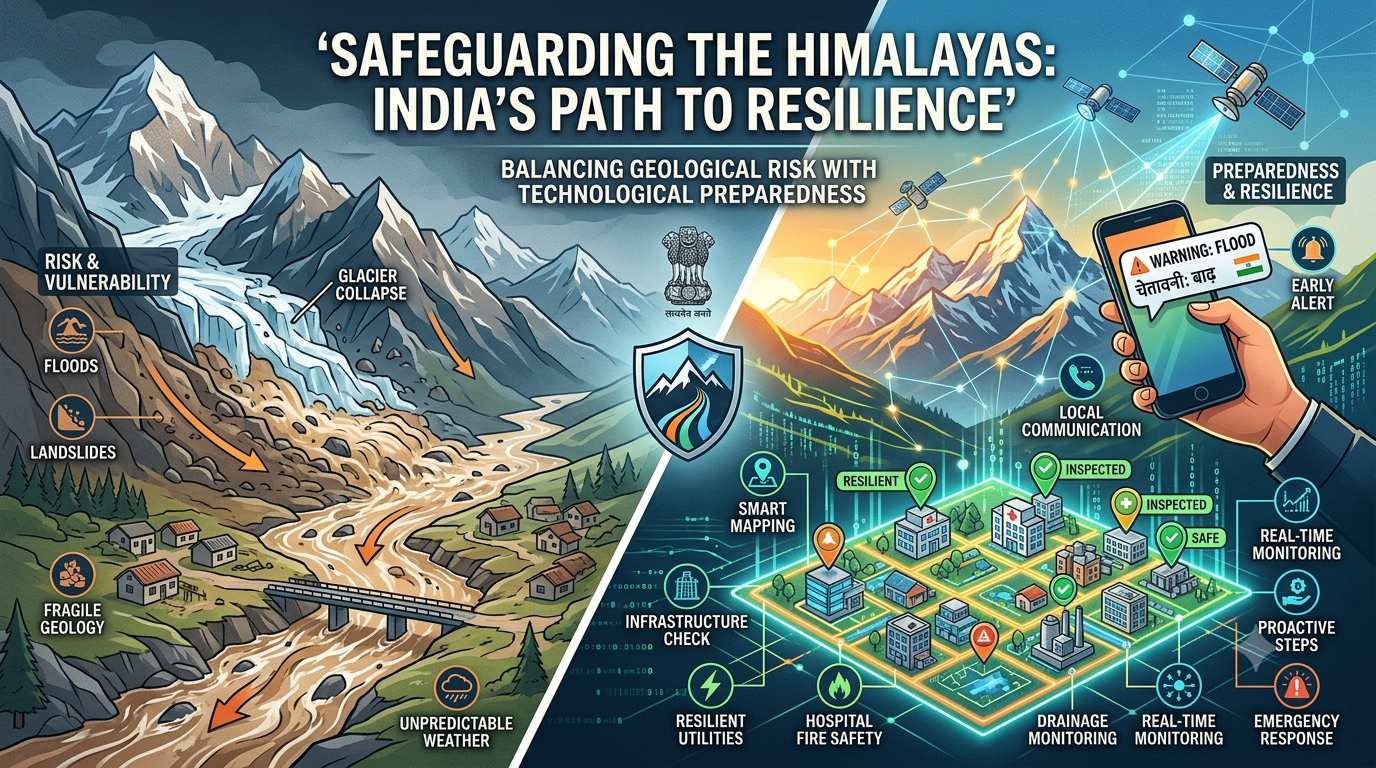
The Himalayas are famous for their beauty, but they are also one of the most fragile and dangerous mountain ranges in the world. While they provide essential water and support life for millions of people across Asia, the land itself is very unstable. Steep mountainsides, heavy monsoon rains, and frequent earthquakes make this region highly prone to natural disasters.
The Impact of Climate Change
Global warming is making these natural risks even worse. As temperatures rise, glaciers are melting faster, and rainfall patterns are becoming highly unpredictable. This combination of changing weather and unstable ground creates a dangerous environment where disasters can happen without much warning.
Learning from Nepal’s Tragedy
Recent devastating floods in Nepal highlighted just how vulnerable the region is. When a glacier collapsed near the border of Nepal and China, it sent a massive wall of water, mud, and rocks rushing down into the valleys.
The damage was heartbreaking:
Homes, roads, and bridges were completely wiped out.
Many lives were lost, and thousands were affected.
Rescue teams struggled to reach victims because the roads were destroyed and the mountain terrain was too difficult to navigate.
This tragedy showed that a problem starting high up in the mountains can quickly turn into a deadly disaster for the people living in the valleys below.
Time to Rethink How We Build
The floods in Nepal also badly damaged the country’s power plants. This serves as a major warning for everyone living near the Himalayas: we can no longer rely on old weather patterns when designing roads, bridges, or dams. Because the climate is changing, our buildings and infrastructure must be strong enough to handle extreme and unpredictable weather.
India’s Action Plan: Technology and Early Warnings
India was quick to send help to Nepal during the crisis. Back home, India is focusing heavily on technology and smart planning to protect its own citizens from similar disasters.
In the past, simple solutions have saved lives. For example, sending text messages to mobile phones in local languages to warn villages about rising floodwaters has helped people and their animals get to safety in time.
To prepare for the future, India is focusing on:
Acting Fast: Starting rescue efforts the moment a warning is received.
Smart Mapping: Using technology to track which buildings are old, checking drainage systems, and making sure water and electricity lines are safe.
Safety Checks: Doing regular inspections on important buildings like hospitals to prevent accidents, such as fires breaking out during extreme heatwaves.
Ultimately, staying safe in the Himalayas means knowing what is happening on the ground and using that information to act before a disaster strikes.