




The Basics of Bonds
A bond is simply a formal loan you give to a government or company in exchange for a promised future profit.
If you lend a government $100 and they promise to give you $105 later, that extra $5 is your return (often called a “yield”).
When governments urgently need cash, they issue more bonds. When the market is flooded with these bonds, governments must offer much higher profits to convince people to buy them.
2. Why Are Global Returns Rising?
Rising Inflation: Because the cost of living is increasing globally, lenders are demanding larger profits on their loans to ensure their money does not lose its purchasing power over time.
Massive National Debts: Wealthy countries like the United States owe trillions of dollars. Since this massive debt makes lending feel slightly riskier, investors are demanding higher financial rewards.
Corporate Borrowing: Large companies are taking out massive loans to fund new technologies (like artificial intelligence), creating fierce competition for available money and driving interest rates up.
3. How Japan and China Fit In
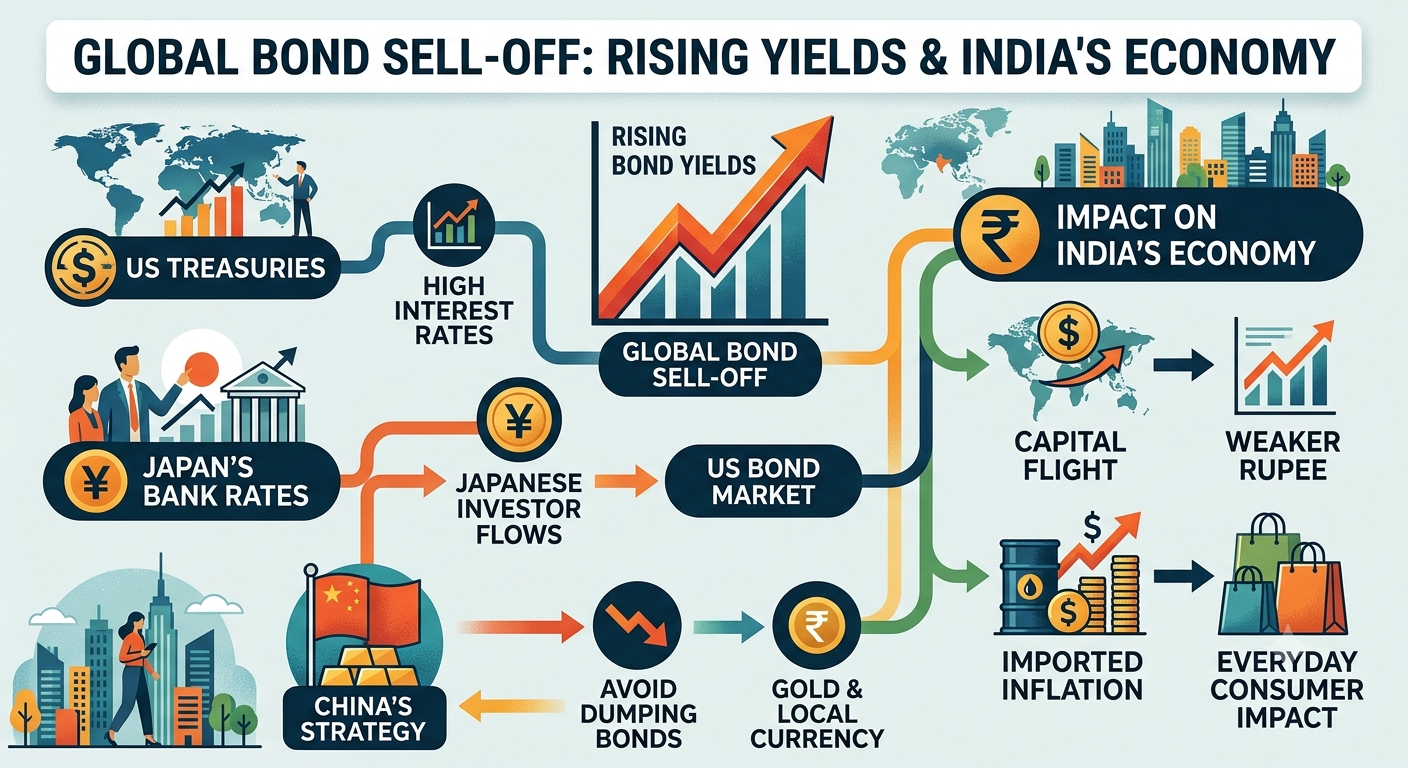
Japan’s Shift: Historically, Japanese investors borrowed money at home for nearly zero cost and invested it in the US for high profits. Now that Japan has finally raised its own interest rates, this easy profit strategy is ending.
China’s Caution: China holds a massive amount of US bonds. They refuse to sell them quickly because flooding the market would instantly crash bond prices, ultimately ruining the value of their own national savings.
4. Why This Matters to India
Money Leaves India: When the US government offers higher, safer returns, foreign investors often pull their cash out of growing economies like India to invest in America instead.
The Rupee Weakens: As foreign investment leaves the country, the value of the Indian Rupee drops compared to the strength of the US Dollar.
Expensive Imports: A weaker Rupee means India must spend much more money to buy crucial imports from other nations, especially crude oil for fuel.
- Everyday Inflation: When fuel and transportation become more expensive for the country, the cost of groceries and daily goods goes up, directly hitting your household budget.