
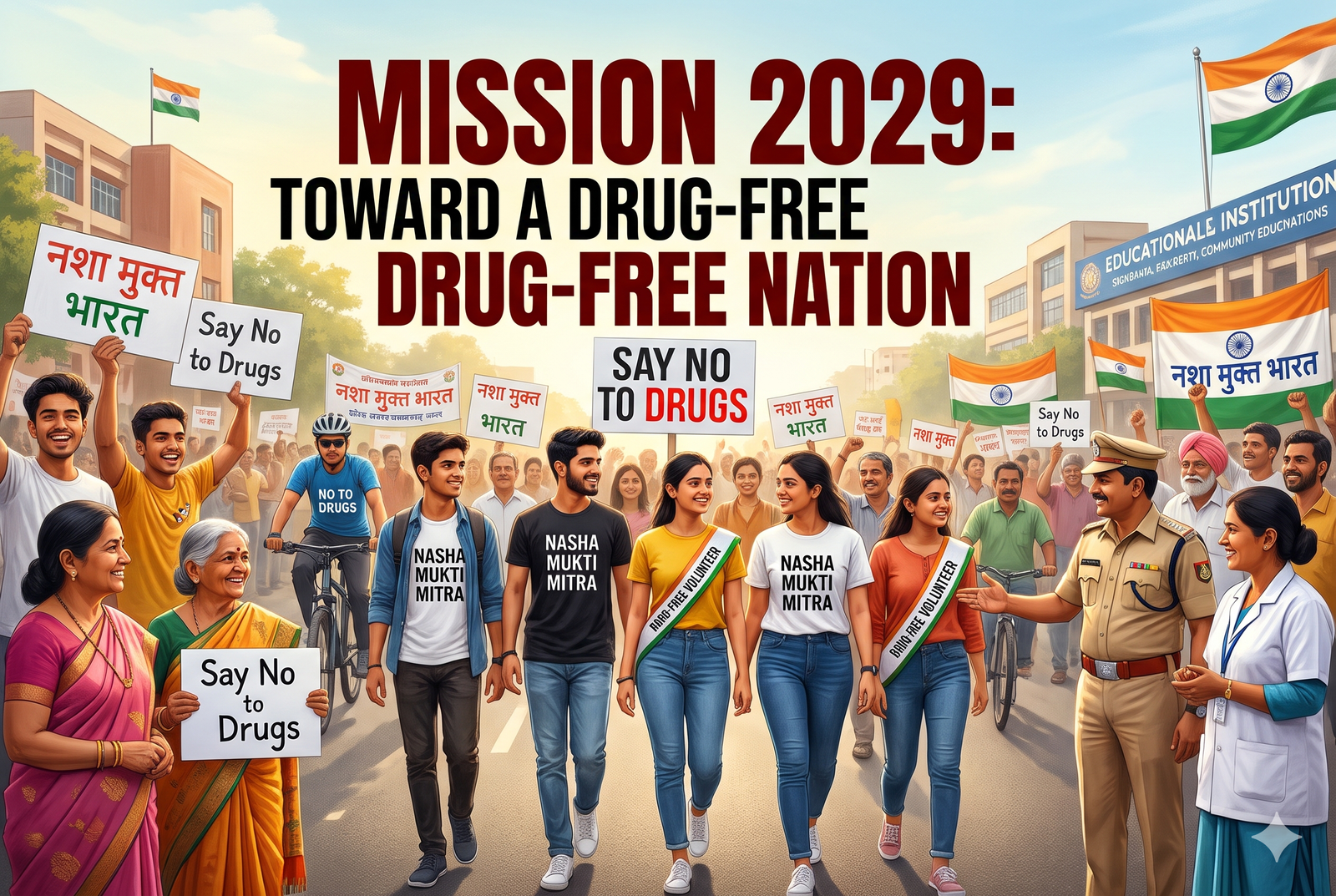
India has launched a nationwide movement to completely eliminate drug abuse and create a healthy, drug-free society by December 31, 2029. This initiative, known as the Nasha Mukt Bharat Abhiyaan, has already reached over 35 crore citizens. The movement heavily focuses on the younger generation and women, successfully bringing together nearly 14 crore youth, 11 crore women, and over 32 lakh schools and colleges. The national leadership has set a clear path for the next few years, bringing together different government departments and state authorities to remove the illegal drug trade from every corner of the country.
The Vision for 2029
The core belief driving this campaign is that the youth are the foundation of the country’s future. When young people fall into addiction, they lose their potential to contribute to the nation’s growth. To prevent this, spiritual leaders, cultural groups, and volunteers are running a focused 100-week awareness drive. The government has created a detailed plan that runs from 2026 to 2029, aiming to stop the supply of harmful substances while educating the public about the dangers of addiction.
New Dangers and Modern Threats
The drug trade is increasingly being used by outside forces to weaken the country’s economy and damage its future workforce. Smugglers are finding dangerous new ways to target children, sometimes hiding harmful substances inside everyday treats like chocolates, ice creams, pizzas, and burgers.
Modern technology has also made the problem harder to control. Harmful substances can now be ordered online and delivered straight to people’s homes. At the borders, smugglers are using drones to drop illegal packages into the country, creating new challenges for law enforcement and border security teams.
The Power of the Community
The government cannot solve this problem alone; it requires the help of everyday citizens. To build a strong network of helpers on the ground, the campaign introduced a volunteer program that quickly gathered over two lakh participants in just a few months. These volunteers work actively on college campuses and in local neighborhoods to spread awareness.
More than 500 rehabilitation centers are currently operating across the country. These centers do not just treat the individuals struggling with addiction; they have also helped over 40 lakh families rebuild their lives and return to society with confidence. Religious and spiritual leaders have also joined the cause, using their platforms to guide people away from harmful habits.
Changing How We See Addiction
One of the biggest obstacles in solving the drug crisis is the shame attached to it. Families often hide the problem because they are afraid of what their neighbors and society will think. When people are treated like criminals rather than individuals who need medical help, they avoid seeking treatment.
Experts emphasize that society must show empathy. Providing support instead of judgment makes it easier for people to go to rehab. Breaking this cycle is highly important because a person struggling with addiction often introduces several others to the habit just to fund their own needs. New educational programs designed for schools and peer support groups are being introduced to stop young people from experimenting with drugs in the first place.
The Role of Movies and Media
The entertainment industry has a massive influence on how young people behave. Unfortunately, popular movies often make drinking alcohol and smoking look stylish and heroic. This glamorization easily influences young audiences who try to copy their favorite actors on screen. The campaign urges the media and film industry to use their power responsibly. Instead of promoting harmful habits, society should celebrate real-life heroes like the police, armed forces, and emergency workers.
Stopping drug abuse requires action from everyone. By engaging young people in positive activities like sports and yoga, educating families, and showing compassion to those who need treatment, the country can successfully protect its citizens and build a stronger, healthier future.