



India is the largest democracy in the world, and its Constitution promises equal rights and protection for everyone. However, in reality, problems like poverty, lack of education, and financial struggles stop many vulnerable people from getting the legal help they need.
To solve this, the government created the Legal Services Authorities Act in 1987 to offer free legal support to disadvantaged citizens. A special parliamentary committee recently sat down to review how well this legal aid system is actually working today.
The Power and Limits of “People’s Courts”
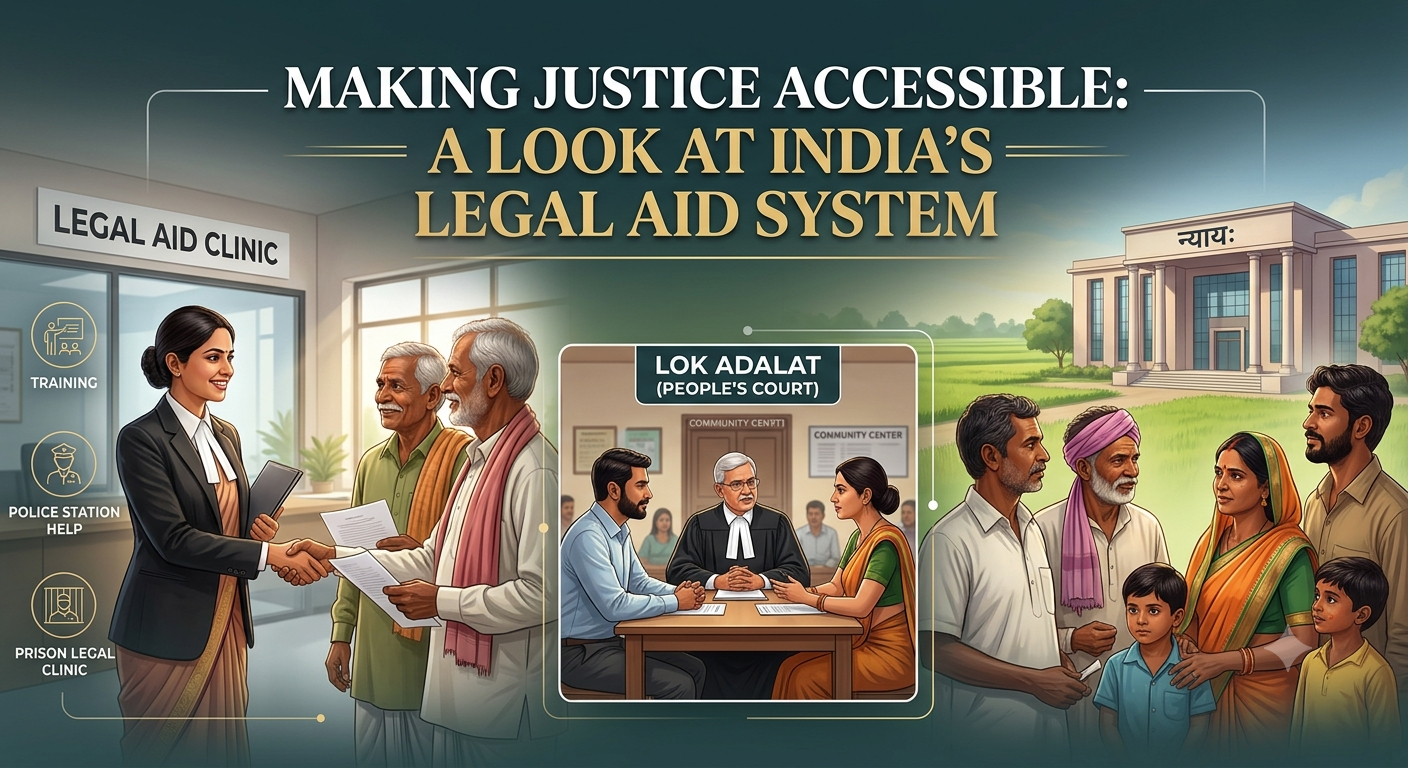
A major way India provides legal help is through Lok Adalats, which translates to “People’s Courts.” These forums focus on solving disputes peacefully through agreements and compromises rather than long trials.
While they have successfully helped millions of people, there is a major roadblock: Lok Adalats do not have the power to force someone to show up to court. If one party refuses to attend, the court cannot make a final decision.
Proposed Solutions:
Granting More Power: The parliamentary committee suggested giving Lok Adalats the authority to issue official summons so that people are required to attend.
Pre-Meetings: They also recommended holding early meetings before the actual court date to encourage both sides to talk and settle their issues out of court.
Upgrading Facilities and Training
For the legal aid system to work better, it desperately needs upgraded physical spaces, more staff, and better training.
Right now, national funds are only spent on the legal activities themselves, leaving the state governments responsible for providing the buildings and staff. The committee advised that national and state authorities need to work together more closely to improve these facilities and bring in modern technology. Additionally, they stressed that judges handling these specific cases need specialized training at state institutes to serve the public more effectively.
Attracting Better Lawyers
One of the biggest differences between India’s legal aid system and those in countries like the US or the UK is how lawyers are paid.
In India, the pay for legal aid lawyers is quite low. Because of this, highly experienced lawyers rarely take on these cases, leaving them mostly to junior lawyers who are just looking for practice. Experts point out that to give poor citizens top-quality legal defense, the government must stop treating legal aid like a “cheap charity.” Instead, it needs a strong budget that pays lawyers fairly so that experienced professionals are motivated to help.
Where Can People Get Help?
Currently, the system is set up to assist people at three crucial stages:
At the Police Station: People can get free legal advice the moment they are arrested. Last year alone, thousands of individuals received help across thousands of police stations.
In Court: When a person is brought before a judge, legal aid lawyers are there to help file bail applications.
Inside Prisons: There are special legal clinics set up inside jails where visiting lawyers offer advice and guidance to inmates waiting for their trials.
Looking Forward: Education and Respect for the Law
Historically, there have been times when poor individuals were wrongly accused of minor crimes just so local police could meet arrest quotas. This makes having a strong, free legal defense system absolutely essential for protecting innocent people.
Moving forward, leaders agree that ordinary citizens need to be educated about their basic rights, such as how to properly file a police report (FIR) and where to find free legal clinics. Furthermore, experts urge that courts must be treated with the highest level of respect and seriousness by everyone involved—lawyers, judges, and citizens. With better funding, stricter rules, and capable lawyers, the dream of equal justice for all can become a reality.