


Tourism in India is no longer just about taking a vacation. Over the past decade, it has transformed into a massive engine for creating jobs, building better facilities, and sharing Indian culture with the world. As India works toward its goal of becoming a fully developed nation by 2047, the travel sector is stepping up to play a starring role.
Here is a simplified look at how Indian tourism has changed and where it is heading next.
What Sparked the Transformation?
The last ten years have completely reshaped how people travel within and to India. This growth was driven by a few key factors:
- A Growing Economy: As India’s overall economy grew faster, the travel industry naturally got a big boost.
- Hassle-Free Visas: Traveling to India is easier than ever. Citizens from over 170 countries can now get an e-visa just by filling out a quick online form, whether they are visiting for fun, business, or medical care.
- Better Infrastructure: Massive upgrades to highways, the building of modern airports, and the launch of high-speed trains like the Vande Bharat have made moving across the country smooth and comfortable.
- The Digital Shift: With cheap internet and smartphones, booking train tickets, flights, and hotels is now just a tap away.
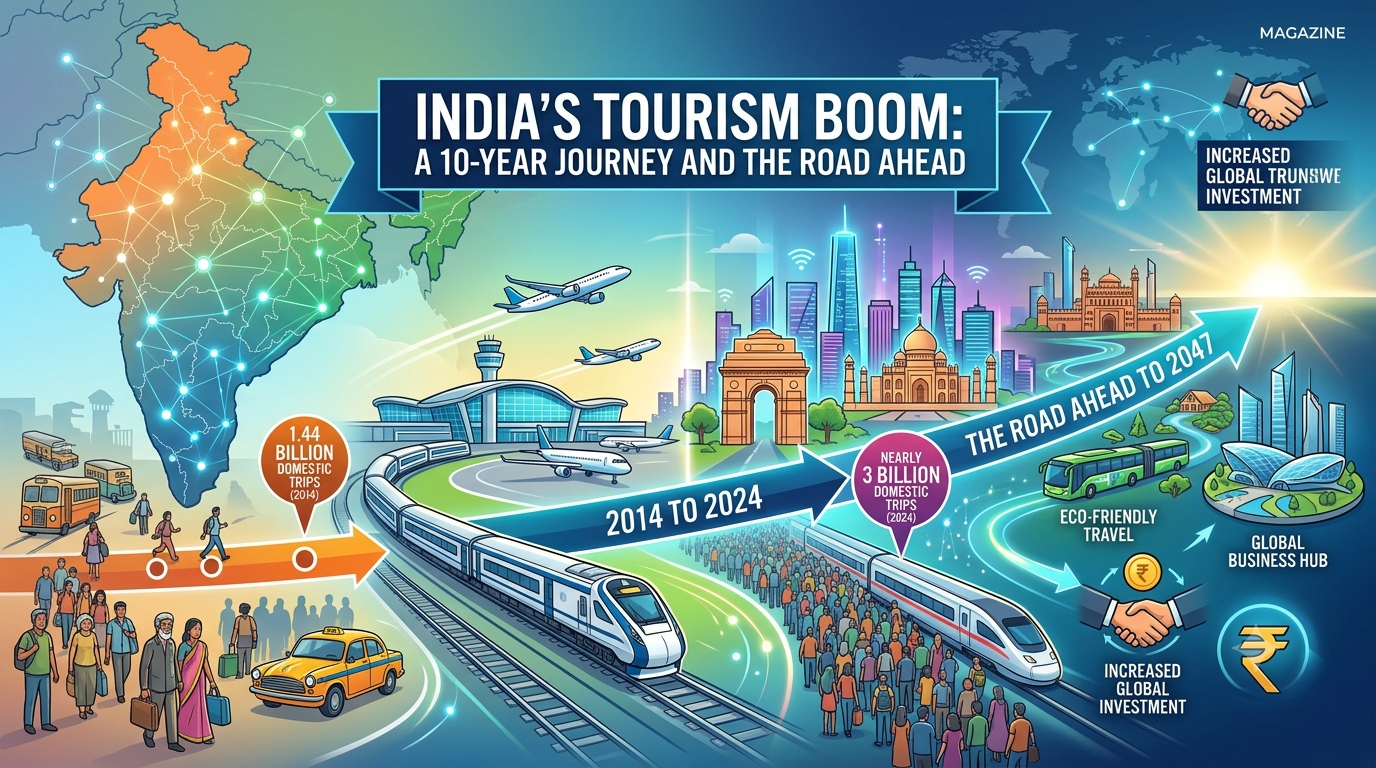
- The Result: Domestic travel has skyrocketed. In 2014, Indians made about 1.44 billion trips within the country. By 2024, that number more than doubled to nearly 3 billion trips, even with the disruptions caused by the pandemic!
The Challenge: Bringing Back Global Tourists
While local travel is booming, attracting international tourists is still a work in progress. Foreign visitors are vital because they bring foreign money into the country, which strongly supports the economy.
The Numbers: In 2019, India welcomed nearly 11 million actual foreign tourists. However, by 2024, that number had only climbed back to about 9.95 million.
- The Roadblocks: High international flight prices and slow visa processing in other parts of the world have kept numbers lower than expected.
- The Solution: Experts suggest that the government needs to spend more money on global advertising to promote India as a safe, beautiful, and premium destination for international travelers.
Smart Planning and Eco-Friendly Travel
To handle the massive increase in tourists without ruining the natural beauty of the country, the government has introduced new strategies:
- Protecting Destinations: Instead of just promoting random tourist circuits, the focus is now on carefully managing specific destinations. This prevents popular spots from getting ruined by overcrowding.
- Financial Support: The central government is giving states long-term, 50-year loans to help them build better local tourist facilities.
- Welcoming Foreign Money: India now allows 100% Foreign Direct Investment (FDI) in tourism, meaning international companies can fully fund and build new hotels and hospitality projects across the country.
- Going Green: There is a strict focus on “sustainable tourism.” This means protecting the environment and ensuring that the local people living near tourist spots are the ones making money from the visitors.
The Vision for 2047: Progress Meets Heritage
Looking toward the future, India has a unique advantage. It offers a blend of rapid modern progress (Vikas) and rich, ancient culture (Virasat).
By hosting major global events like the G20 summit, India has already proven it is a fantastic place for massive international business meetings and conferences. With its reputation as a peaceful country full of rich history and fast-improving infrastructure, India is well on its way to becoming one of the most popular and wealthy tourism destinations in the world