

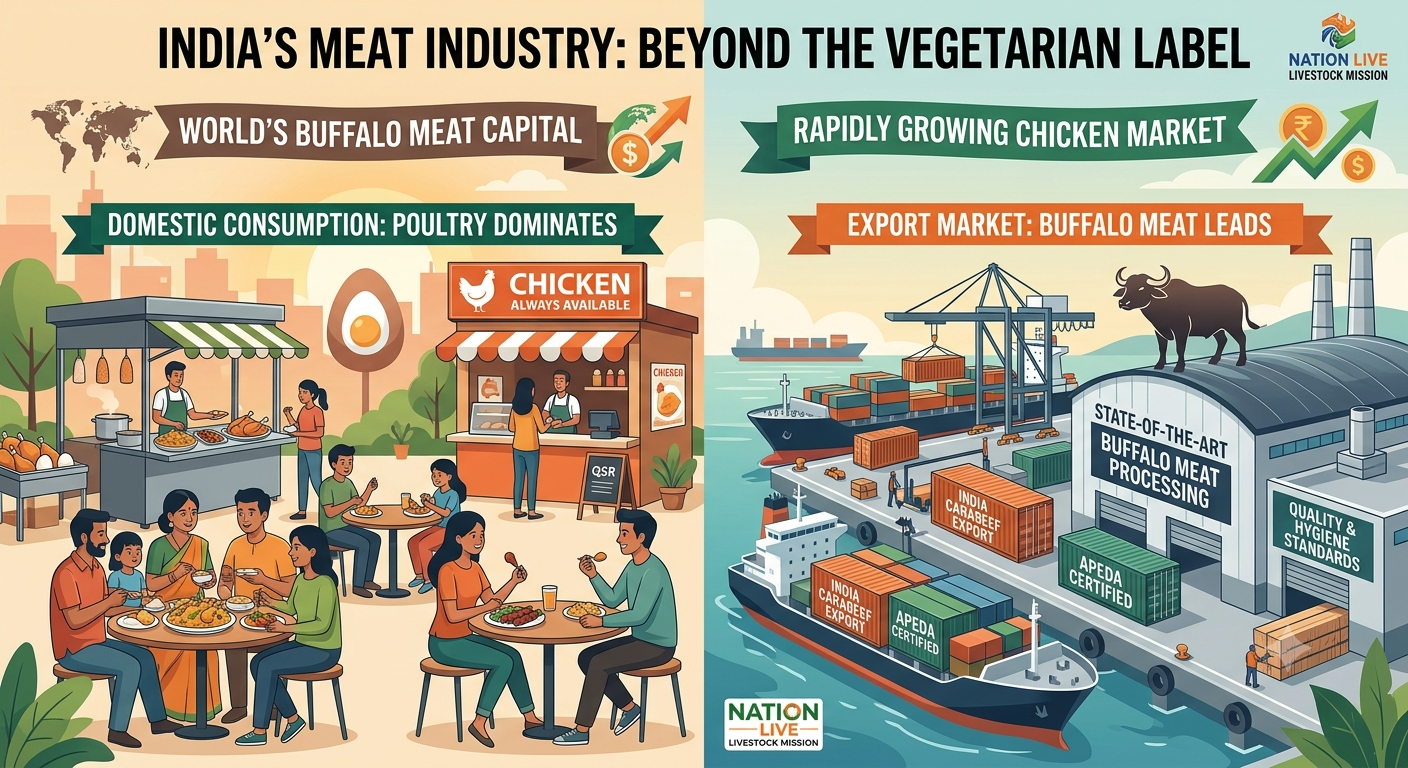
Most people picture India as a strictly vegetarian nation. However, a closer look at everyday eating habits and trade facts reveals a surprisingly different reality. India is actually the world’s largest exporter of buffalo meat.
Here is a simple breakdown of how a country famous for its vegetarian culture also runs a massive meat industry.
The Big Business of Buffalo Meat
The buffalo meat trade is a major economic driver for the country:
India produces about 37% of all the buffalo meat in the world.
The country recently exported roughly $5.1 billion worth of this meat in a single year.
The biggest international buyers include countries like Vietnam, Egypt, and Malaysia.
The Vegetarian Myth
The idea that the entire country is vegetarian is actually a misconception:
Studies show that only about 30% to 39% of Indians follow a strictly vegetarian diet.
This means a large majority of the population eats meat in some form.
While millions of tons of meat are shipped overseas, a huge amount is also eaten right at home.
The Link to Milk and Farming
To understand this meat industry, you have to look at dairy farming:
India is home to the largest population of buffaloes on the planet.
Farmers mainly raise these animals for milk. Once a buffalo gets too old to give milk, keeping it becomes too expensive for the farmer.
By selling the older buffaloes, farmers earn enough money to buy younger ones that produce milk. The meat trade is essentially the final stage of the dairy cycle.
Laws and Domestic Choices
You might wonder how this works given India’s cultural protections for animals:
India has strict laws protecting cows because of deep religious and cultural beliefs.
However, buffaloes are legally classified differently. This distinction allows the buffalo meat industry to operate freely without breaking cow protection laws.
Interestingly, when Indians eat meat at home, they overwhelmingly prefer chicken. Poultry makes up nearly half of all the meat consumed inside the country because it is affordable and faces no legal or religious hurdles.
Were you surprised to learn about the strong connection between the dairy industry and the meat export market?