


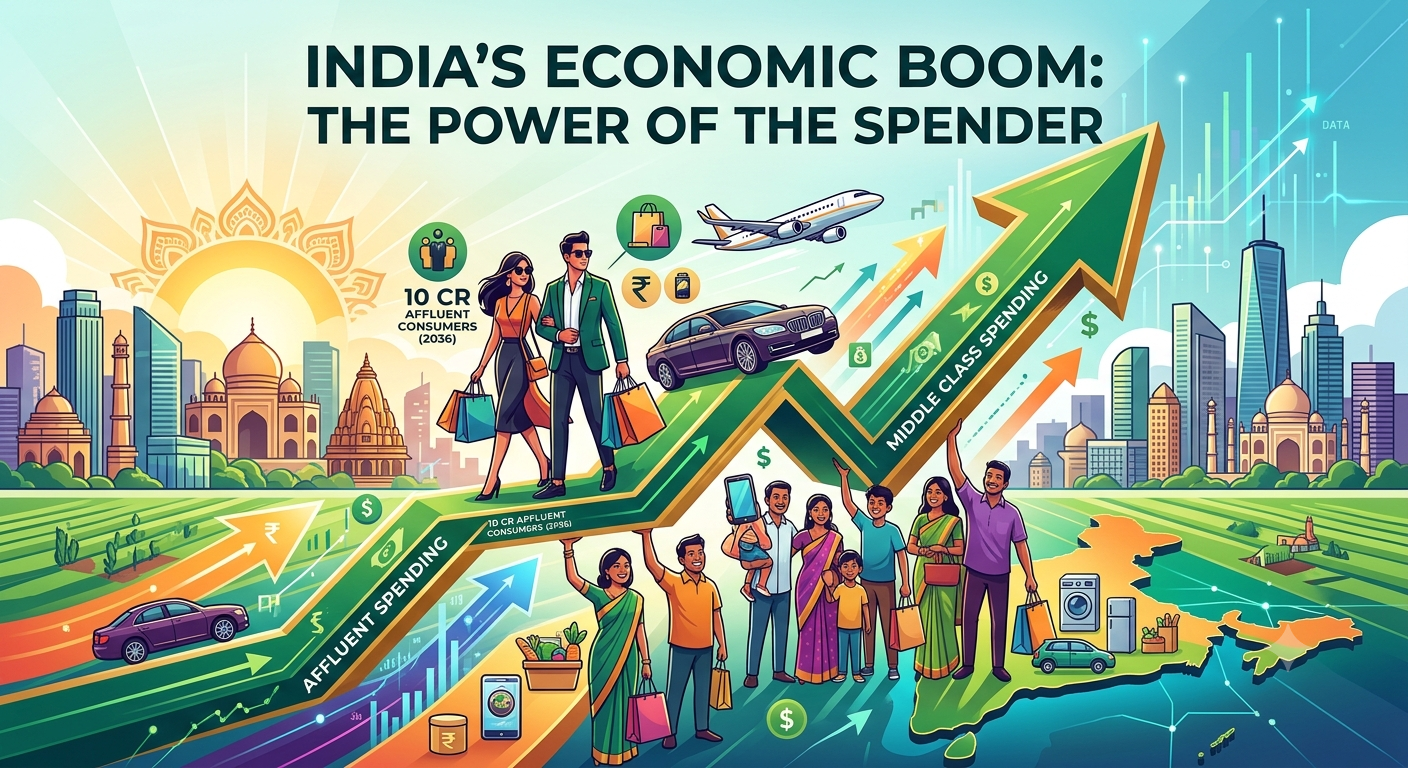
India is entering an exciting new phase of economic growth. In the past, the focus was mostly on getting more people into the workforce. Today, the focus is shifting to how much people are spending. By 2036, India is expected to have over 10 crore affluent (wealthy) consumers, surpassing China and trailing only the United States.
Here is a breakdown of why this is happening and what it means for the future.
The Two Engines of Growth
India’s economy is getting a massive boost from two different groups of people at the same time:
The Rising Middle Class: Millions of people have recently moved out of poverty. This massive group is buying more everyday goods, which forces factories to produce more items at a faster rate.
The Wealthy Class: At the same time, the number of high-income earners is rapidly increasing. This group has the cash to spend on premium experiences like air travel, luxury cars, and nice hotels.
The Challenge for Local Businesses
As Indians get richer, they naturally want better, more premium products. Historically, consumers looking for luxury have turned to established brands from countries like Germany, Japan, and the United States.
While India has become great at manufacturing goods in large quantities, the next big challenge is creating recognized premium brands. Local companies need to invest heavily in research, innovative design, and product quality to convince wealthy buyers to choose a local brand over a foreign one.
Building a Unique Identity
Indian brands do not need to simply copy what Western companies have done. The future of luxury is shifting toward sustainability, nature, and organic living—concepts that are already deeply rooted in Indian culture. Additionally, since India is famous for its hospitality, local companies can create premium brands based on exceptional services, just as much as physical products.
Going Global
The number of wealthy consumers isn’t just growing in India; it’s growing all over the world. By signing new trade agreements with other nations, the Indian government is making it easier for local businesses to sell their goods overseas.
If local companies can step up and create world-class products that appeal to these high-spending customers, this new wave of spending will power India’s economy for decades to come.
What specific Indian brands do you think are currently doing a great job at competing with global premium names?