




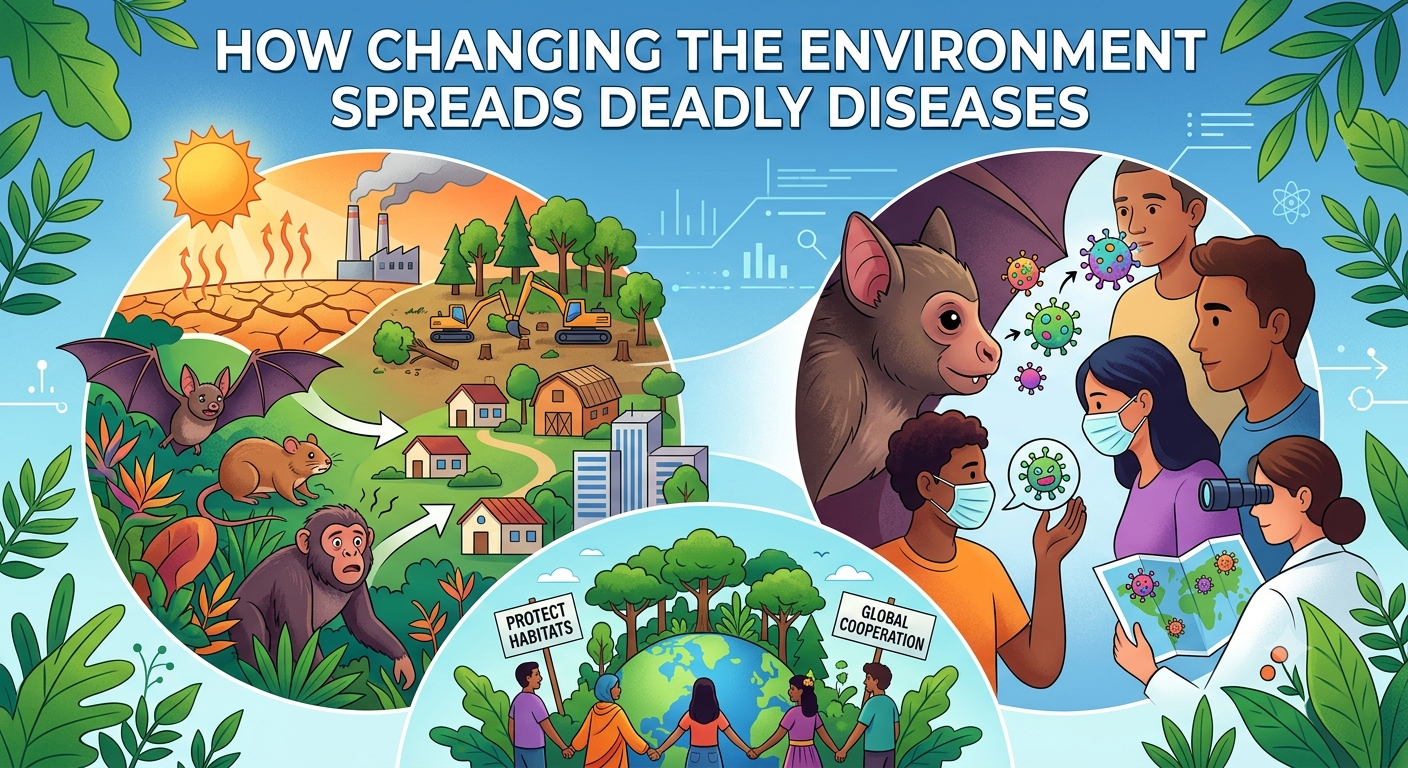
Many health experts warn that it is only a matter of time before the world faces another pandemic. As humans continue to change the natural environment, the chances of deadly diseases spreading are going up.
Dr. Neil Vora, a public health expert, has spent his life working as a “disease detective.” He focuses on a specific threat: diseases that jump from animals to people. One of the most famous and dangerous examples is Ebola. Having worked on the frontlines of disease outbreaks, experts like Dr. Vora have seen how devastating these germs can be.
But why are these diseases spreading more frequently today? The answer lies in how we are treating the planet.
How Climate Change and Deforestation Spread Sickness
A changing climate and the cutting down of forests are making it easier for human beings to catch new diseases from wildlife. Here is why:
Animals are moving closer to us: As the planet gets hotter and weather patterns change, wild animals like bats and mice are forced to leave their natural homes to find food and water. Often, this pushes them right into human cities and towns, bringing their germs with them.
Creating unnatural borders: When humans cut down forests to build farms, mines, or towns, it forces people and wild animals to live right next to each other. This constant contact makes it very easy for germs to jump from an animal to a human.
Stressed animals get sick: Destroying animal habitats makes wild animals highly stressed. Just like humans, when animals are stressed, their immune systems get weak. This makes them more likely to catch and spread infections.
Only the germ-carriers survive: When a forest is cut down, the unique animals that rely on that forest die off. The animals that do survive are usually common creatures that are good at living around humans, like rats. Unfortunately, these common animals are also the ones most likely to carry germs that can infect us.
The Danger of the Wildlife Trade
Destroying nature isn’t the only problem. The global buying and selling of wild animals is also a massive risk. For example, bringing wild animals into other countries for the exotic pet trade can easily spread sickness. In 2003, wild rats imported into the United States caused an outbreak of Mpox (formerly known as monkeypox) that infected dozens of people.
Hope for the Future
Because of climate change and environmental damage, scientists predict we will see more outbreaks in the future. However, we have the power to stop this.
Experts say the best way to prevent future diseases is to protect wild places, like the Amazon rainforest. If we protect wild habitats, wild animals—and their germs—can safely stay away from people.
Even though the threat is serious, there is plenty of reason to be hopeful. In the past, countries from all over the world worked together to completely wipe out smallpox, a disease that used to kill millions. If humanity can work together to defeat smallpox, we can work together to protect our environment and stop the next big outbreak before it starts.