


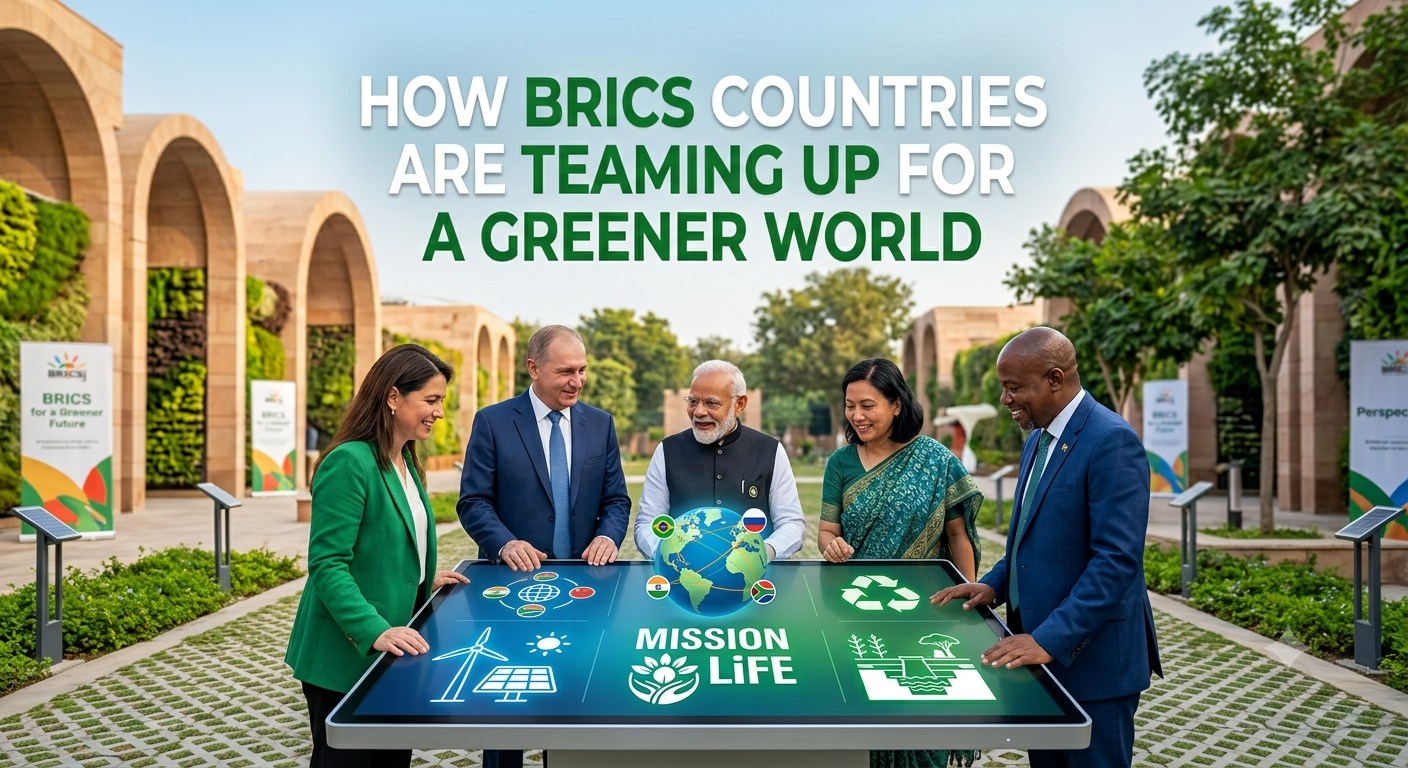
Climate change is no longer just about cutting down pollution; it is about preparing our communities to survive extreme weather, wildfires, and resource shortages. Recently, India hosted the 12th BRICS Environment Ministers Meeting in New Delhi to figure out how these nations can tackle these shared problems together.
The Four Main Goals
During the meeting, India laid out four big priorities for the group to focus on:
Greener Lifestyles: Encouraging people to change their daily habits to be more eco-friendly.
Protecting Forests: Better management of forests to prevent wildfires and survive natural disasters.
Reducing Waste: Moving toward a system where we reuse and recycle materials instead of throwing them away.
Community-Led Adaptation: Helping local communities adapt to climate change using their own traditional knowledge.
Why This Group Matters
The BRICS nations represent about half of all the people on Earth and a huge chunk of the global economy. Because they share so many of the same environmental challenges, working together gives them a massive opportunity to lead the world in finding solutions that actually work for developing nations.
Focusing on Survival, Not Just Prevention
For a long time, global climate meetings focused mostly on stopping climate change by cutting emissions. But for many developing countries, the extreme weather is already here. That is why this meeting focused heavily on adaptation—learning how to live with and survive these changes. India pushed for using traditional, indigenous knowledge (like ancient farming or water-saving methods) alongside modern science to help communities stay safe.
The Power of Everyday Choices and Technology
Governments cannot save the planet on their own. The meeting highlighted India’s “Mission LiFE” concept, which reminds us that everyday choices made by regular citizens and businesses are key to a healthy planet.
At the same time, these countries recognize that they need modern tools to fight back. They discussed using artificial intelligence, space technology, and satellites to predict disasters early and monitor the health of their forests.
Less Talk, More Action
The biggest takeaway from the meeting was that these nations are ready to move past just making promises. The next steps involve taking real action on the ground:
Sharing successful local ideas with other countries so they can be adapted and reused.
Setting up training programs for scientists and policymakers.
Finding cooperative ways to fund these environmental projects, which is currently one of the biggest hurdles for developing nations.
By mixing traditional wisdom with modern technology, these countries are working to build a future where environmental rules aren’t just handed down by the West, but are created by and for the people actually living on the front lines of climate change.