

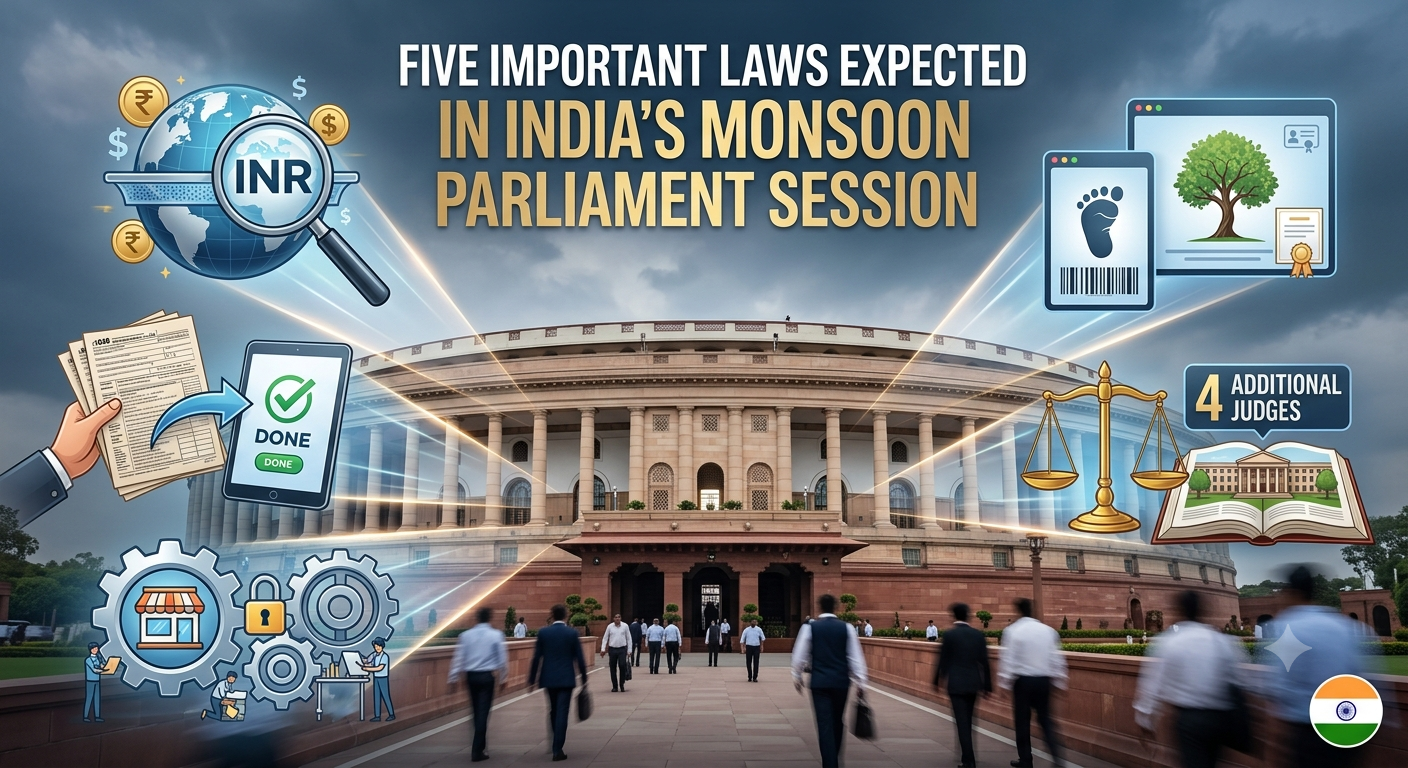
The Monsoon Session of the Indian Parliament has officially started. Although the initial meetings have faced delays due to protests and disagreements, the government has a busy schedule ahead. They plan to introduce five major new laws that cover taxes, education, small businesses, and foreign money.
Here is a simple breakdown of the five biggest changes the government is proposing.
1. Tighter Rules for Foreign Money (FCRA Bill)
This proposed law will change how Non-Governmental Organizations (NGOs) and charities receive money from outside of India.
The Goal: The government wants to prevent illegal money laundering and stop foreign money from being used against national interests.
The Changes: If passed, charities will have to explain exactly why they are receiving the money. The government will also use digital tracking to follow every single rupee to see how it is spent.
2. Simpler Income Taxes
The government wants to replace temporary tax rules with a permanent, easy-to-understand law.
The Goal: To make the tax system less confusing for everyday citizens and businesses.
The Changes: By cleaning up the complicated rules, this bill aims to make filing taxes much easier. It should also reduce the number of legal fights between taxpayers and the government.
3. Support for Small Businesses (MSME Bill)
Small and medium-sized businesses are crucial for creating jobs in India, but they often struggle with cash flow and paperwork.
The Goal: To help small businesses grow without failing due to financial blockages.
The Changes: This bill tries to force large companies to pay small businesses on time. It also aims to make it easier for small business owners to get loans and reduces the confusing paperwork they have to fill out.
4. Digital Birth and Death Records
This bill will update an older law from 1969 to bring record-keeping into the digital age.
The Goal: To create a centralized, nationwide digital database for every birth and death in the country.
The Changes: Having digital records will make it much easier for citizens to get the documents they need for school admissions, getting a passport, or claiming inheritances. It also helps the government keep an accurate count of the population without needing to do as many manual surveys.
5. College Upgrades and More Judges
While the first four bills are very specific, there are two other major areas of focus for this session:
Better Higher Education: A new education bill is being introduced to improve how colleges and universities are managed across the country.
Faster Justice: Because India’s Supreme Court has a massive backlog of cases, the government is proposing to increase the total number of Supreme Court judges from 34 to 38. This aims to speed up the delivery of justice for everyday people.
What Happens Next?
This Parliament session is expected to be highly active. Along with debating these new laws, politicians will also be discussing recent national issues, such as controversies over national exams and various citizen protests.