





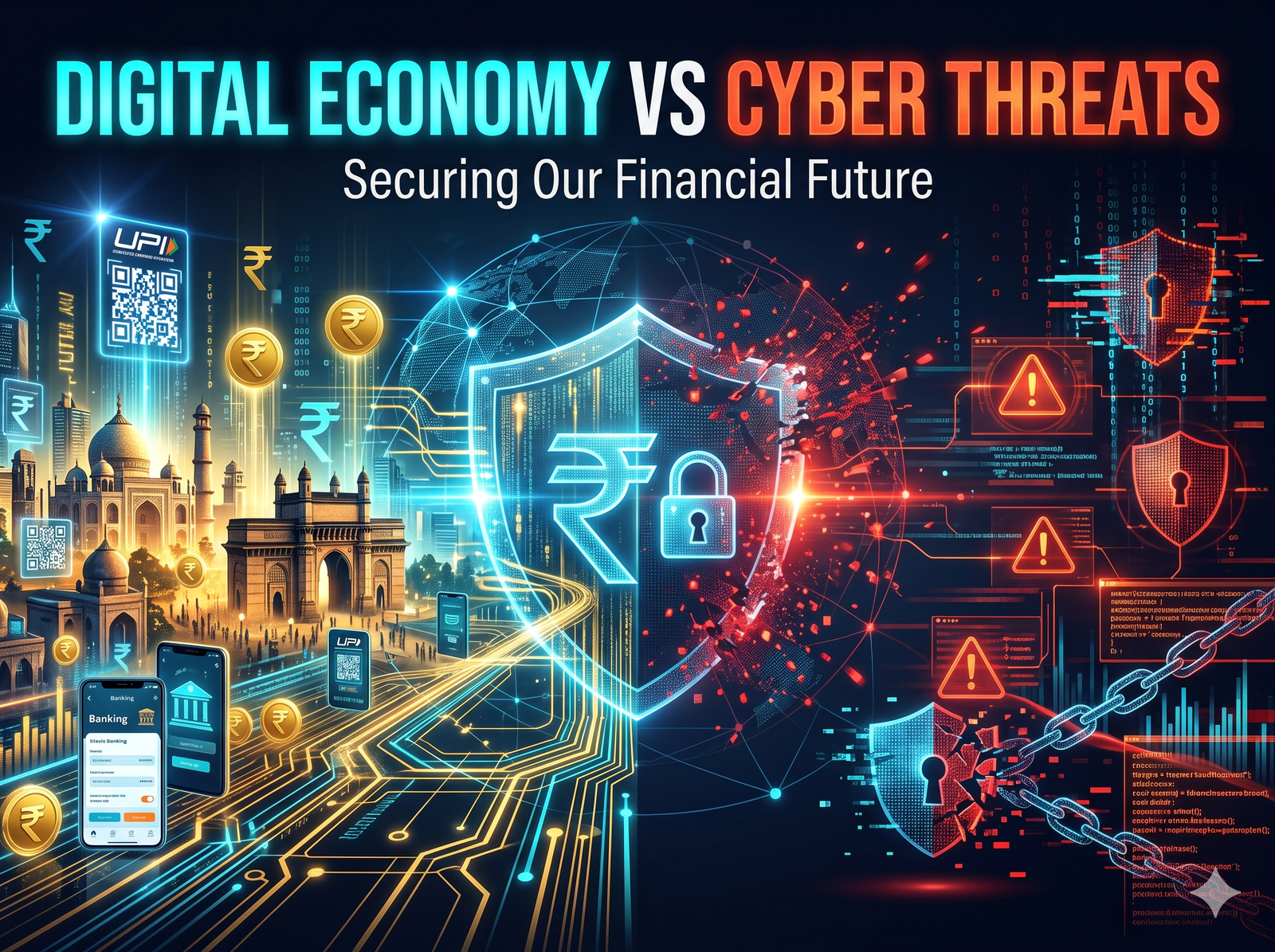
Today, doing things online is a normal part of life. We use our phones and computers to pay bills, buy groceries, and send money to friends. While this digital shift has made life much easier, it has also brought a hidden danger: cyber attacks.
Recently, the International Monetary Fund (IMF) shared a serious warning. They stated that cyber attacks on banks and financial systems are a major global risk. If hackers successfully attack big banks, it could stop people from using their money and destroy public trust in the digital system.
The Heavy Cost of Online Crime
The financial damage caused by internet crimes is massive. Experts predict that globally, cybercrime will cost around $10.5 trillion in the year 2026. By 2029, this could jump to a staggering $15 trillion.
In India, the problem is growing rapidly. Cyber attacks on the Indian banking system happen much more often than the global average. In fact, the number of attacks on Indian financial services more than doubled recently, jumping from 14 lakh incidents in 2021 to 29 lakh in 2025.
New Dangers: AI and Supercomputers
Today’s hackers are not just ordinary thieves. Many are part of highly organized, state-sponsored groups from foreign countries. They are using advanced technology to break into systems:
Supercomputers (Quantum Computing): The secret codes and passwords that banks currently use to protect our money could soon be broken by incredibly powerful supercomputers. While some countries are already upgrading their security to stop this, India still needs strict rules to catch up.
Artificial Intelligence (AI): Hackers are using AI to find hidden weaknesses in computer systems faster than humans ever could. AI can even be used to fake a person’s voice over the phone to trick bank employees into giving away secret information.
Why We Need “Made in India” Technology
A big weakness for India is that we rely too much on foreign technology. Most of the computer systems, internet browsers, and cloud storage we use are owned by companies outside of India. This means a large amount of Indian data is stored in other countries.
When we rely on outside technology, a single mistake by a foreign company can shut down computers worldwide—as seen in a recent global software crash. To truly keep our digital money safe, experts suggest that India needs to build its own software, computer networks, and digital storage systems.
India’s UPI Success and the Way Forward
Even with these growing threats, India’s banking system has proven to be very strong. Every single day, millions of Indians safely complete around 80 crore UPI transactions.
Because the system is so huge, banks realize that it is almost impossible to stop every single hacker. Therefore, their main focus is now on rapid recovery. This means that if a cyber attack does happen, banks are preparing to fix the problem instantly so that customers don’t even notice a delay.
Conclusion
Almost every home in India is now connected to the internet. The “Digital India” dream is a reality, making services easier to reach for everyone. However, as our digital world grows, so do the risks. Keeping our digital money safe from hackers is no longer just a computer issue—it is one of the most important goals for the nation.