





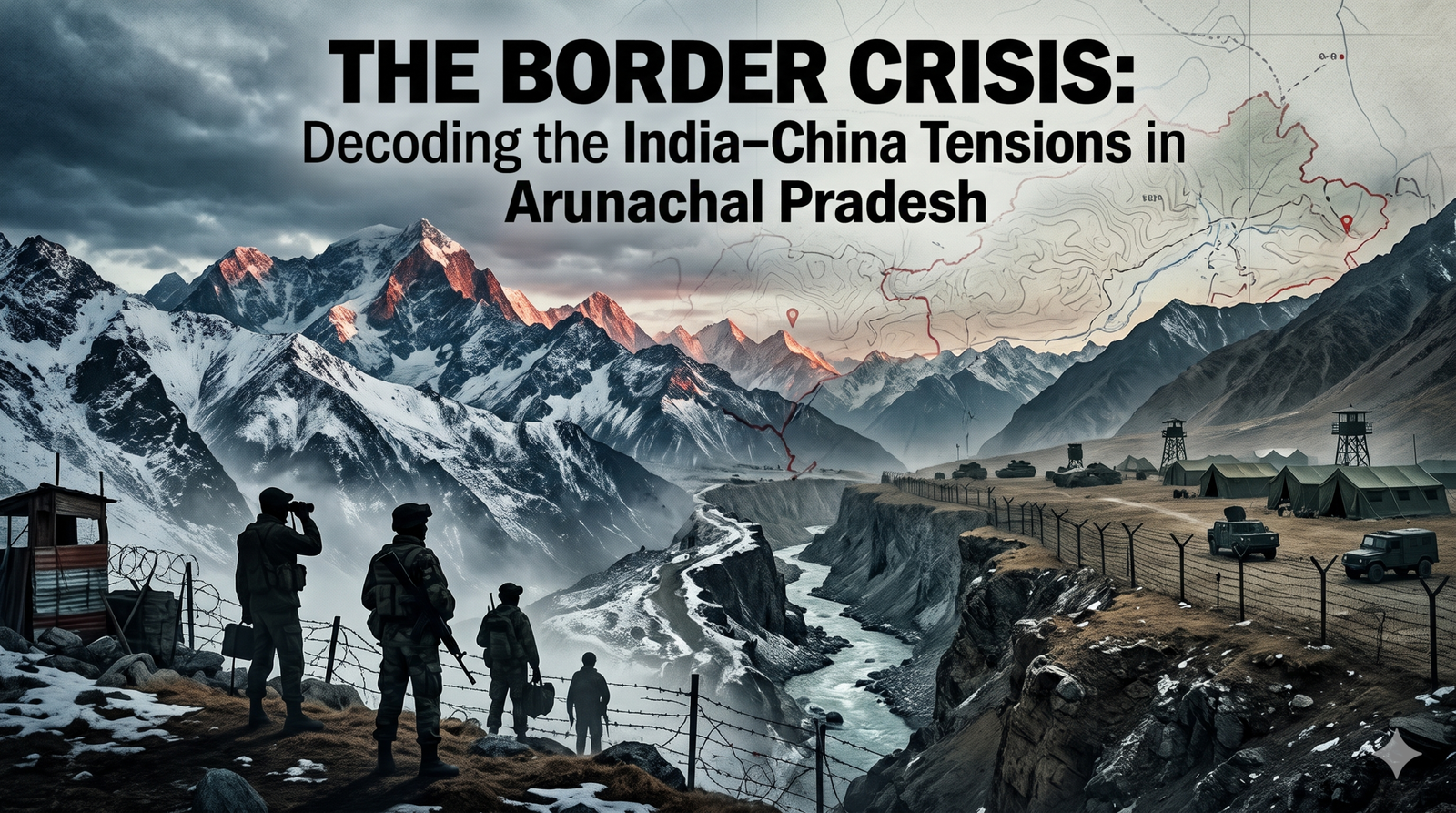
The relationship between India and China remains one of the most complex geopolitical puzzles in the modern world. At international events like the BRICS summit, Chinese leaders often speak about regional cooperation and building a shared Asian future. Yet, on the ground in regions like Arunachal Pradesh, the reality is starkly different. Continuous military face-offs between the Indian Army and the People’s Liberation Army highlight a growing tension that threatens peace in the region. Understanding this dynamic requires looking closely at China’s long-term tactics and how India is preparing to defend its borders.
The Current Border Situation
Military leaders have confirmed that border skirmishes are not isolated events but are happening repeatedly across various points along the Arunachal Pradesh border. Over recent months, Chinese forces have continuously tried to assert their presence. A notable example occurred when Chinese troops pushed several kilometers into Indian territory near the Asafila area to set up camp. Their typical pattern involves causing a brief friction point, stepping back temporarily, and then returning with a much larger military deployment. This constant pressure is a deliberate tactic to remind India that China does not recognize the currently established borders, completely ignoring India’s official maps and territorial claims.
Why the Dispute Exists
To understand these ongoing clashes, it is necessary to look back at the origins of the boundary dispute. India and China share a massive, unresolved border stretching over 3,400 kilometers, known as the Line of Actual Control. This long boundary is broadly broken down into three sections: the western area (where the Galwan Valley clash took place), the middle area, and the eastern area (which includes Arunachal Pradesh).
The root of the disagreement dates back to 1914 with the Shimla Convention. During this time, British India and Tibet agreed upon a formal boundary. However, China later rejected this agreement. The Chinese government argued that Tibet was not an independent nation and therefore had no legal right to sign international treaties. Because China refuses to accept that original boundary line, the two countries have completely different views on where their actual borders lie today.
China’s Two-Sided Approach
China manages its relationship with India using a dual strategy, balancing peaceful diplomacy with aggressive military action.
On the diplomatic side, Beijing regularly participates in peace talks. There are frequent meetings between military commanders and national security advisors, alongside discussions about resuming border trade and cultural exchanges. This creates an outward appearance that China wants to de-escalate tensions and maintain friendly, profitable economic ties.
On the military side, China aggressively challenges the border using three specific methods:
Gradual Land Grabbing: Often called “salami slicing,” this involves taking small, incremental steps to change the physical reality of the border. By building roads, sending out frequent patrols, and publishing maps with new Chinese names for Indian territories, they slowly try to make their claims permanent.
Military Bullying: By keeping a massive armed presence right at the border, China tries to intimidate India. The goal is to use this military threat to force India into a weaker position during formal diplomatic negotiations.
Separating Trade from Conflict: China wants to keep its profitable business relationship with India entirely separate from the border fights. They attempt to compartmentalize the relationship, hoping to sell goods in Indian markets while simultaneously competing aggressively for land and regional influence.
How India is Pushing Back
Faced with this overwhelming strategy, India is actively changing how it defends its territory. The focus has shifted from standard military responses to a more modern and comprehensive defense plan.
The Indian military is investing heavily in new technology, particularly drone warfare, and building underground infrastructure to protect troops and supplies in harsh mountain terrains. Beyond just military hardware, India is also using civilian presence as a defense tool. Through new government initiatives, India is developing border villages and encouraging citizens to live there. These locals act as the eyes and ears of the military while legally and physically cementing India’s claim to the land.
Economically, India is reducing its reliance on Chinese imports. By building up domestic manufacturing and finding new global suppliers for critical materials, India is stripping away the economic leverage China currently holds. Furthermore, Indian diplomats are standing firm, making it clear that normal business and political relations cannot resume until there is guaranteed, verifiable peace along the border.
Both nations understand that a full-scale war between two massive economies would be globally disastrous. Therefore, India’s ultimate goal is to build a military and economic defense so strong that China is deterred from attacking, forcing both sides to settle their differences through dialogue rather than conflict.