




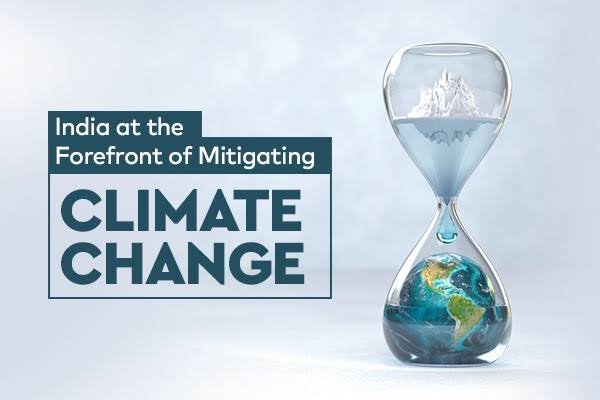
In a significant stride toward global ecological responsibility, India has formalized its latest set of sovereign environmental commitments. These updated “Nationally Determined Contributions” (NDCs) serve as a strategic compass for the 2031-2035 window, reinforcing the nation’s intent to harmonize industrial growth with planetary health.
The Framework: Tailored Pledges for a Global Cause
Originating from the 2015 Paris Agreement, these climate blueprints are individualized action plans that signatory nations refresh every half-decade. The collective mission is to prevent the Earth’s average temperature from climbing more than 2°C—and ideally keeping it within a 1.5°C limit—above historical levels.
India’s newest roadmap, or NDC 3.0, is the result of a rigorous internal audit and insights gained from the “Global Stocktake”—a worldwide progress report that assesses whether current international efforts are sufficient to meet climate objectives.
A Foundation of Surpassing Expectations
India’s forward-looking goals are anchored in a series of major successes from the previous cycle. The nation has consistently outpaced its own projections:
Greening the Economy: India has slashed the volume of greenhouse gases produced for every unit of economic value (GDP) by 36%. Remarkably, this target was met over a decade ahead of the original 2030 deadline.
A Leap in Clean Power: Over half (52.57%) of the country’s power generation capacity is now derived from sustainable sources like solar, wind, and nuclear energy. This milestone was cleared nine years ahead of schedule.
The Growth of Natural Reservoirs: Through persistent reforestation, India now hosts the third-largest net increase in forest cover globally. This biological infrastructure currently sequesters approximately 2.29 billion tons of carbon dioxide.
The 2035 Horizon: Elevating Environmental Ambition
Drawing confidence from these wins, the new strategy for 2031-2035 introduces even more rigorous benchmarks:
Aggressive Emission Reductions: The nation is now targeting a 47% decrease in its carbon-to-wealth ratio by 2035.
A Non-Fossil Dominant Grid: The objective is to ensure that 60% of all installed power capacity comes from eco-friendly sources within the next decade.
Expanding Biological Carbon Storage: India plans to bolster its natural carbon sinks to capture between 3.5 and 4 billion tons of CO2.
These short-term milestones are vital components of India’s long-term “Viksit Bharat” vision—achieving the status of a developed nation by 2047—and the ultimate pledge of reaching Net Zero emissions by 2070.
The Engine of Change: Policy and Partnership
The success of these initiatives relies on a seamless collaboration between federal and state leadership. The National Action Plan on Climate Change (NAPCC) provides the overarching structure, operating through nine specialized missions that tackle everything from water conservation to sustainable farming. This is mirrored at the regional level by State Action Plans (SAPCC), ensuring that local governance aligns with national environmental priorities.
Propelling this transition are several key government-led movements:
Technological Modernization: Programs like the National Green Hydrogen Mission and decentralized solar initiatives are redefining how the nation produces and consumes energy.
Collaborative Diplomacy: Beyond its borders, India continues to spearhead global groups like the International Solar Alliance and the Biofuel Alliance, promoting clean energy alternatives and disaster-resilient infrastructure.
By prioritizing a “green growth” philosophy, India is demonstrating that a nation can rapidly modernize while remaining a steadfast guardian of the environment.