

India’s Civil Services Examination is one of the toughest tests in the country. Recently, a government committee looked closely at how this test works and found several areas that need to be fixed. They realized the current system needs a major update to be fair and to find the best possible people to run the country’s administration.
The Imbalance of Candidates
Currently, the exam heavily favors students with technical and scientific backgrounds.
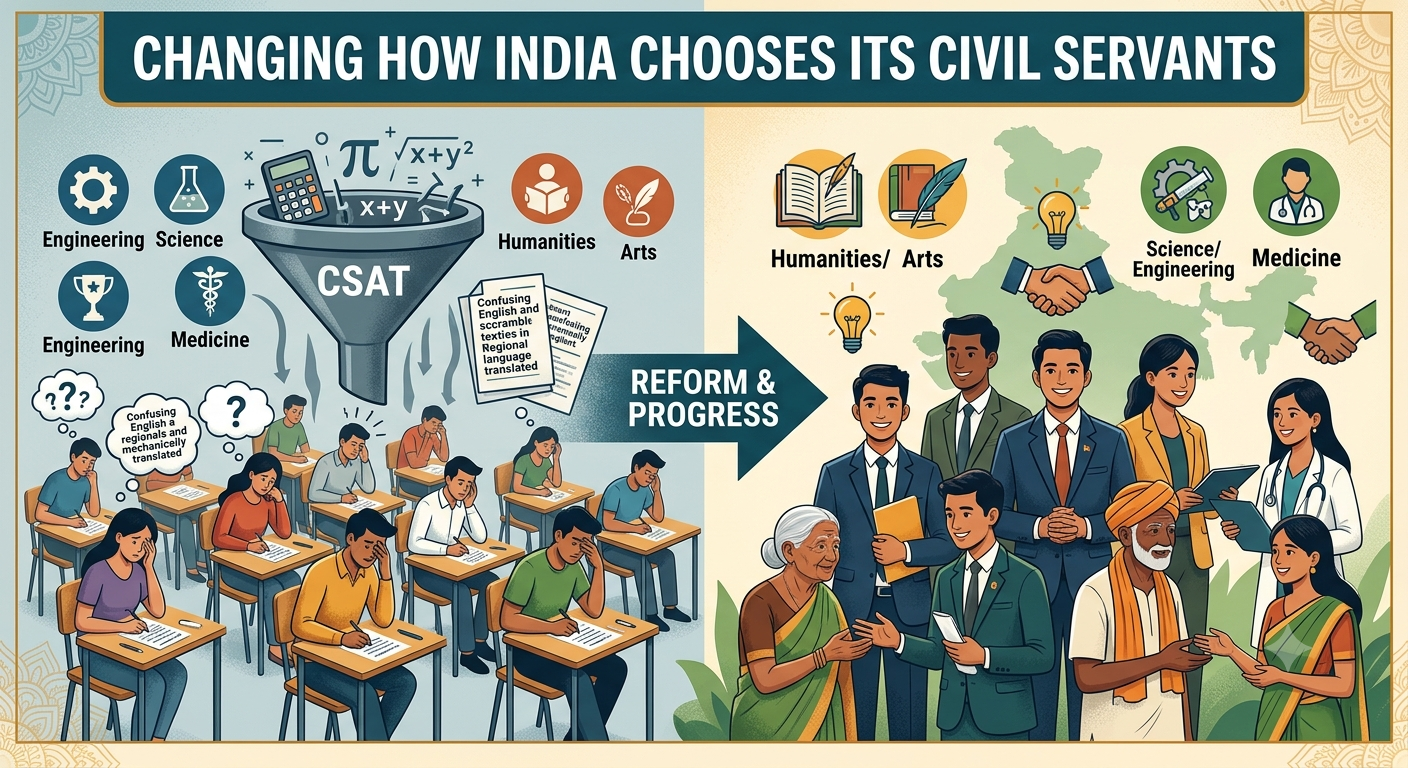
Too Many Technocrats: Over 70% of the people who clear the exam are from technical fields, such as engineering and medicine.
A Loss for Other Fields: Because of this, India is losing brilliant doctors and engineers who could have helped the country by working in their actual professions. It also makes it incredibly difficult for students studying arts and humanities to get a fair shot.
The CSAT Roadblock
The biggest hurdle for non-technical students is the second paper, known as the CSAT (Civil Services Aptitude Test).
Tough Math: The math questions on this test are extremely difficult and are similar to what you would find on entrance exams for top business or engineering schools.
Unfair Filter: This setup heavily favors students who are naturally good at advanced math, while unfairly filtering out excellent candidates who excel in other areas.
The Translation Trap
Even though students are allowed to take the exam in 22 different regional languages, the system still gives a massive advantage to English speakers.
Mechanical Translations: The exam papers are originally written in English and then translated word-for-word by a machine or standard translator into regional languages.
Confusing Language: This literal translation creates unnatural and highly confusing sentences, making it much harder for students taking the test in Hindi or other regional languages to simply understand what the question is asking.
Focusing on the Right Skills
The committee highlighted the need to move away from a system obsessed with strict rules and focus on real-world impact.
Empathy Over Book Smarts: A good civil servant needs emotional intelligence and a genuine desire to help people, rather than just the ability to memorize textbooks.
Proper Mindset Testing: High-pressure roles like the police force (IPS) require a specific, empathetic mindset. The committee suggested adding psychological or specialized aptitude tests to make sure candidates actually have the right temperament to wear a uniform and serve the public on the ground.
To build a modern, future-ready administration, the selection process must be inclusive, easy to understand, and focused on finding people who truly want to serve the nation.
What aspect of the civil service exam do you think is the most important to change first?