


If India wants to become a fully developed country by 2047, simply building new roads and factories won’t be enough. The real power of the country lies in its people.
Over the past decade, the government has trained millions of citizens. However, experts agree that the goal must change. We can no longer just focus on how many people sit in a classroom or how many certificates are handed out. The new goal is to make sure young people are learning the exact skills they need to earn a good living in the real world.
Here is what needs to change to make the country’s youth truly job-ready.
1. Focus on Real Results, Not Just Numbers
For a long time, success was measured by how many people finished a training program. But a piece of paper does not guarantee a job. The focus needs to shift from just giving out degrees to teaching practical skills—like design and problem-solving. When young people can invent and create things on their own, local businesses and services will naturally grow.
2. Embracing AI Instead of Fearing It
Technology is changing the workplace extremely fast. Many people are afraid that Artificial Intelligence (AI) and machines will take away jobs. However, this change is actually a huge opportunity. While computers might take over simple tasks, the world will need smart workers to manage, check, and guide those computers. If workers learn to control and work alongside AI, they can actually earn much higher salaries.
3. Companies Must Help Teach
Right now, schools and businesses are not on the same page. Schools often teach from old textbooks, while companies complain they can’t find workers with modern skills. To fix this, businesses need to stop being just “buyers” of talent. They need to help create it.
Companies should help design school courses and offer hands-on training for students. Furthermore, instead of relying only on book-smart teachers, schools should invite retired professionals with decades of real-world experience to teach students how things actually work.
4. The “Skill Passport” and Respecting All Work
To make finding a job easier, experts suggest a few big ideas:
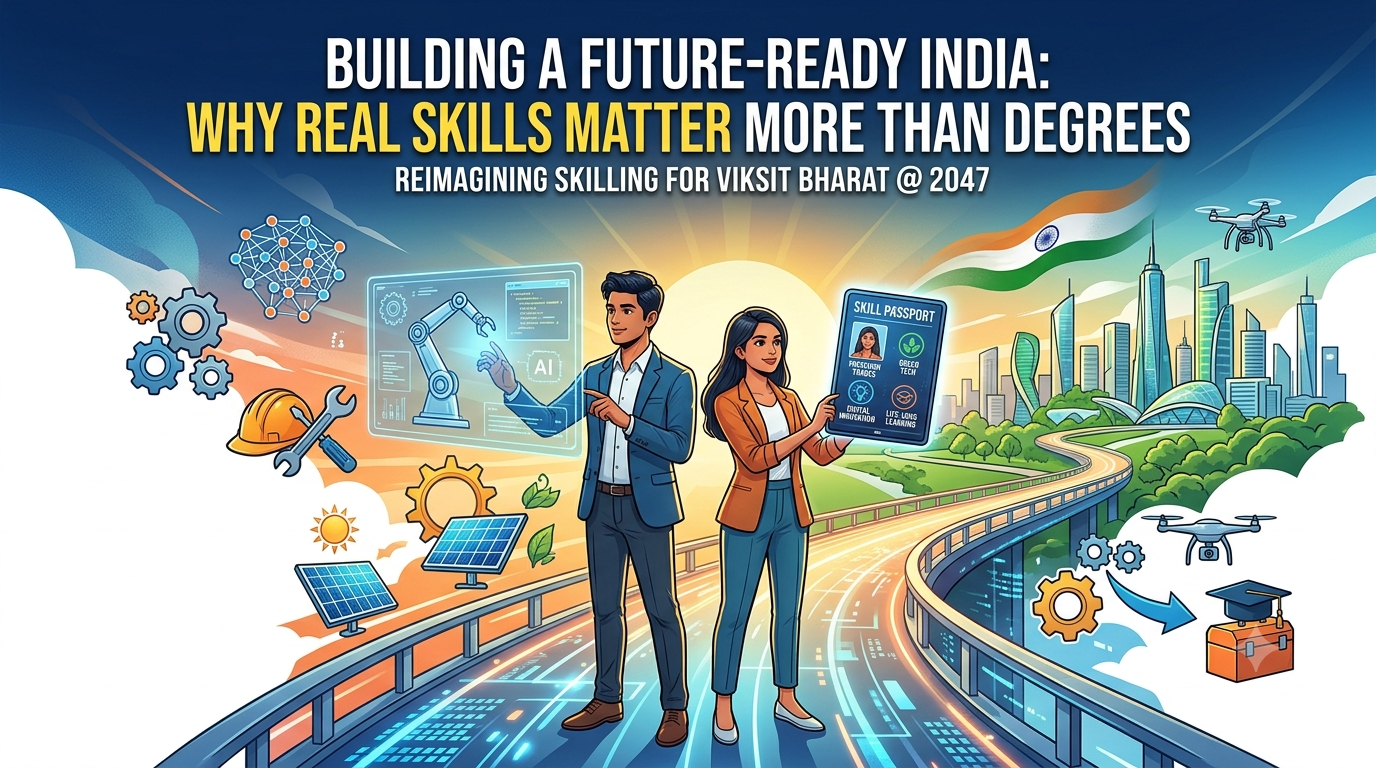
A Skill Passport: Imagine a digital file that stays with you forever. It would record every course you take, every skill you learn, and all your past work experience. This would make it incredibly easy for employers to find the exact worker they need.
Changing How We View Jobs: Society needs to respect all types of work. Today, many young graduates would rather take a low-paying job at a mall than become a plumber or an electrician—even though skilled tradesmen often earn five to seven times more money. We need to make these hands-on jobs respectable and attractive to the youth.
Focus on Earning a Living: Instead of only looking for traditional corporate “jobs,” people should focus on “livelihoods”—finding sustainable ways to earn a good living. Huge opportunities are opening up in the service sector, like healthcare and elderly care, all over the world.
The Bottom Line
Learning does not stop when school ends; it is a lifelong journey. If the government, businesses, and regular citizens work together to value real, practical skills over simple book knowledge, the country has a golden opportunity to become the talent capital of the world.