





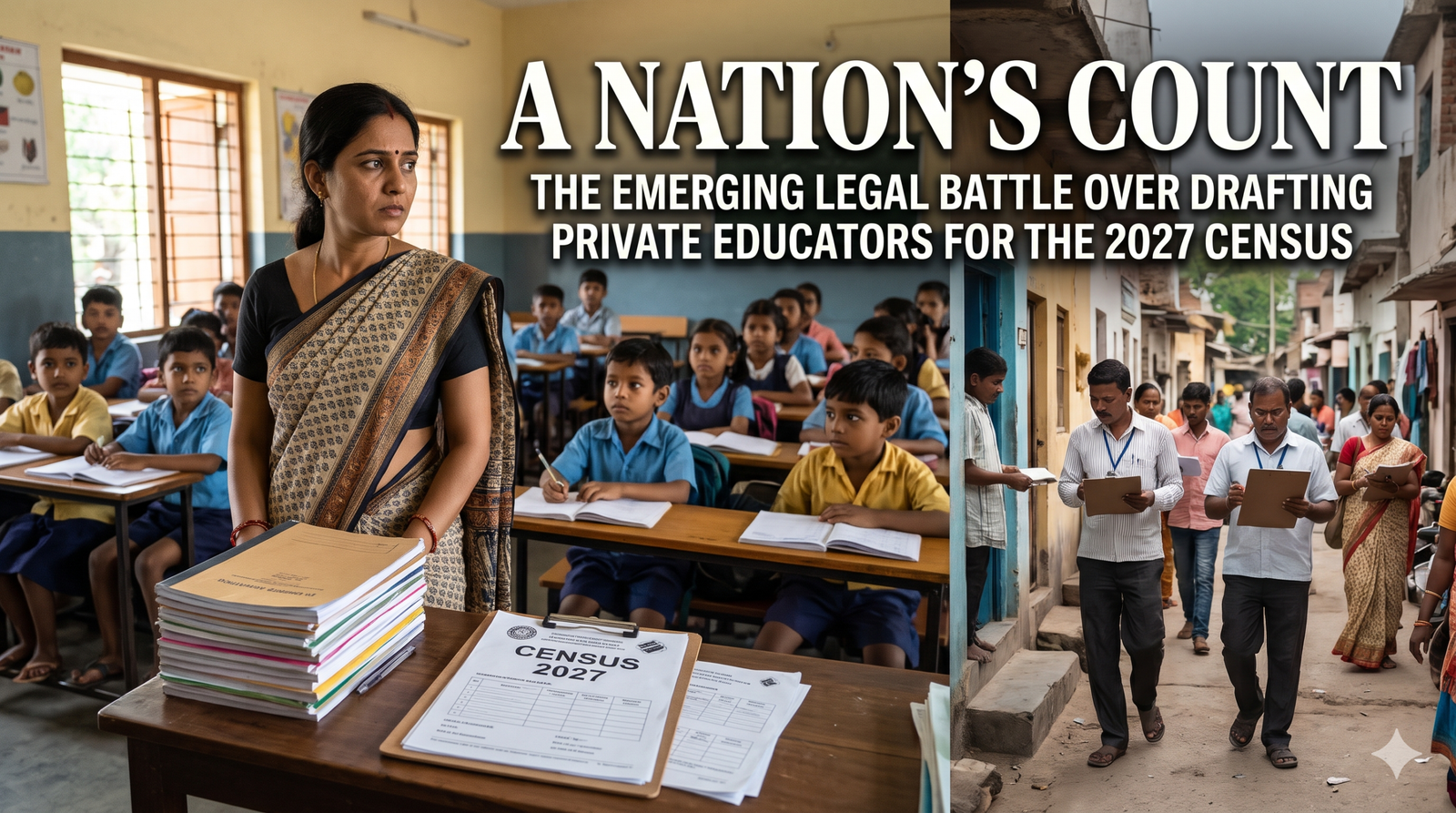
India stands at the forefront of a profound technological renaissance, characterized by lightning-fast digital payments, instant travel bookings, and the rapid integration of artificial intelligence across industries. Despite this capacity to process vast oceans of data in fractions of a second, the monumental task of mapping the country’s demographics still relies heavily on manual labor. The upcoming census has brought this paradox into sharp focus, particularly as administrative bodies look to private school teachers to fill the massive manpower gap. The decision to pull educators away from their primary pedagogical duties has ignited a fierce legal and ethical debate regarding state authority, compulsory service, and the future of classroom instruction.
The Catalyst of the Dispute
The controversy stems from recent directives issued by the Registrar General of India, which amend historical administrative guidelines—specifically the Census Rules of 1990. These modifications explicitly authorize the deployment of instructors from both state-aided and completely unaided private educational institutions for national census duties.
Unsurprisingly, this administrative shift has faced immediate pushback from the private education sector, culminating in legal challenges. The core of the educators’ argument rests on a crucial legal distinction: being theoretically eligible to assist in a national project does not equate to being legally obligated to abandon their private employment for state service. The private teaching community is questioning whether the government possesses the statutory authority to mandate their participation without their explicit consent.
The Mechanics of a Gigantic Demographic Exercise
To grasp why the state is taking such aggressive measures to recruit workers, one must understand the sheer scale of the Indian census. It is far more comprehensive than a simple headcount. It represents a meticulous, nationwide socioeconomic audit that gathers essential data on living conditions, income brackets, and community demographics.
This rich dataset is the foundation upon which the country plans its future. The statistics dictate where new hospitals should be erected, how transportation networks must be expanded, and where educational resources are most desperately needed. Executing a project of this magnitude across a population exceeding 1.35 billion requires a staggering workforce. Current estimates suggest that the state requires upwards of three million enumerators and field supervisors to ensure the data is collected accurately and comprehensively.
Navigating the Legal and Constitutional Labyrinth
The friction between the state and private educators is deeply rooted in legislative interpretation. The foundation of census operations lies in the Census Act of 1948. Within this legislation, Section 4(2) grants state governments the power to appoint census officers, stipulating that those appointed are legally bound to fulfill their duties. However, the original 1948 text conspicuously lacks any direct provision for conscripting employees of private institutions. Consequently, private educators argue that introducing such a mandate through a mere administrative rule change—without amending the primary parliamentary legislation—constitutes statutory overreach.
Conversely, the state relies on the broader framework of the Indian Constitution, specifically Article 23, which allows the government to mandate compulsory service for a recognized public purpose. Because the national census is undeniably a critical public initiative, authorities argue that drafting citizens into service is constitutionally sound. The courts are now tasked with determining whether the state’s right to demand civic service overrides the operational independence of private entities and their employees.
Why Technology Cannot Replace Human Enumerators
A recurring question in this debate is why a rapidly digitizing nation cannot simply automate the census. While the government is indeed transitioning toward a digital census model—incorporating smart data centers and electronic reporting—a complete technological handover is currently impossible.
India continues to grapple with a significant digital divide. Millions of citizens residing in deep rural pockets or economically disadvantaged areas lack reliable internet connectivity, smartphone access, or the digital literacy required to participate in an online census. Until this digital infrastructure is universally accessible, human enumerators remain an absolute necessity to ensure that marginalized communities are not erased from the national record.
The Educational Toll
Beyond the complex legal jargon lies a pressing societal concern: the disruption of education. If the state forces both public and private school teachers into extensive field data collection, the inevitable result is empty classrooms. The absence of educators, particularly in regions where educational resources are already stretched thin, threatens to stall the academic progress of countless students.
The ongoing litigation represents a critical juncture in Indian administrative law. The judiciary must now strike a delicate balance between the undeniable necessity of gathering accurate national data and the protection of private labor rights, all while safeguarding the continuous, uninterrupted education of the nation’s youth.