


India’s public health journey: ten years of the Pradhan Mantri Surakshit Matritva Abhiyan (PMSMA). Conceived with the fundamental belief that every pregnancy deserves to be safe, this nationwide initiative has fundamentally reshaped how expecting mothers receive care, moving the needle from basic survival to comprehensive maternal well-being.
By combining targeted medical interventions, grassroots mobilization, and digital tracking, India has created a sustainable model for saving the lives of mothers and newborns across varying socioeconomic landscapes.
A Ten-Year Shift in Maternal Health
The true success of India’s maternal health initiatives is best understood through its shifting statistics. Over the past decade, the concerted efforts of healthcare workers have yielded dramatic improvements across the country.
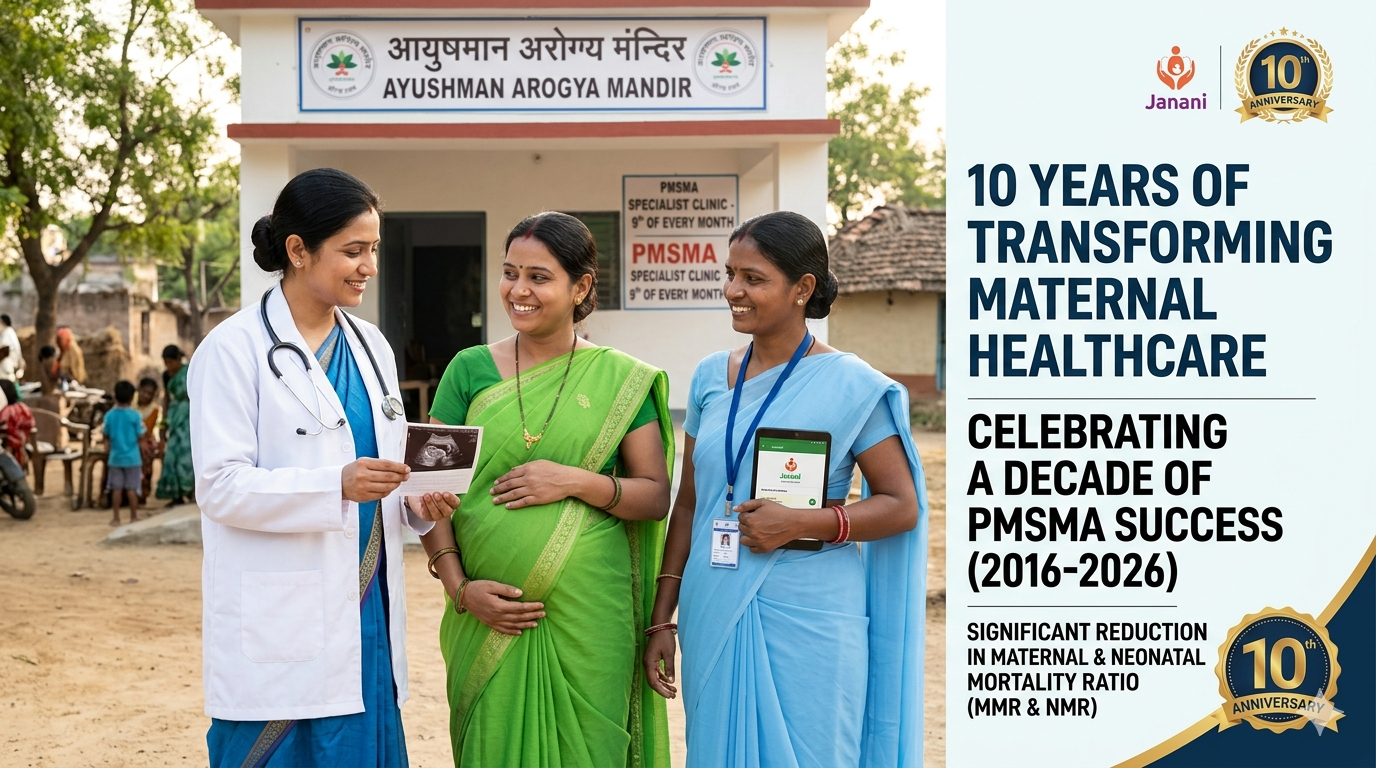
The national Maternal Mortality Ratio (MMR) has experienced a steep decline, dropping from 130 per 100,000 live births in the pre-PMSMA era down to 87 per 100,000 live births today. Similarly, the Neonatal Mortality Rate (NMR) has seen a steady reduction, falling from 26 to 18 per 1,000 live births over the same period.
This drop in mortality is closely tied to a major surge in institutional deliveries, which have climbed from 78.9% to an impressive 90.6%. In total, the program has successfully reached over 75 million women, allowing healthcare providers to identify and manage 12 million high-risk pregnancies that might have otherwise gone unnoticed.
Redefining Prenatal Support
Historically, public health guidelines recommended four standard antenatal checkups (ANCs) for expecting mothers. The introduction of PMSMA revolutionized this baseline by adding a critical fifth visit—a guaranteed consultation with a specialist, complete with free ultrasounds and diagnostics, held on the 9th of every month.
Recognizing that not all pregnancies are equal, the government introduced an extended strategy in 2022. Women identified with high-risk pregnancies now receive up to eight comprehensive checkups. To ensure financial barriers never compromise care, this initiative is closely integrated with support networks like SUMAN, Janani Suraksha Yojana (JSY), and Janani Shishu Suraksha Karyakaram (JSSK). Together, they cover everything from clinical treatments and medications to transportation and nutritional support, entirely free of charge.
The Power of Digital Health Tracking
Modernizing maternal care required robust digital infrastructure to ensure no mother falls through the cracks. Key technological drivers include:
- The Janani Ecosystem: A dedicated app and portal that registers expecting mothers, seamlessly tracking their progress, identifying high-risk factors, and automating financial assistance payouts upon institutional delivery.
- U-WIN Platform: A centralized system mapping vaccination schedules for both mothers and newborns, ensuring immunizations are administered on time.
- Proactive Communication: Automated SMS alerts notify both the mother and local health workers if a checkup is missed. Concurrently, programs like Kilkari deliver automated, educational audio messages directly to mobile phones, guiding families on maternal nutrition and healthy habits.
The Grassroots Champions
Technology and policy aside, the lifeblood of this healthcare transformation relies on community engagement. India’s vast network of over 1 million ASHA (Accredited Social Health Activist) workers acts as the crucial link between rural families and formal healthcare.
These frontline heroes actively mobilize women, educate families, and guide mothers to the nation’s 180,000 Ayushman Arogya Mandirs (primary health centers). Thanks to their on-the-ground advocacy, hospitals are seeing a massive reduction in women arriving in labor with preventable life-threatening conditions, such as severe anemia.
The Next Frontier: Bridging the Final Gaps
Despite a decade of remarkable progress, healthcare administrators are actively avoiding complacency. The focus has now shifted toward localized challenges and bridging the final gaps in care:
- Targeting Vulnerable Geographies: The government has identified roughly 110 districts where mortality rates lag behind the national average. These areas will receive hyper-focused interventions.
- Chasing a New Baseline: The immediate national goal is to push the Maternal Mortality Ratio below 70.
- Customizing Solutions: Addressing specific regional hurdles, from solving emergency transport deficits in rugged terrains to mitigating the risks associated with localized spikes in teenage pregnancies.
- Continuous Skill Upgrades: Rolling out ongoing training modules for medical officers and nurses to ensure the workforce remains highly skilled and motivated.
The past ten years of PMSMA have proven that large-scale, coordinated health interventions can change the fate of millions. By maintaining this momentum, expanding digital safety nets, and empowering frontline workers, India continues to pave the way toward a future where every pregnancy is a safe, healthy, and supported journey.