




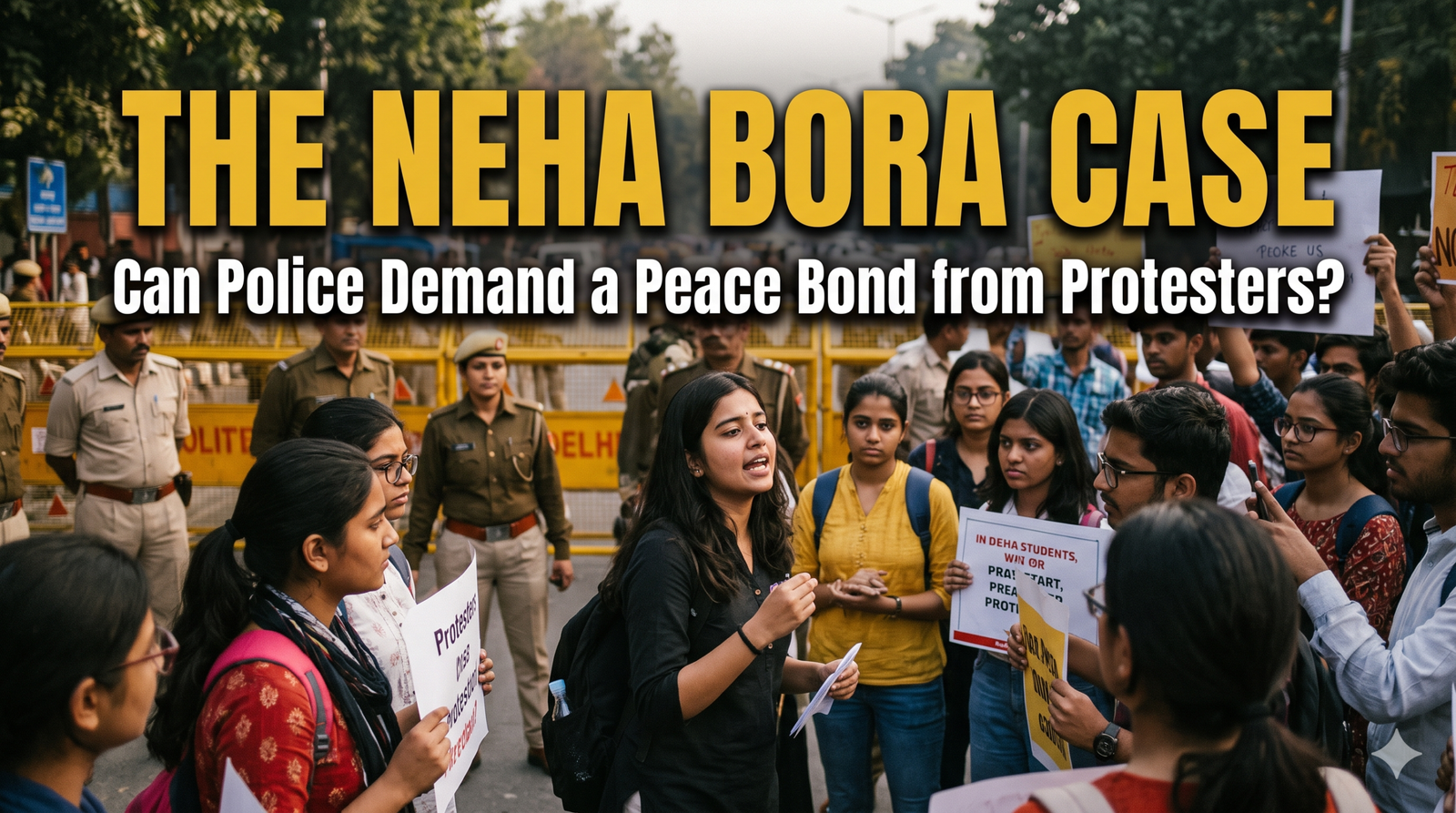
In any democracy, there is a constant balancing act between keeping the public safe and protecting citizens’ rights to speak up. This balance is currently being tested in a case involving student leader Neha Bora.
During a protest in Delhi demanding the resignation of the Chief Election Commissioner over voting roll issues, authorities issued Bora a ₹10,000 “peace bond” notice. In response, she took the matter to the Delhi High Court.
What is a Peace Bond?
A peace bond is not a fine, a penalty, or a punishment. It is a preventive legal tool. It is simply a formal promise made to the authorities that a person will stay peaceful for a certain amount of time.
In this case, the authorities also asked for a “surety.” A surety means a second person must step forward to guarantee that the protester will behave and not break their promise to keep the peace.
The Rules Behind Peace Bonds
The power to issue these bonds comes from a law called the Bharatiya Nyaya Suraksha Sanhita (BNSS).
Section 126: This rule allows a magistrate to ask for a peace bond to prevent trouble. However, they cannot do this just because they want to; they must have real, solid reasons to believe the person might cause violence.
Section 130: This rule says the magistrate must provide a written order explaining exactly why they are demanding this security promise.
The Core Disagreement
The police argue that because Bora is a prominent student leader, her presence at the protest could trigger violence, making the peace bond a necessary precaution. Bora argues that she was simply participating in a peaceful protest and chanting slogans, which is not a crime or a threat to peace.
This clash highlights important parts of the Constitution:
The Right to Protest (Article 19): Citizens have the fundamental right to speak freely and gather peacefully. However, the government can restrict these rights if it is necessary to maintain “public order.”
The Right to Liberty (Article 21): Citizens cannot have their personal freedom taken away without a proper legal reason. Bora is arguing that the authorities did not have a valid reason to issue the notice against her.
The Role of the Judges
When the government and citizens disagree on these rights, the courts step in. Under Article 226, the High Court has the power to review the actions of the police and magistrates. The judges will look at the evidence to see if the authorities had a good enough reason to demand the peace bond from Bora.
Why This Matters
If authorities use peace bonds too often or without good reason, it creates what is called a “chilling effect.” This means ordinary people become too afraid of legal trouble to protest or speak out against the government.
To prevent this fear while keeping cities safe, experts say police should only act when they have clear evidence of danger, always follow fair legal steps, and ensure that their desire to keep order does not crush citizens’ basic rights.